



Maritime Chronometer Clock
A maritime chronometer clock is a precise marine timekeeper housed in brass and mahogany, essential for nautical navigation and highly sought after by collectors for its mechanical ingenuity.
Maritime Chronometer Clock
When you search for a maritime chronometer clock, you are looking at precision timepieces designed to endure the motion of the sea and assist with navigation. The pieces on this page span the Victorian period, the nineteenth century, and into the twentieth century, reflecting a rich history of maritime engineering.
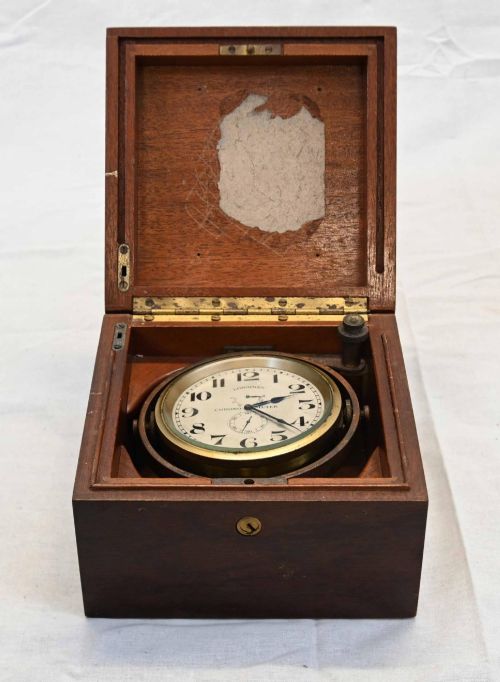
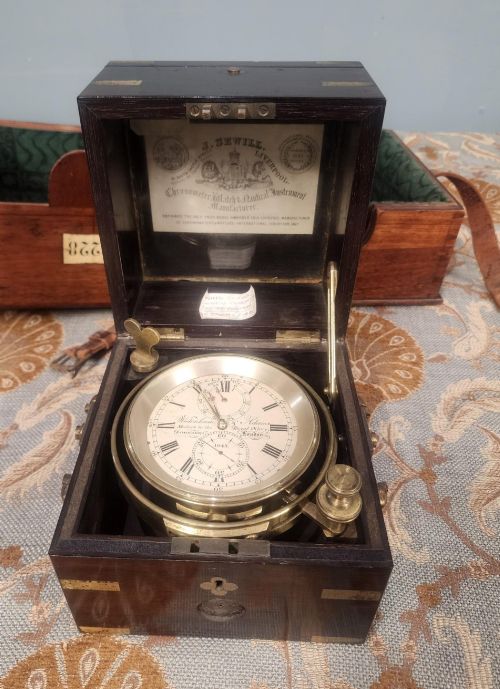
You are most likely to meet wall clocks, table clocks, and marine chronometers housed in gimbal boxes. These objects originate from makers working in London, Liverpool, and Cricklewood during the nineteenth and twentieth centuries.
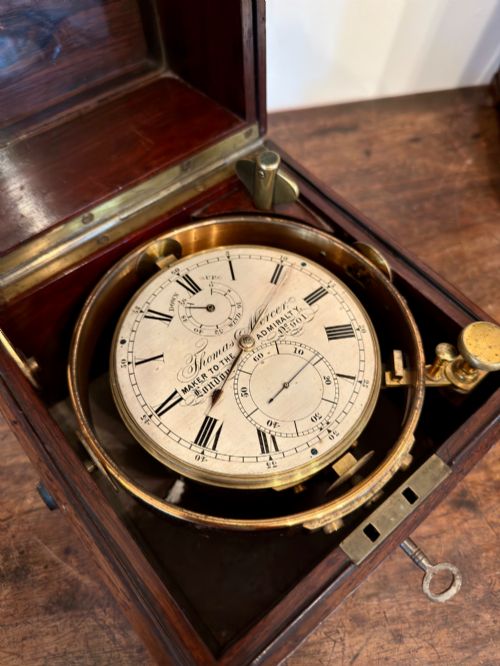
The forms range from bulkhead fusee clocks to two-day marine chronometers encased in mahogany or rosewood. Each type displays the specific functional adaptations required for life aboard a vessel.
How they were made
Makers constructed these timepieces using heavy brass for movements and fittings, combined with mahogany or rosewood for protective boxes and housings. Glass protected the delicate silvered metal, enamel, and steel dials from moisture and salt air.
Workshops employed complex chain fusee movements and seconds sweep mechanisms to maintain steady tension and precise accuracy despite the rolling of a ship. Gimbal mounts were utilised to keep the chronometer level regardless of the vessel's movement.
Maritime Chronometer Clock Retail Price Guide 2026
Typical asking prices for maritime chronometer clock among the pieces listed under this phrase on Sellingantiques today, from the lower quarter to the upper quarter. They describe what is for sale here now, not the wider market.
Materials recorded across the inventory include glass, brass, mahogany, silvered metal, steel, enamel, rosewood, and wood.
What varies in quality
The distinction between a standard timekeeper and a finer example lies in the crispness of the engraved silvered metal dials and the complexity of the movement. Pieces by documented makers such as Thomas Mercer or James McCabe demonstrate superior finishing in their brasswork and wheel trains.
The integrity of the original mahogany gimbal box and the presence of matching maker signatures across the dial, movement, and case elevate the standing of the piece. Lesser examples often feature replaced components or simpler time-only movements without the refined fusee mechanism.
Smiths Cricklewood·Longines·J Sewill Liverpool·Mercer of London·Litherland Davies Of Liverpool·Kelvin White Hutton London·James McCabe·Thomas Mercer
The Maritime Chronometer Clock Glossary
- Chronometer
- A portable timekeeper of high precision used for determining longitude at sea. It maintains a consistent rate through temperature changes and motion.
- Fusee
- A conical pulley used in clock movements to equalize the declining power of the mainspring as it unwinds. This ensures uniform force is delivered to the gear train.
- Gimbal
- A pivoted support ring that allows a chronometer box to remain level while the ship pitches and rolls. This mechanical stabilization protects the delicate balance wheel.
- Bulkhead clock
- A sturdy clock designed to be mounted directly onto the interior wall of a ship's cabin. These units often feature heavy brass bezels and secure latches.
- Silvered metal
- A brass or copper dial plate treated with a silver compound to produce a matte white finish. Graduations and maker inscriptions are typically engraved and filled with black wax.
Maritime Chronometer Clock: Frequently Asked Questions
What is a marine chronometer?
A marine chronometer is an ultra-precise clock used aboard ships to determine longitude by measuring Greenwich Mean Time. Their mechanical stability under harsh sea conditions made them vital navigational instruments.
Unlike standard domestic clocks, they incorporate spring detent escapements and are mounted on gimbals to counteract the motion of the vessel.
How do fusee movements work?
A fusee movement uses a conical pulley connected to the mainspring via a fine chain or cord. As the mainspring unwinds and loses tension, the chain pulls on a wider radius of the cone, maintaining constant torque.
This ingenious mechanical device ensures the clock maintains an even rate throughout its running period.
Why are some clocks in gimbal boxes?
Gimbal boxes use concentric rings and pivots to keep the chronometer level at all times, regardless of how the ship tilts or rolls. This protects the delicate balance wheel from erratic forces.
Most high-grade marine chronometers from the nineteenth and twentieth centuries utilise this mahogany housing system.
How do I care for a chronometer clock?
Keep the clock in a stable environment away from direct sunlight, extreme temperature fluctuations, and excessive moisture. Allow the movement to run down and be serviced periodically by a specialist horologist.
Avoid moving a gimbaled chronometer without securing the locking arm to prevent damage to the delicate pivots.