




Maritime Barometer Instrument
These maritime barometer instrument pieces are scientific tools built to track weather at sea, offering both practical utility and classic nautical character.
Maritime Barometer Instrument
A maritime barometer instrument is a mechanical device designed to measure atmospheric pressure in marine environments. When someone searches for a maritime barometer instrument, they encounter Victorian, Edwardian, and early twentieth-century examples ranging from portable pocket models to substantial wall-hanging stick barometers and bulkhead instruments.
The selection on this page runs from mahogany barographs and pocket forecasters to brass bulkhead clocks and oak ships barometers. These pieces originate from workshops and makers active in London, Hong Kong, and Singapore during the nineteenth and early twentieth centuries.
Most items meeting this description date from the Victorian period, though Edwardian and Georgian iterations also appear. Forms include circular beechwood casings, cased barocyclinometers, and RNLI-type aneroid designs intended for use aboard vessels or in maritime stations.
How they were made
Makers constructed these instruments using dense timbers such as mahogany, oak, rosewood, and beechwood for the protective housings and wall mountings. These woods were turned, carved, and polished to withstand damp conditions at sea while presenting a formal appearance.
Internal mechanics rely on brass, steel, and silvered metal components to register pressure changes accurately. Dials feature delicate engraving or enamel work, protected by heavy glass bezels and often paired with mercury columns or aneroid capsules.
Maritime Barometer Instrument Retail Price Guide 2026
Typical asking prices for maritime barometer instrument among the pieces listed under this phrase on Sellingantiques today, from the lower quarter to the upper quarter. They describe what is for sale here now, not the wider market.
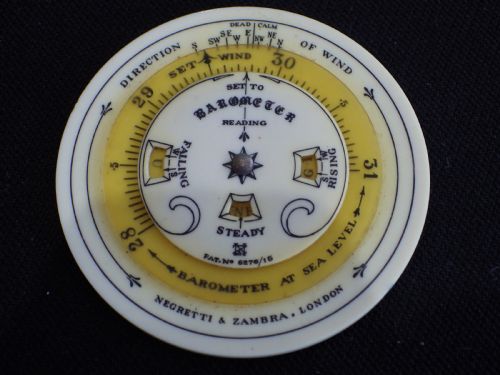
Early typhoons met their match in the barocyclonometer, a stormy-weather specialist designed to outwit tropical gales.
What varies in quality
Quality in a maritime barometer instrument rests on the precision of the maker's signature and the complexity of the mechanism. Signed pieces from established London firms exhibit finer graduation on the silvered dials and more rigorous calibration in the movement.
Material selection and cabinetry execution also distinguish standard production from superior examples. Finely figured mahogany cases with cast brass gimbals and bezels represent a higher grade of manufacture than utilitarian beechwood housings.
GAUPP & CO HONGKONG & SINGAPORE·Aitchison·Elliott Brothers·Negretti & Zambra·M Pillischer·Gowland London
The Maritime Barometer Instrument Glossary
- Barometer
- An instrument measuring atmospheric pressure, used to forecast weather changes. These devices use mercury columns or aneroid capsules to indicate rising or falling pressure.
- Aneroid barometer
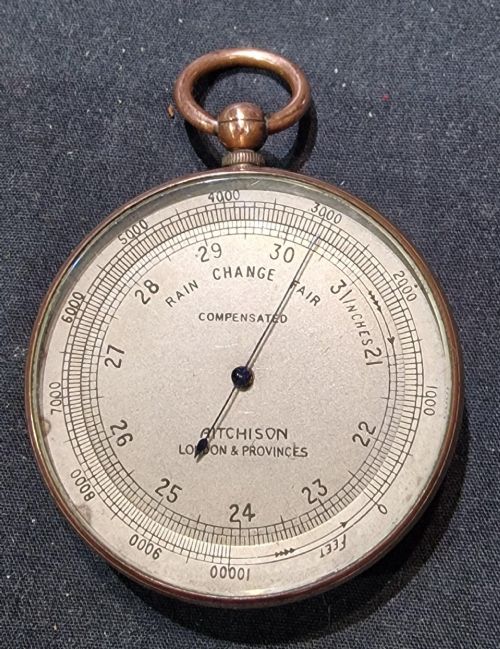
- A barometer that measures pressure without liquid, using a flexible metal box that expands or contracts. This design proved more robust for use aboard moving ships.
- Stick barometer
- A tall, vertical barometer housing a long glass tube filled with mercury. This traditional form offers high reading accuracy.
- Bulkhead barometer
- A barometer designed to be mounted directly onto the interior wall or bulkhead of a ship. They often feature heavy brass bezels and secure fastening points.
- Barograph
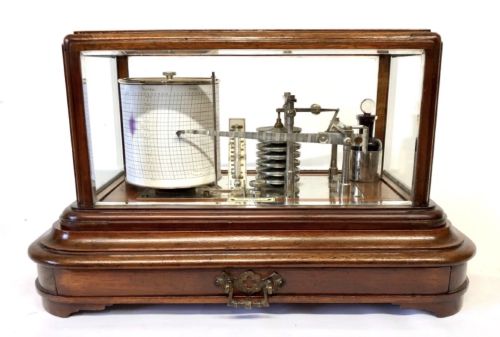
- A recording barometer that graphs pressure changes over time onto a rotating drum. These instruments combine clockwork mechanisms with barometric measurement.
Maritime Barometer Instrument: Frequently Asked Questions
What is a marine stick barometer?
A marine stick barometer is a tall mercury-filled instrument enclosed in wood, historically suspended on gimbals to stay vertical as a ship rolled.
These pieces use gravity and atmospheric pressure against an exposed cistern to show weather shifts at sea.
How do aneroid barometers work?
Aneroid barometers measure pressure through a sealed corrugated metal box that expands or contracts as pressure alters.
This movement connects via levers to a visible needle on a graduated dial, removing the need for liquid mercury.
Where were bulkhead barometers mounted?
Bulkhead barometers were secured directly to the wooden walls inside cabins or chart rooms on vessels.
Their heavy brass frames protected the delicate internal dials from sea spray and constant ship vibrations.
What is a barocyclonometer?
A barocyclonometer is a specialised meteorological instrument used to detect and track tropical revolving storms or typhoons.
These complex devices combined barometric readings with wind direction data to help captains navigate dangerous weather.
How do I care for an antique barometer?
Antique barometers require stable indoor environments away from direct sunlight and sudden temperature swings.
Wood cases benefit from occasional waxing, while glass and brass components need gentle dusting with a soft cloth.