



Marine Battle Painting
These marine battle painting works capture historic naval engagements on canvas, wood, and paper, bringing dramatic maritime warfare directly into your home.
Marine Battle Painting
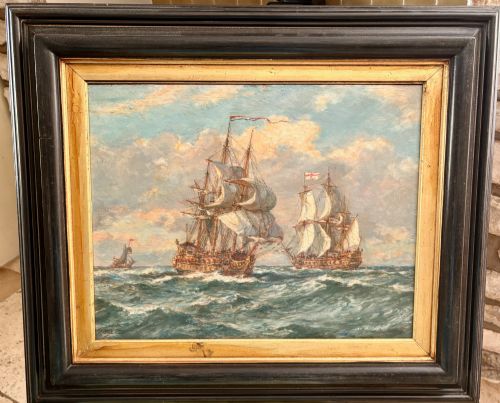
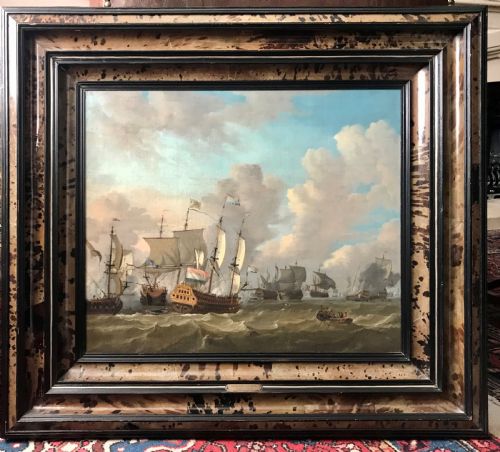
When you search for a marine battle painting, you are looking at historical depictions of naval warfare, sea battles, and historic warships under sail. These works record historic engagements from the seventeenth century through to the mid-twentieth century.
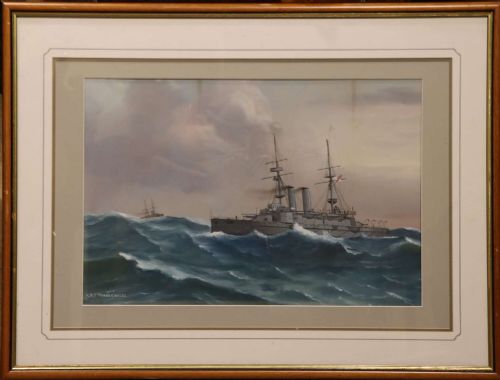
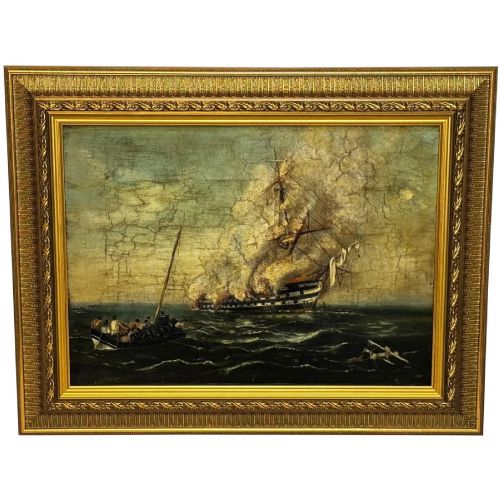
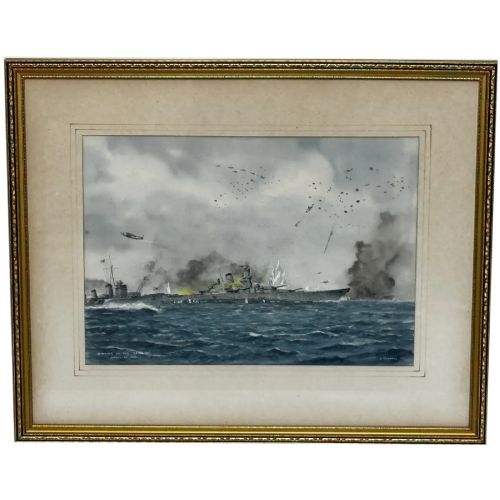
The pieces on this page appear in various forms, including oil paintings on canvas, watercolours, and gouache works on paper. You will most frequently meet nineteenth-century oil paintings and works depicting specific historical vessels like the HMS Bombay or HMS Queen Charlotte.
Originating across different eras such as the Georgian, Regency, Victorian, and Edwardian periods, these artworks often show warships with raised sails and cannon fire. They range from traditional maritime art to mid-century marine realism.
How they were made
Artists painted these naval scenes primarily using oil paint on canvas, sometimes framed in gilt wood, or applied gouache and watercolour to paper. The physical support typically consists of canvas stretched over wood or mounted paper behind glass.
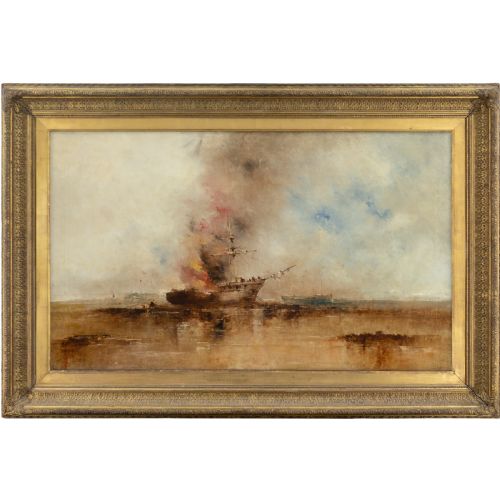
The technical execution relies on layered oil paint or precise watercolour applications to render complex details of galleons, warships, and turbulent coastal seas. Pigments capture the smoke of cannon fire and the sombre tones of historic naval engagements.
Marine Battle Painting Retail Price Guide 2026
Typical asking prices for marine battle painting among the pieces listed under this phrase on Sellingantiques today, from the lower quarter to the upper quarter. They describe what is for sale here now, not the wider market.
Current listings include oil paintings, watercolours, and gouache works spanning from the seventeenth century to 1960.
What varies in quality
The distinction between standard and superior examples lies in the precision of the maritime rigging, the historical accuracy of the warships, and the handling of light across the sea. Masterful brushwork brings movement to the water and smoke to the battle scenes.
Condition of the canvas, paper, and original gilt wood framing also influences the character of each piece. Works attributed to named artists or established followers often demonstrate a higher degree of compositional skill.
William McAlpine·Eric Tufnell·Bernard Gribble·Dion Pears·James Hardy·Abraham Storck
The Marine Battle Painting Glossary
- Gouache
- An opaque watercolour paint that dries to a matte finish, used by artists for detailed maritime scenes on paper.
- Gilt wood
- Wood carved and coated with gold leaf, frequently forming the decorative frames around nineteenth-century oil paintings.
- Follower
- An artist whose style closely imitates a recognised master, such as the followers of Abraham Storck.
- Canvas
- Heavy woven fabric stretched across a wooden frame to serve as the foundation for oil paint.
- Regency
- The period in British history from 1811 to 1820, known for distinctive maritime painting styles and classical aesthetics.
Marine Battle Painting: Frequently Asked Questions
What is a marine battle painting?
A marine battle painting depicts historic naval engagements, sea battles, and warships with raised sails during combat. These artworks record specific historical actions and vessels upon the water.
They serve as historical documents and dramatic decorative works for collectors of maritime history.
How old are these paintings?
The pieces span multiple centuries, ranging from seventeenth-century depictions by followers of traditional artists to eighteenth, nineteenth, and mid-twentieth-century works.
Each period brings distinct framing methods, canvas types, and artistic styles to the portrayal of naval warfare.
How should I hang maritime art?
Maritime art suits rooms with traditional decor, libraries, or studies where historical paintings can be displayed away from direct sunlight. Proper wall placement protects the canvas, paper, and gilt wood frames from environmental damage.
Ensure the painting is secured firmly, as heavier gilt frames require robust wall fixings.
Who painted these sea battles?
These works are created by named marine artists, followers of historical painters, and military artists recording naval history. Signatures and attributions link specific pieces to known historical painters.
Many works also reference earlier masters or historical events like Trafalgar and the East China Seas.