



Marine Artist Painting
These marine artist painting examples capture coastlines and vessels across the nineteenth and twentieth centuries, offering buyers strong decorative presence and historical depth.
Marine Artist Painting
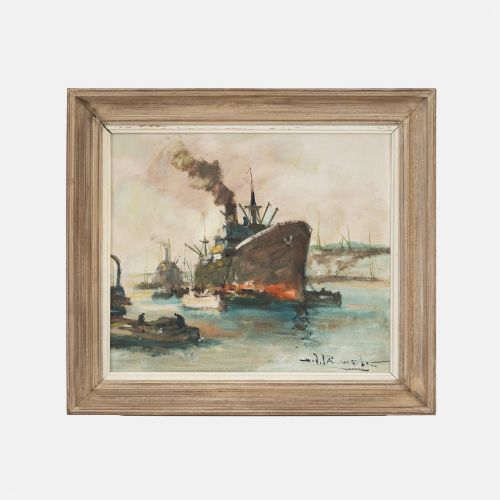
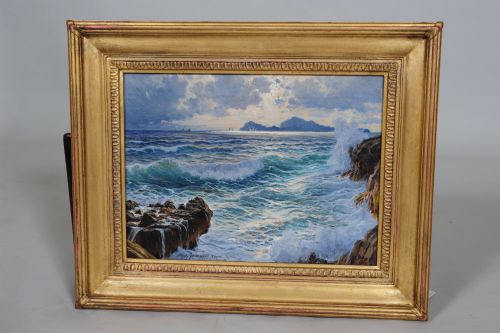
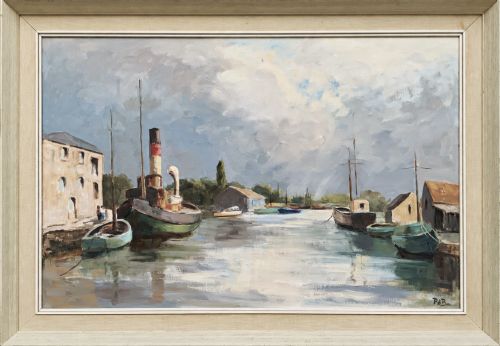
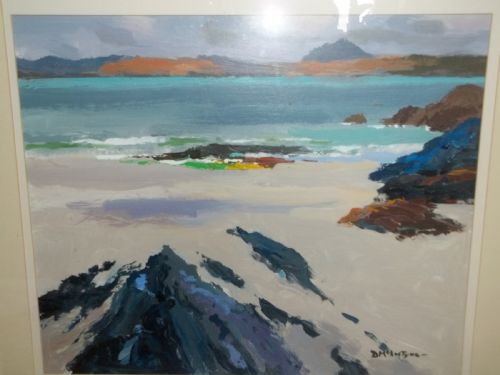
When you search for a marine artist painting, you encounter framed watercolours and oil paintings depicting harbours, coastal towns, and estuarial scenes. These works capture maritime life and coastal topography through varied regional lenses.
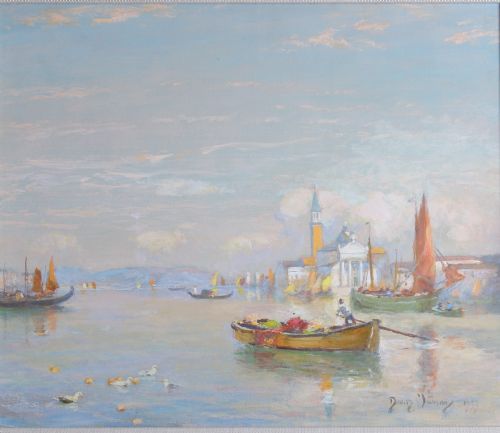
The selection here draws primarily upon nineteenth-century Victorian pieces alongside early twentieth-century British works up to mid-century examples. You will find depictions ranging from Venetian canals and Scottish ports to English fishing villages like St Ives and Whitby.
Most pieces document specific coastal locations, executed on canvas, paper, or board. They range from tight topographical watercolours to freer impressionistic oil paintings.
Materials and techniques
Artists relied primarily on oil paint applied to canvas or wood panels, and watercolour applied to paper. Oil painting allowed for heavier texture and rich depiction of water and sky, while watercolour offered translucent washes suited to atmospheric coastal light.
Framing often utilised wood and glass to protect the delicate paper supports of watercolours, whereas oil paintings on canvas typically remained stretched within decorative wooden frames.
Marine Artist Painting Retail Price Guide 2026
Typical asking prices for marine artist painting among the pieces listed under this phrase on Sellingantiques today, from the lower quarter to the upper quarter. They describe what is for sale here now, not the wider market.
Listings feature works spanning the nineteenth century through to the nineteen-sixties, utilising both oil paint and watercolour on paper and canvas.
Distinctions in quality
Quality rests upon the artist's handling of light, movement, and spatial depth within the marine setting. Stronger works demonstrate confident brushwork and precise atmospheric control over water and sky.
The provenance and documentation associated with listed painters elevate certain pieces above anonymous works. Signatures, exhibition history, and recognised membership in artistic societies indicate higher execution standards.
Sir David Murray RA·Donald McIntyre·Raymond Picque·F J Aldridge·Ernest F Hill·George Stanfield Walters·William Tatton Winter·Rowland Henry Hill·William Lee Hankey·George Stainton·John D Walker·James Aitken·Samuel Bough
The Marine Artist Painting Glossary
- Watercolour
- A paint consisting of colour suspended in a water-soluble vehicle, commonly applied to paper to produce translucent effects. It requires careful mounting under glass to prevent moisture damage.
- Oil paint
- A slow-drying paint made with pigments suspended in a drying oil, typically linseed. It permits thick impasto application and subtle blending.
- Impressionism
- A nineteenth-century art movement characterised by relatively small, thin, yet visible brush strokes and an emphasis on accurate depiction of light. British interpretations often focused on coastal and plein-air subjects.
- Estuary
- The tidal mouth of a large river, where the tide meets the stream. These areas provided rich subject matter for nineteenth and twentieth-century maritime artists.
Marine Artist Painting: Frequently Asked Questions
What is a marine artist painting?
A marine artist painting is an artwork depicting ships, coastal views, harbours, or the open sea. These pieces range from detailed nineteenth-century watercolours to mid-century oil paintings.
They record maritime history and coastal topography through the specific techniques of individual painters from British and European schools.
How do I care for a watercolour?
Watercolours require placement away from direct sunlight to prevent fading of the pigments on paper. Maintaining stable indoor humidity protects both the paper support and the surrounding wooden frame.
Glazing with glass helps shield the delicate surface from dust and atmospheric pollution.
How can I tell periods apart?
Victorian and nineteenth-century works often employ tighter topographical precision and traditional framing. Early twentieth-century and mid-century pieces frequently show looser brushwork influenced by impressionism.
Material supports and artist signatures help date the work to specific decades.
Where should I hang these?
These paintings suit dining rooms, studies, or hallways where natural light complements the maritime palette. Pairing them with neutral wall colours allows the coastal tones and textures to stand out.
Ensure placement avoids damp walls or excessive temperature fluctuations.