




Marine Art on Board
Marine art on board brings the energy of the coast and open water directly onto sturdy panels, offering enduring visual charm for any room.
Marine Art on Board
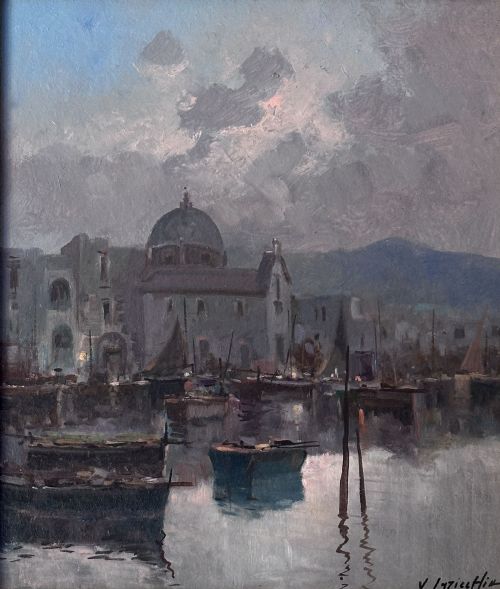
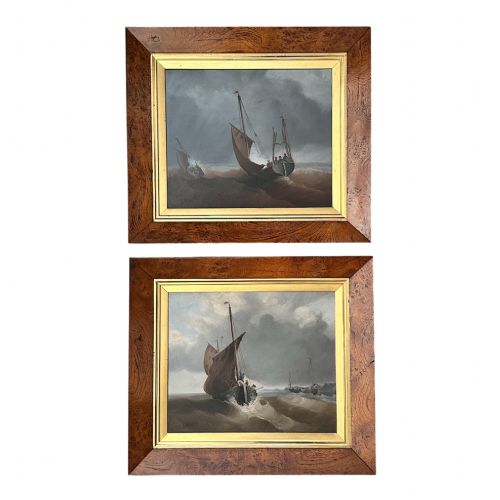
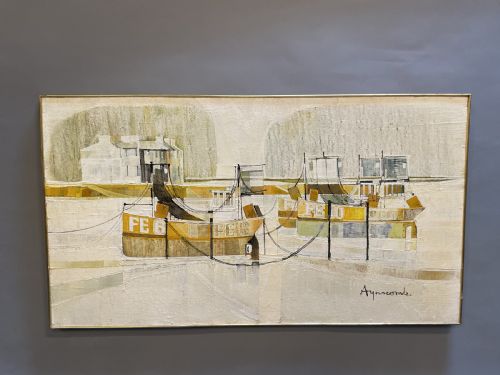
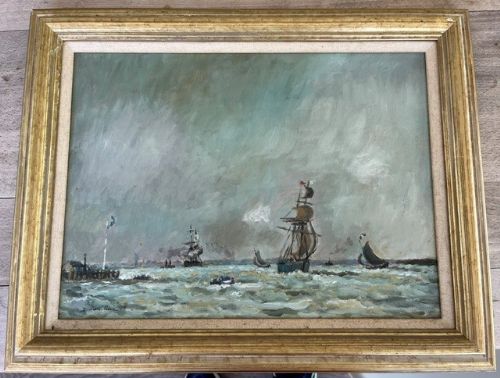
When you search for marine art on board, you enter a diverse world of coastal scenes, harbour views, and open water painted on firm wooden supports rather than stretched fabric. These works range from nineteenth-century Victorian depictions of bustling ports to mid-century French and British interpretations capturing calmer shores and fishing boats in choppy seas.
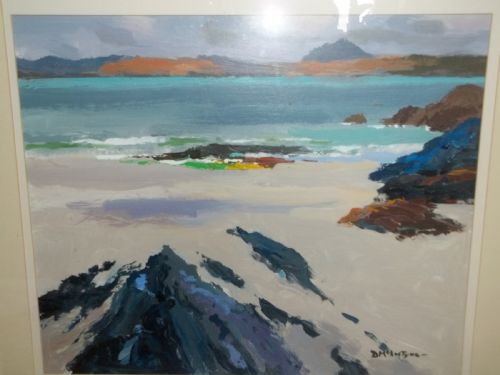
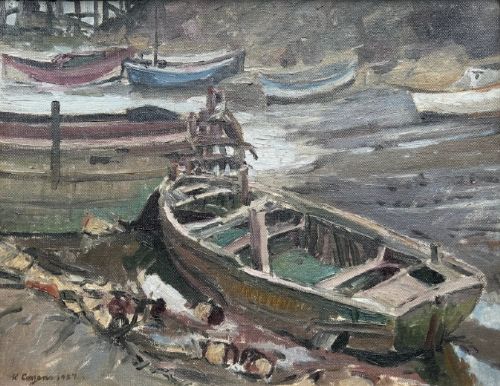
The pieces on this page lean heavily towards mid-century works and nineteenth-century oils, presenting everything from grand sailing ships to quiet coastal inlets. You will encounter framed oil paintings by named artists alongside atmospheric nineteenth-century nautical scenes and half hull ship models that record maritime history in three dimensions.
Subjects stretch across European waters, taking in Italian ports, French coasts, and familiar English harbours like Folkestone and Poole. Whether rendered in an impressionist manner or through thick impasto strokes, each piece records a distinct maritime moment on a rigid board foundation.
Materials and construction
Artists working in this genre relied predominantly on oil paint applied directly to rigid board or wooden panels. This solid substrate provided a stable surface that could handle heavy brushwork and impasto texture without the give associated with stretched canvas.
Frames frequently incorporated gilt wood to complement the painted scenes, giving the maritime subjects a distinct architectural finish. The combination of oil paint on a wooden base ensured longevity, protecting the coastal compositions through changing decades.
Marine Art on Board Retail Price Guide 2026
Typical asking prices for marine art on board among the pieces listed under this phrase on Sellingantiques today, from the lower quarter to the upper quarter. They describe what is for sale here now, not the wider market.
The selection includes traditional maritime scenes alongside mid-century French and British landscapes, plus half hull ship models.
Distinguishing quality in these works
The strength of a piece rests in the artist's handling of light and movement across the water, where confident brushstrokes capture the rhythm of choppy seas or the calm stillness of a shoreline. Finer works display a purposeful command of atmosphere, making the air and water feel convincing rather than static.
Condition and framing also play a central role, as well-preserved boards paired with sympathetic period frames elevate the overall presence of the painting. The distinction lies in how successfully the maker translates the sheer weight and shifting mood of the marine environment onto a solid panel.
Donald McIntyre·Kenneth Cozens·John Moore of Ipswich·James Fry·James Kyd·Micheal Matthews
The Marine Art on Board Glossary
- Board
- A rigid flat piece of wood or composite material used as a painting support instead of canvas. It offers a firm surface that resists sagging.
- Impasto
- Paint applied in thick layers that stand out from the surface, creating a tactile texture. This technique is often used to render churning waves or clouds.
- Half Hull Model
- A three-dimensional representation of one side of a ship's hull, mounted on a backboard. Shipbuilders used these to design vessel forms.
- Seascape
- A work of art depicting the sea, coastal views, or ships in water. It forms the core subject matter of maritime collections.
Marine Art on Board: Frequently Asked Questions
What is marine art on board?
These pieces comprise oil paintings and related works depicting coastal views, harbours, and ships executed on rigid wooden panels. They span from nineteenth-century Victorian scenes to mid-century modern interpretations.
Collectors prize them for their direct connection to maritime history and the varied ways artists capture the sea on a solid surface.
How should I care for these paintings?
Keep the works away from direct sunlight and dramatic shifts in temperature to protect both the wooden board and the oil paint. Gentle dusting of the surface and frame with a soft dry cloth is usually all that is required.
Avoid hanging them in damp areas like kitchens or unventilated bathrooms to prevent warping of the panel.
How do I identify the period?
Look closely at the framing style, the painting technique, and any inscriptions or signatures on the reverse of the board. Nineteenth-century pieces often feature heavier Victorian framing and darker, romantic palettes.
Mid-century works tend to embrace brighter coastal lighting and freer impressionist or post-war brushwork typical of the nineteen-fifties and sixties.
Where were these pieces displayed?
Historically, maritime paintings adorned the homes of sea captains, merchants, and coastal residents who felt a personal connection to the water. They also found a place in metropolitan parlours seeking the fresh atmosphere of the seaside.
Today, they suit studies, living rooms, and hallways where their nautical subjects can create a focal point.