

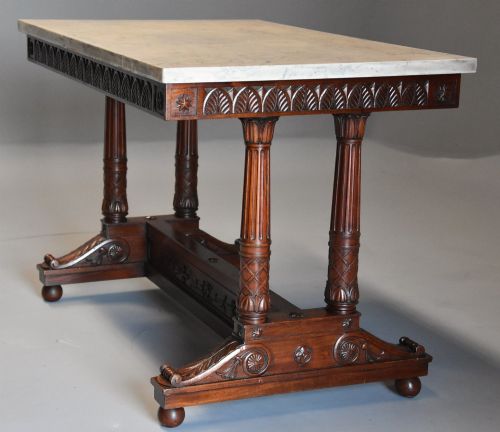
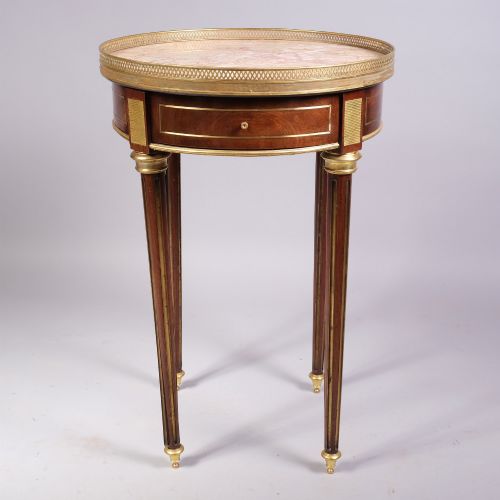
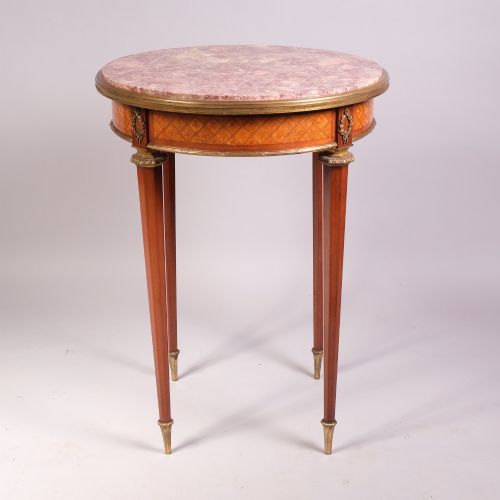
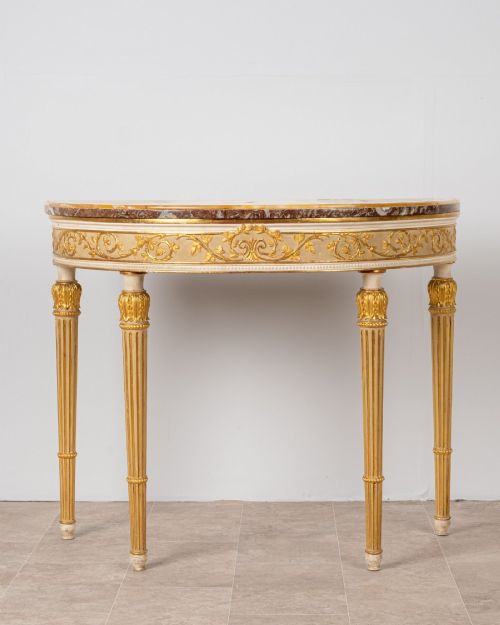
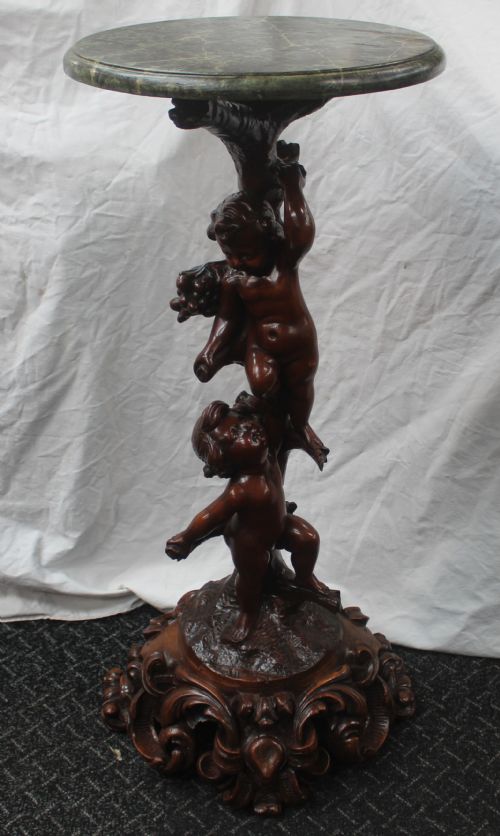
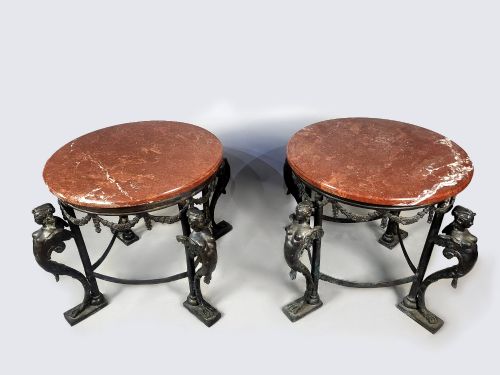
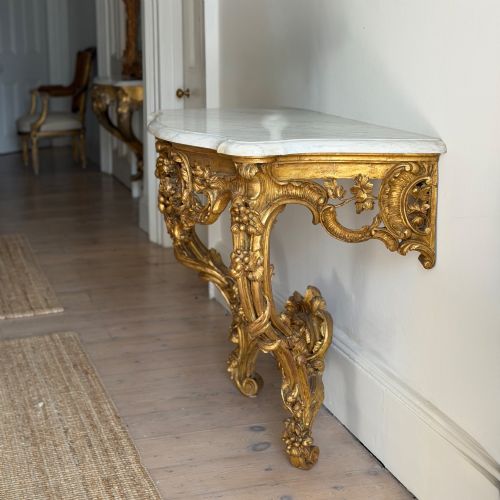
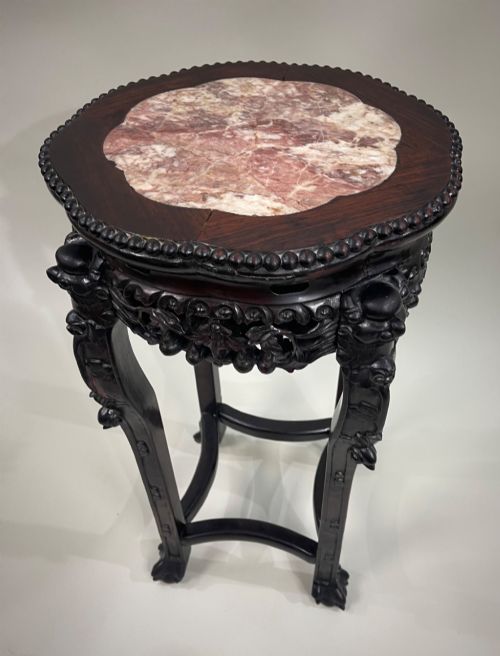
Marbled Top Side Tables
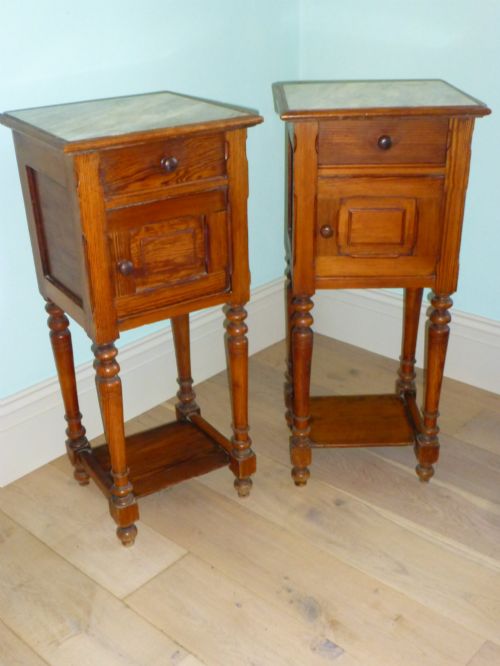
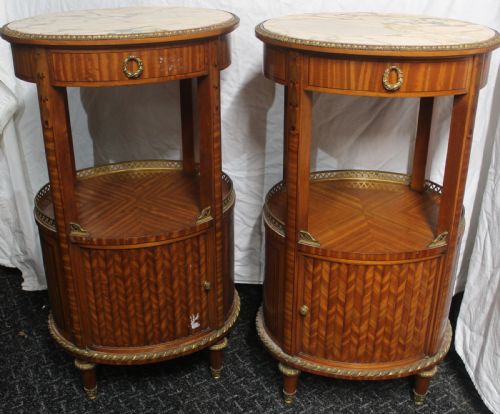
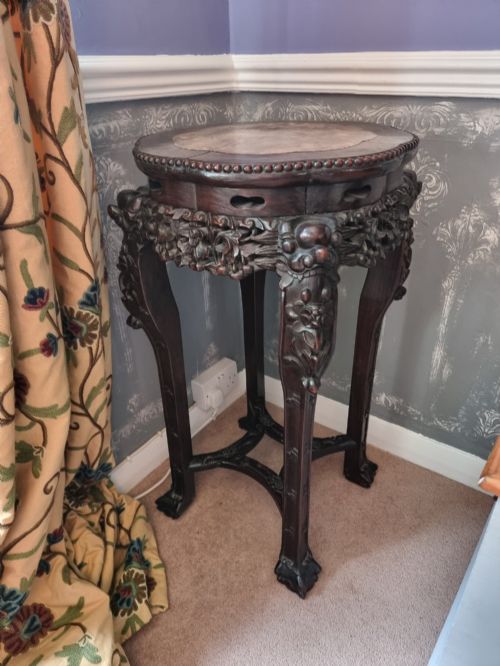
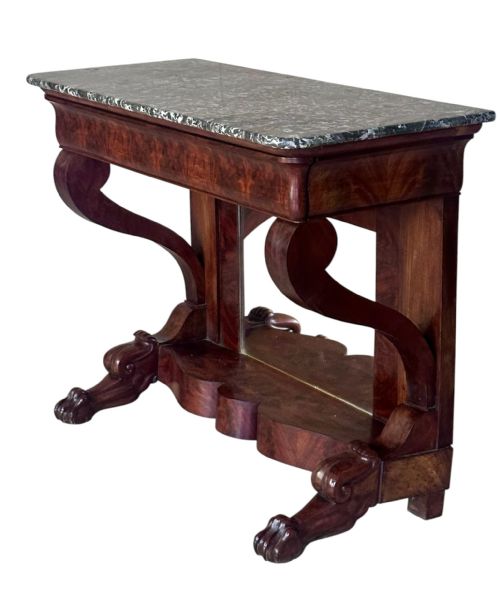
These marbled top side tables bring stone surfaces and timber frames together, offering durable ledges for lamps and decorative objects.
Marbled Top Side Tables
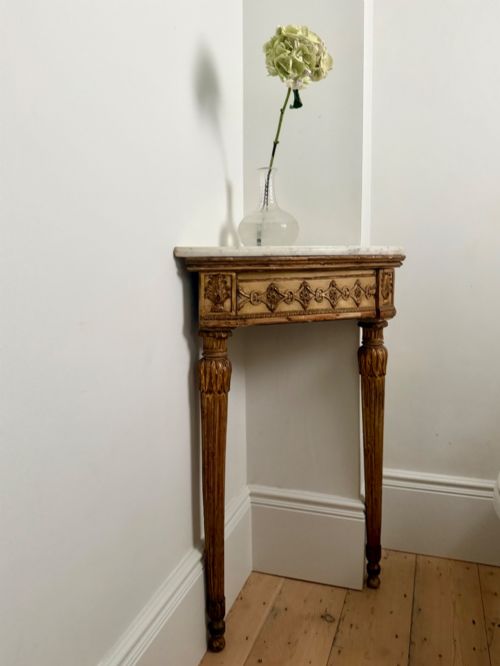
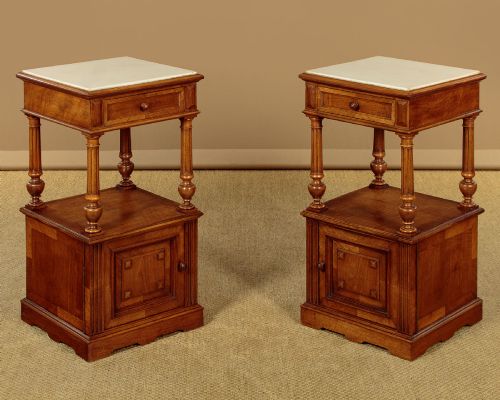
Marbled top side tables combine heavy stone surfaces with wooden or metal bases, taking the form of console tables, bedside cabinets, and occasional stands. These pieces originate from various periods including the eighteenth, nineteenth, and early twentieth centuries.
Continental European workshops, particularly French and Italian makers, produced many of the console and pedestal formats seen here, alongside British Victorian examples. Buyers frequently encounter console tables and bedside cabinets fitted with inset marble surfaces.
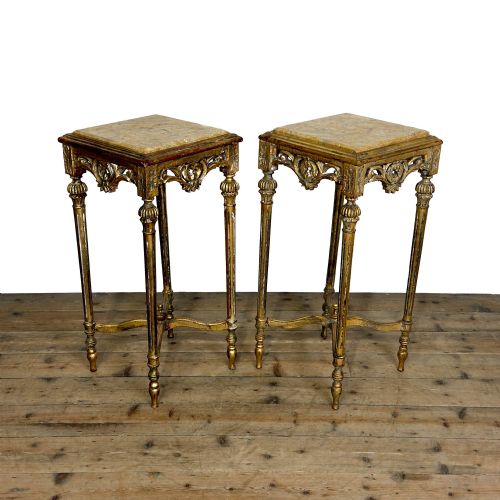
The selection ranges from low Chinese hardwood stands to ornate French giltwood consoles and Victorian mahogany washstands. Each piece integrates a stone slab into a supporting frame designed for domestic utility or display.
Materials and Construction
Carpenters constructed the supporting frames using timbers such as mahogany, walnut, kingwood, satinwood, and hardwood, often applying veneers or paint finishes. Ormolu, gilt bronze, and giltwood enrich the structural woodwork on continental and revival pieces.
Stone masons cut and polished marble slabs, including rouge, verde, and breccia varieties, to fit precisely into the wooden recesses of tables and cabinets. Metal elements like brass mounts and wrought iron provide additional structural reinforcement and decoration.
Marbled Top Side Tables Retail Price Guide 2026
Typical asking prices for marbled top side tables among the pieces listed under this phrase on Sellingantiques today, from the lower quarter to the upper quarter. They describe what is for sale here now, not the wider market.
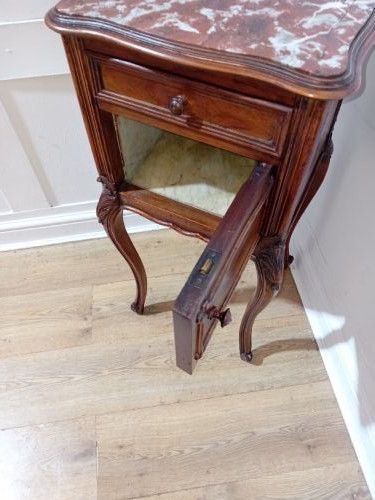
Several bedside cabinets secretly hide their marble slabs inside hinged lids, treating the stone like a precious basin cover.
Evaluating Quality
The refinement of the carving and the precision of bronze or gilt mounts distinguish finer examples from standard production. Artisans who executed detailed marquetry, crisp Ormolu castings, and balanced proportions achieved superior decorative results.
The selection and thickness of the marble slab, alongside the integration of the stone into the wooden chassis, indicate the standard of manufacture. Well-matched wood grains and solid carcase construction separate high-grade workshop output from simpler utilitarian items.
Gabriel Viardot·Maison Millet
The Marbled Top Side Tables Glossary
- Console table
- A table designed to stand against a wall, frequently secured with brackets or resting on front legs. These items often feature elaborate carved frames and marble tops.
- Gueridon
- A small circular table on a central pillar or multiple legs, originating in seventeenth-century France. This form serves well as a centre table or lamp stand.
- Ormolu
- Gilded bronze used for decorative mounts on furniture. Makers cast and chased these metal ornaments to enhance the corners and aprons of tables.
- Marquetry
- Inlaid patterns of wood veneers applied to furniture surfaces. Craftsmen used various tinted timbers to create geometric or floral designs.
- Demilune
- Half-moon shape, applied to tables built with a flat back for placement against a wall and a curved front.
Marbled Top Side Tables: Frequently Asked Questions
Where do marbled top side tables work best?
These tables fit well in hallways, beside beds, or against living room walls where a durable stone surface is useful.
The flat stone top resists liquid rings and heat, making them practical for holding lamps, drinks, or decorative vessels.
How do I care for the marble top?
Clean the stone surface with a damp cloth and mild soap, avoiding acidic cleaning products that etch polished marble.
Regular dusting keeps the surface clear, and minor stone maintenance requires specialised polishing powders rather than household detergents.
Are these tables sturdy enough for daily use?
Most examples rely on heavy stone slabs that add substantial weight to the overall structure, keeping them stable in domestic settings.
Console versions often secure to a wall for added safety, while freestanding centre tables balance stone weight over wooden or metal frames.
How can I tell the period of a table?
Examine the timber species, joinery methods, and decorative styles such as French Empire, Victorian, or Louis XVI.
Hardware details, the type of marble used, and underlying construction marks often provide clues to the decade of manufacture.