


Marble Topped Washstand
A marble topped washstand brings solid stone and timber utility to the bedroom, combining a practical splash surface with refined period carpentry.
Marble Topped Washstand
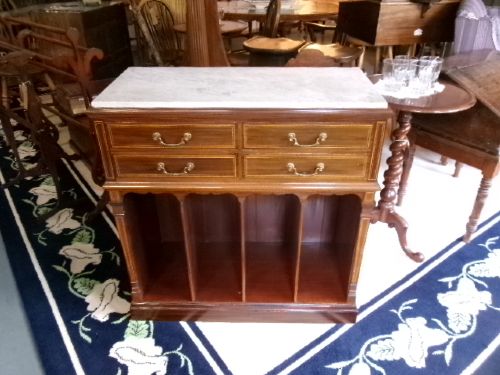
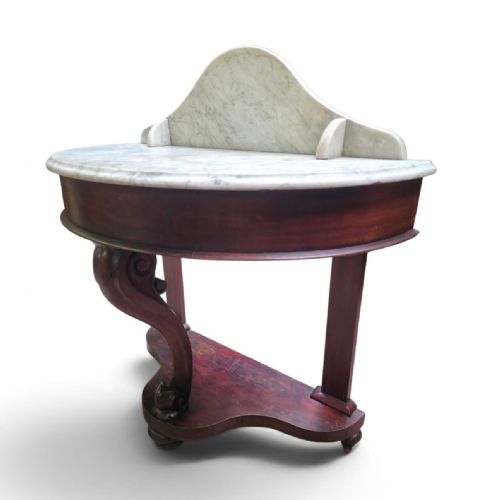
A marble topped washstand is a functional bedroom cabinet designed to hold basins, jugs and toiletries before plumbed bathrooms became standard. These pieces emerge chiefly from the Victorian and Edwardian periods, alongside nineteenth-century French workshops.
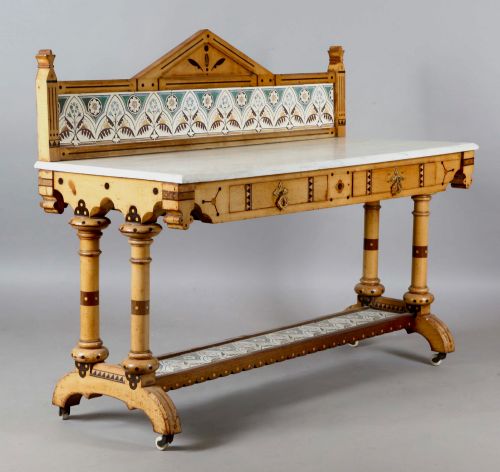
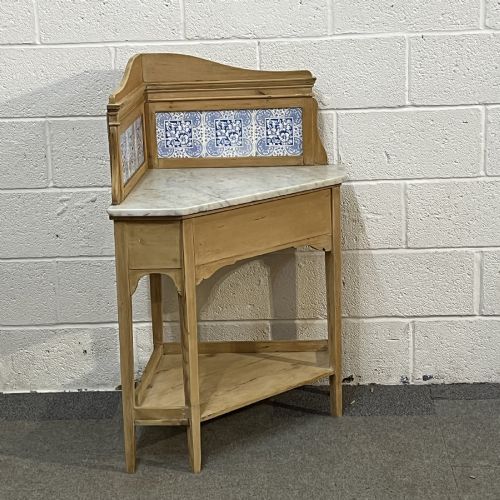
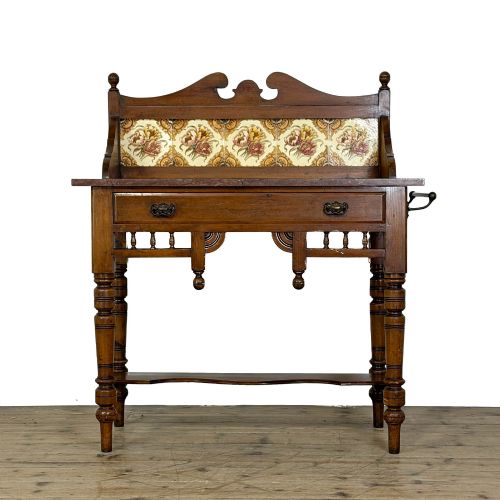
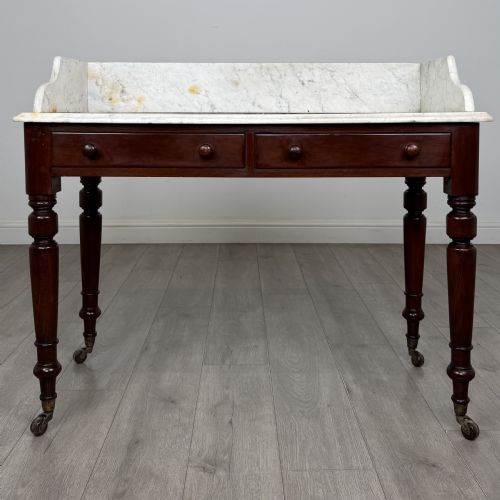
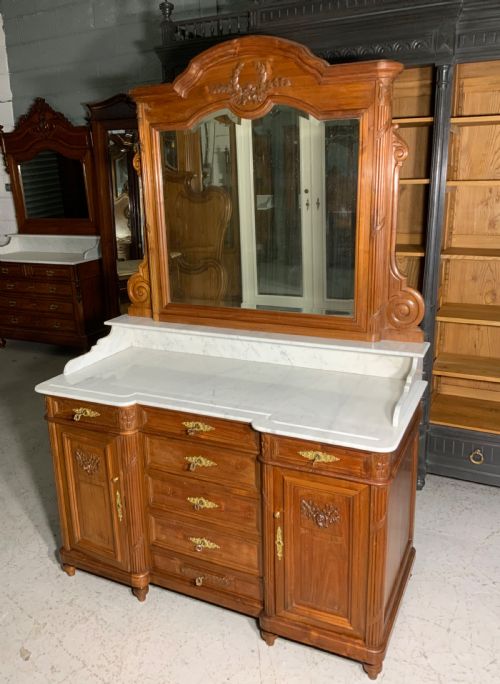
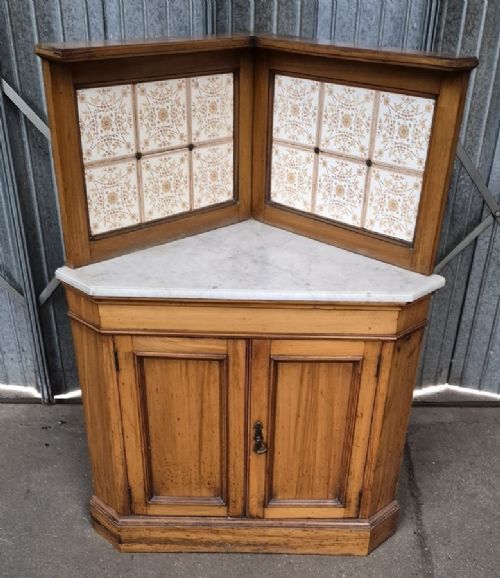
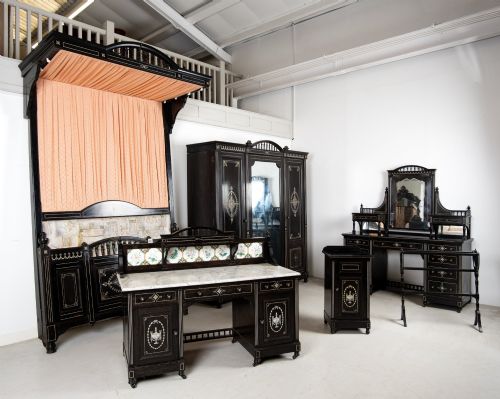
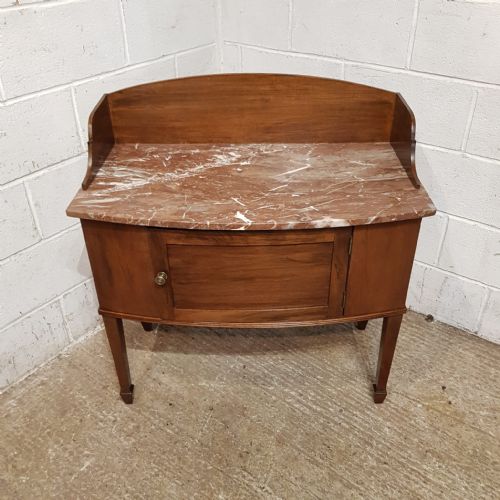
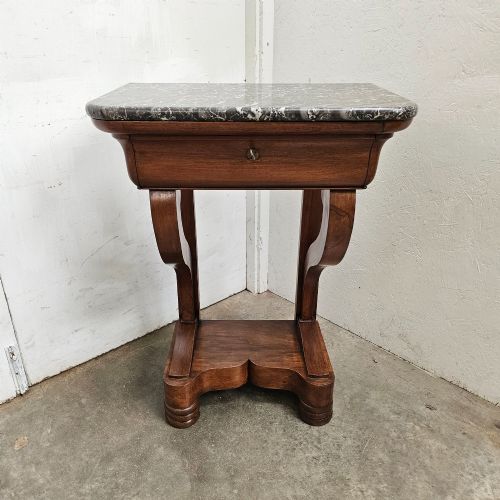
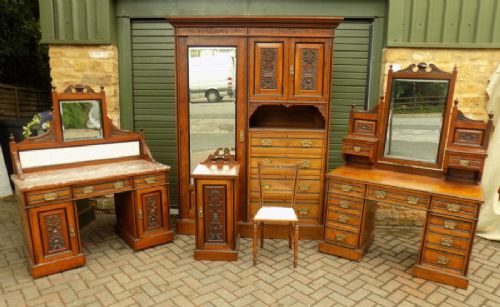
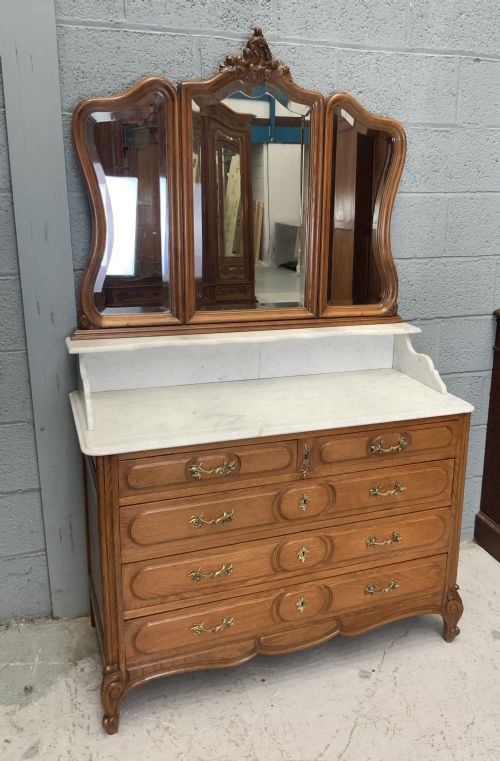
The form typically comprises a timber base fitted with a heavy stone slab on top, frequently accompanied by a low or high marble back splash. Buyers encounter straightforward rectangular cabinets, corner models, and elaborate examples integrated into larger bedroom suites.
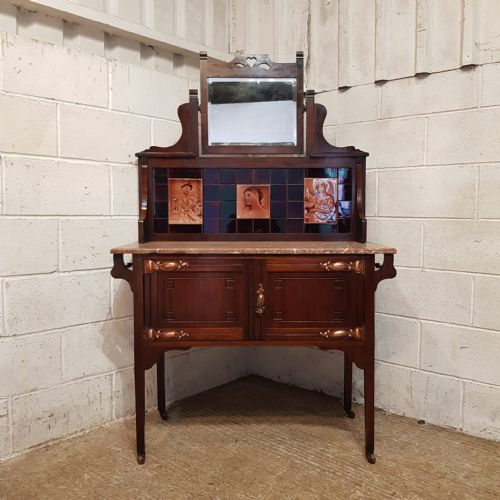
Timbers such as mahogany, walnut, oak, satinwood and pine form the primary carcases, occasionally dressed with ceramic tiles or brass hardware. The surviving examples reflect domestic routines from the eighteen-eighties through to nineteen-twenty.
Judging Quality
Quality rests on the selection of timbers and the density of the marble top. Finely figured burr walnut, rich mahogany and select satinwood separate standard utilitarian pieces from high-status commissions.
The integration of decorative details dictates distinction. Subtle inlay work, carved woodwork, matching ceramic tile inserts, and original brass fittings elevate the piece far beyond basic bedroom utility.
Marble Topped Washstand Retail Price Guide 2026
Typical asking prices for marble topped washstand among the pieces listed under this phrase on Sellingantiques today, from the lower quarter to the upper quarter. They describe what is for sale here now, not the wider market.
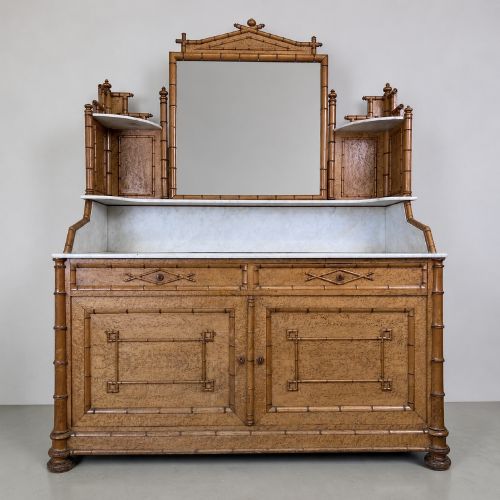
Some nineteenth-century makers carved innocent pine to masquerade as exotic bamboo, proving Victorians loved a clever botanical impersonation just as much as we do.
Walker And Sons·Maples·Gillows
The Marble Topped Washstand Glossary
- Splashback
- A vertical panel rising behind the stone slab to protect the bedroom wall from water splashes. It is frequently made of matching marble or inset with decorative ceramic tiles.
- Faux bamboo
- A decorative turning technique applied to wood to imitate natural bamboo stalks. It appears frequently on French and English pieces from the late nineteenth century.
- Duchess washstand
- A grander variant of the standard form, combining a dressing table arrangement with marble surfaces. These pieces often incorporate substantial mirrors and tier shelving.
- Rouge marble
- A deep reddish limestone with white or grey veining used for high-status table and washstand surfaces. It provides a striking contrast to dark mahogany or walnut frames.
Marble Topped Washstand: Frequently Asked Questions
What is a marble topped washstand?
A marble topped washstand is a nineteenth- or early twentieth-century bedroom cabinet built to hold washing basins and jugs before indoor plumbing. The stone top provided a water-resistant surface that resisted staining and moisture.
Cabinets below typically offered enclosed storage for chamber pots, linens, and personal washing accessories. They stand as robust examples of period domestic furniture adapted for modern decorative use.
How do I date a washstand?
Dating relies on timber choices, stylistic markers, and construction methods visible across the piece. Victorian examples often utilise heavy mahogany or burr walnut with elaborate carving.
Edwardian and later pieces frequently employ lighter satinwood or simpler Edwardian lines. French variants display distinct regional carving traits and characteristic rouge or white marble slabs.
How do I use one today?
These washstands function exceptionally well as hall tables, bathroom sink vanities, or serving surfaces in dining areas. The stone top naturally handles damp items and daily household use.
Cupboard space below provides concealed storage for modern items while maintaining the historical character of the room.
Are the marble tops attached?
Most marble tops on these washstands rest loose upon the timber carcase, held entirely by their own substantial weight. This design allowed makers to transport the heavy stone separately from the wooden frame.
Lifting the slab requires care and multiple people to avoid damaging the stone or the supporting wood underneath.