



Marble Topped Lockers
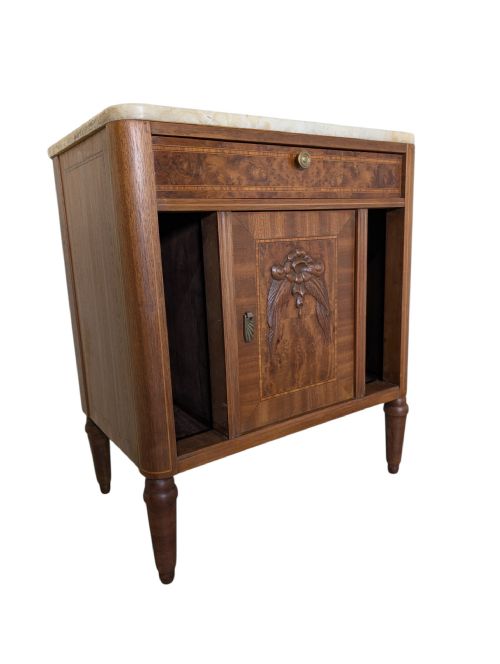
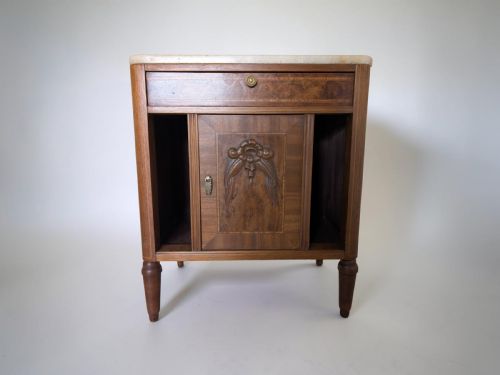
Marble topped lockers offer compact bedside storage topped with stone, bringing practical elegance and a durable surface to the bedroom.
Marble Topped Lockers
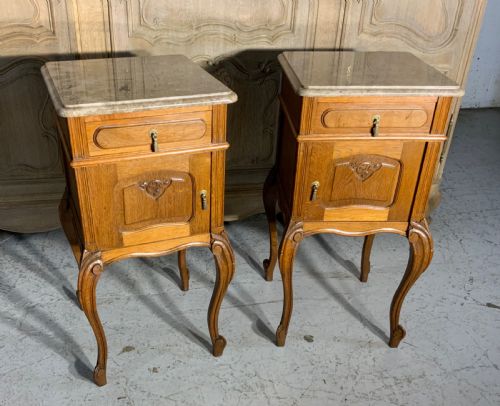
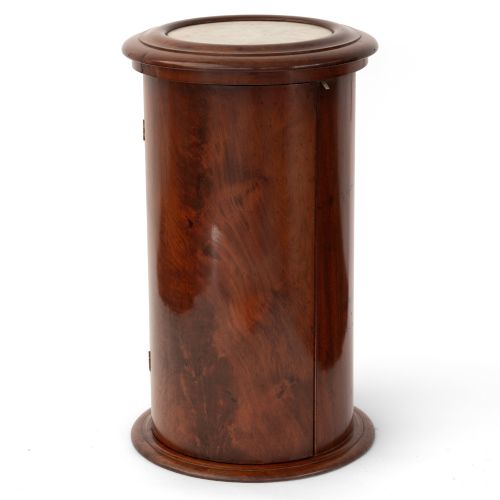
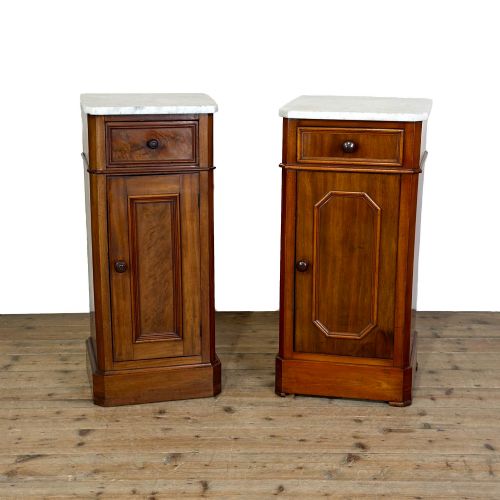
When searching for marble topped lockers, buyers find enclosed bedside storage units surmounted by stone slabs. These pieces function primarily as bedside cabinets, nightstands, and pot cupboards.
The selection here encompasses forms spanning the Victorian era, the nineteenth century, and early twentieth-century decades up to nineteen thirty. Continental pieces, particularly French and Swedish examples, appear frequently alongside British designs.
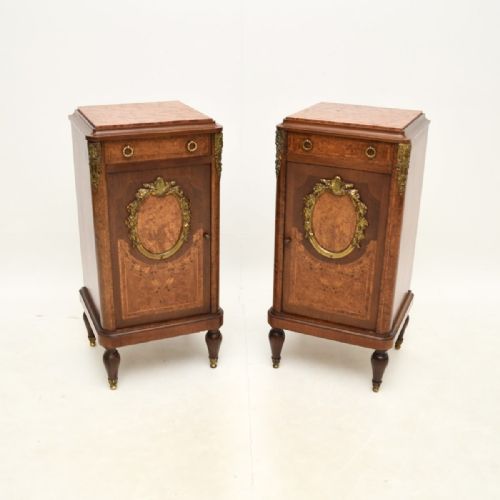
Cabinets arrive singly or in matched pairs, taking forms from Louis Philippe and Louis XVI revivals to Art Deco and Biedermeier styles.
How they were made
Carpenters built the carcases of these cabinets using hardwoods such as mahogany, walnut, oak, kingwood, and satin birch, often applying burr walnut and satinwood veneers to decorative surfaces. Natural stone slabs were then fitted precisely to the top of each wooden base to create a water-resistant and hard-wearing surface.
Brass mounts, handles, and galleries frequently provide functional and decorative accents across French Provincial, Empire, and Art Nouveau designs. Joinery methods of the nineteenth and early twentieth centuries ensure sturdy construction for daily bedside use.
Marble Topped Lockers Retail Price Guide 2026
Typical asking prices for marble topped lockers among the pieces listed under this phrase on Sellingantiques today, from the lower quarter to the upper quarter. They describe what is for sale here now, not the wider market.
One cabinet disguised its nocturnal duties so well as a musical box that guests might try to play a tune before washing.
What varies in quality
The grade of materials defines the upper tier of these pieces, distinguishing standard utility furniture from finer commissions. Selection of figured veneers like burr walnut or exotic timbers such as kingwood marks out superior workshops.
Design ambition separates basic cabinets from revival pieces displaying detailed brass mounts, shaped marble edges, and refined stylistic adherence to periods like Louis XVI or Art Deco.
The Marble Topped Lockers Glossary
- Pot cupboard
- A small bedside cabinet originally designed to house a chamber pot. These enclosed lockers typically feature a single door and interior shelf.
- Nightstand
- A small table or cabinet placed beside a bed for holding nighttime necessities. These pieces combine enclosed storage with a durable upper surface.
- Biedermeier
- A Central European style dating from the nineteenth century prioritising clean lines and domestic comfort over ornate decoration. Swedish examples in satin birch typify this restrained aesthetic.
- Kingwood
- A dense, richly figured timber imported from Brazil and utilised extensively in fine cabinet making. Its dark grain provides strong contrast in French revival pieces.
- Art Deco
- A design movement emerging strongly by nineteen twenty characterised by streamlined geometric forms and sleek surfaces. Cabinets from this period often display symmetrical veneers and stepped profiles.
Marble Topped Lockers: Frequently Asked Questions
What are marble topped lockers?
These pieces are compact bedside cabinets and nightstands featuring fitted stone tops above wooden storage cupboards. They provide a practical, wipe-clean surface alongside enclosed space for bedroom items.
The form spans multiple periods from the nineteenth century through the early twentieth century, incorporating various regional European styles and timbers.
How were they used historically?
Historically placed beside the bed, these lockers served to store chamber pots, water jugs, and personal items out of sight. The stone top provided a hygienic platform resistant to spills from water pitchers.
Over time their function shifted toward general bedside storage for books, lamps, and evening accessories while retaining the durable stone surface.
Are pairs common?
Matched pairs appear frequently alongside single cabinets within these listings. Pairs often originate from continental European bedrooms where symmetrical bedside furnishing was standard practice.
Matching pairs share identical timber grains, hardware, and marble colouration, though single pieces offer flexible placement options.
How do I identify the period?
Dating relies upon stylistic markers such as Empire brass mounts, Art Nouveau curves, or Art Deco geometry combined with construction timbers like oak, mahogany, or satin birch. Nineteenth-century pieces often display traditional cabinet joinery.
Earlier Victorian and nineteenth-century examples tend toward heavier proportions and revival carving, whereas nineteen twenties and thirties pieces favour geometric simplicity.