


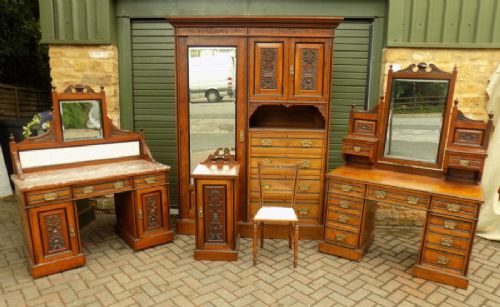
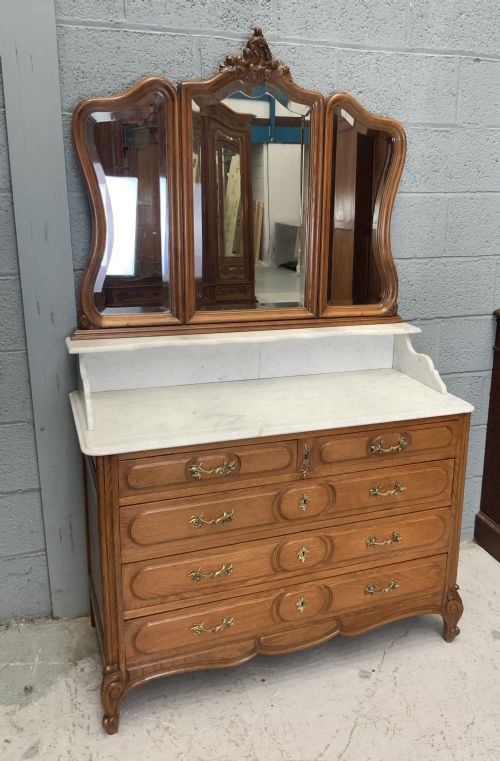


Marble Topped Dressing Chest
A marble topped dressing chest combines practical bedside storage with a robust stone surface designed to handle daily grooming.
Marble Topped Dressing Chest
A marble topped dressing chest is a substantial bedroom fixture that typically integrates drawer storage with a dedicated washing or dressing surface. Buyers searching for a marble topped dressing chest will encounter various regional interpretations spanning the nineteenth and early twentieth centuries.
The pieces on this page encompass traditional British Victorian forms alongside continental European designs like French Provincial and Louis XVI style commodes. These items frequently appear as part of larger bedroom suites or as standalone washstands and dressing tables.
Makers utilised diverse timber carcasses ranging from warm mahogany and burr walnut to carved oak and ash. The inclusion of a stone slab provided a durable, water-resistant top that distinguished these functional items from standard timber chests.
Materials and construction
Cabinetmakers constructed these carcases using solid timbers and veneers such as mahogany, oak, walnut, and ash, often adding brass handles and mirror glass attachments. The heavy stone slab sits atop the timber base to provide a stable, cool surface for washing and preparation.
Carving and styling details vary widely across the examples, incorporating Victorian revival motifs, faux bamboo turnings, and classical Louis XVI proportions. Structural integrity relies on sound cabinet joints and the precise fitting of the thick stone counters.
Marble Topped Dressing Chest Retail Price Guide 2026
Typical asking prices for marble topped dressing chest among the pieces listed under this phrase on Sellingantiques today, from the lower quarter to the upper quarter. They describe what is for sale here now, not the wider market.
Listings feature items spanning the nineteenth century through to the nineteen-twenties, incorporating French and British stylistic influences.
Assessing quality and craftsmanship
Quality reveals itself in the selection of timber figures, such as burr walnut or birds eye maple, and the depth of hand-carved detailing on the oak or mahogany frames. Superior examples display tighter joinery, well-matched drawer linings, and carefully finished brass hardware.
The stone itself forms a key element of the piece, with finer items featuring cleanly cut marble slabs that fit flush against the timber upstands and mirror supports. The overall harmony between the decorative style, whether French Rococo or Arts and Crafts, and the underlying woodwork determines the standing of the piece.
The Marble Topped Dressing Chest Glossary
- Commode
- A decorative chest of drawers or cabinet, often originating from French furniture traditions. In this context, it frequently describes pieces with integrated stone tops.
- Burr walnut
- A prized timber veneer obtained from the knot growths of walnut trees, displaying highly figured, swirling grain patterns. Cabinetmakers utilised this material on statement fronts.
- Washstand
- A piece of furniture designed to hold a basin and jug for washing, frequently adapted with stone surfaces to resist water damage. These items share functional overlaps with dressing tables.
- Arts and Crafts
- A design movement prioritising simple forms, visible construction methods, and local craftsmanship over industrial ornamentation. Pieces from this period focus on honest timber work.
Marble Topped Dressing Chest: Frequently Asked Questions
What is a marble topped dressing chest?
A marble topped dressing chest is a heavy bedroom furnishing that combines drawer storage with a durable stone counter. These pieces bridge the gap between traditional chests of drawers and washstands.
Cabinetmakers built them using various regional styles, incorporating mirrors, timber frames, and stone slabs to handle daily personal care.
Are these pieces heavy to move?
These items are exceptionally heavy due to the combination of solid timber carcases and thick stone slabs. The marble top is frequently removable to make transport and repositioning more manageable.
Lifting the chest requires at least two people to prevent structural strain on the joints and prevent damage to the stone corners.
How do I date a dressing chest?
Dating relies on observing construction methods, timber choices, and stylistic cues like Victorian carving or Arts and Crafts simplicity. Secondary woods inside the drawers and the type of fixings also offer clues to the era of manufacture.
Comparing the decorative hardware and mirror framing styles against established historical periods helps narrow down the decade.