
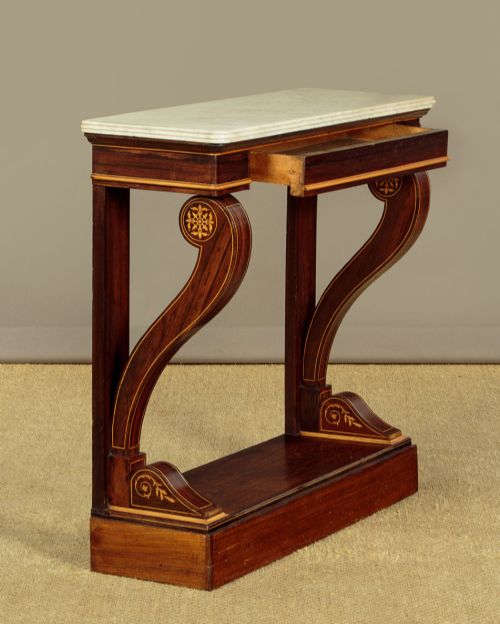
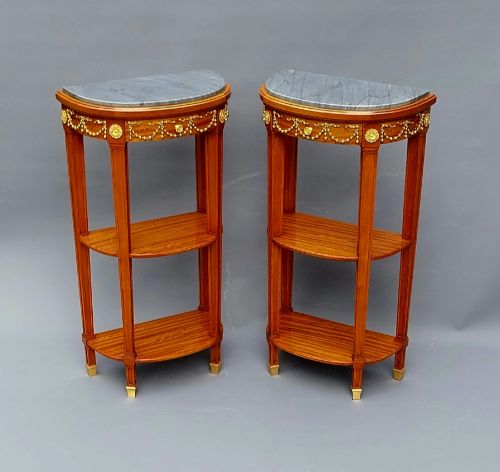
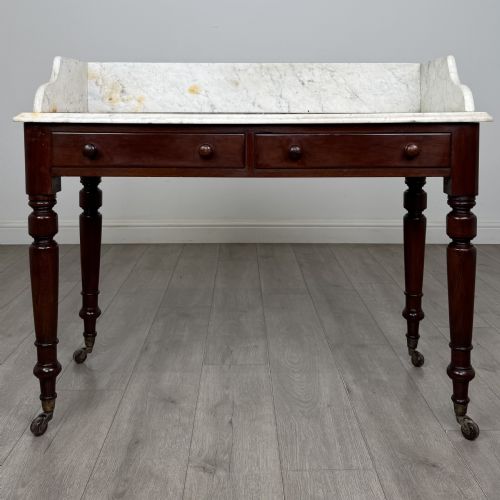
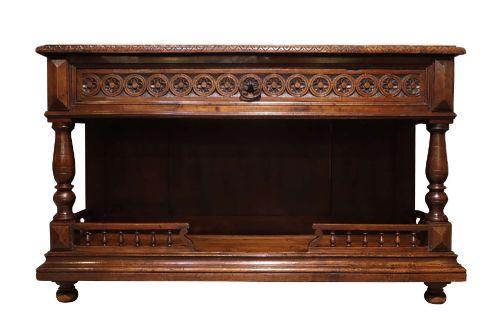
Marble Topped Console
A marble topped console brings solid stone and carved timber together to anchor a hallway or reception room.
Marble Topped Console
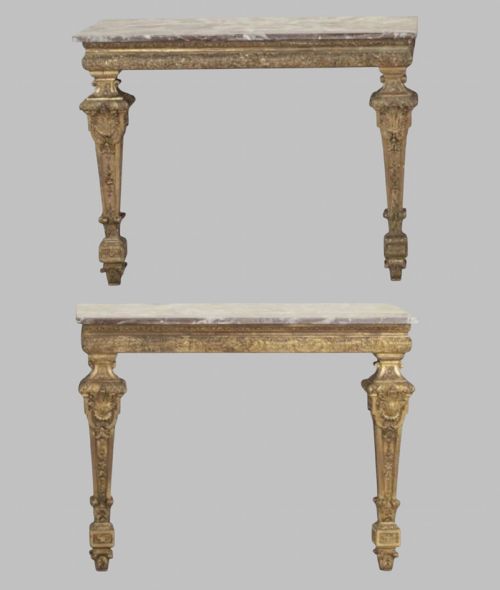
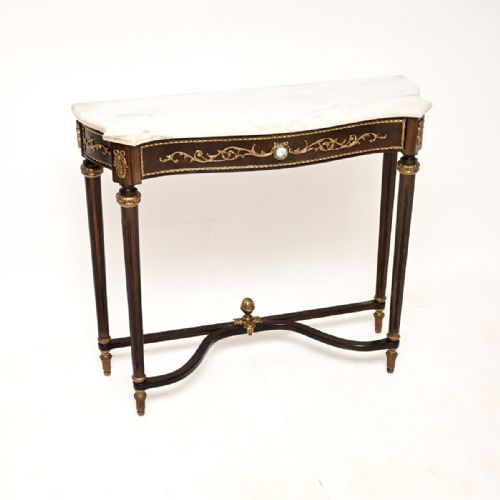
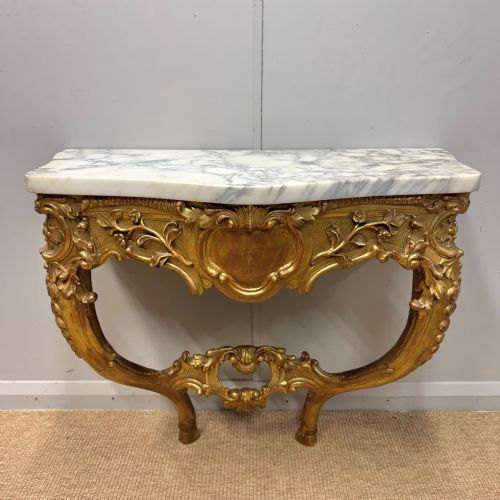
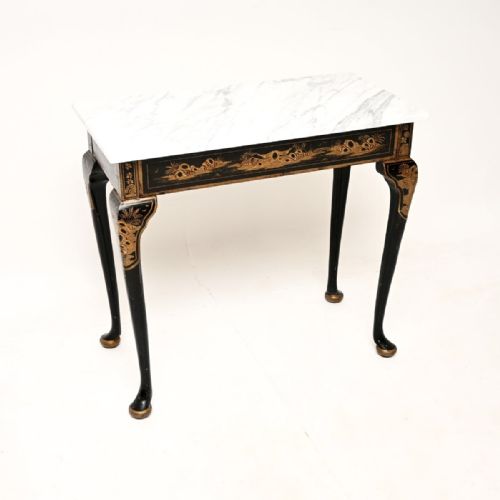
When you search for a marble topped console, you encounter tables originating from the eighteenth century through to the early twentieth century. The selection spans distinct regional expressions, notably Italian giltwood and French styles including Rococo Revival, Louis XV, and Empire.
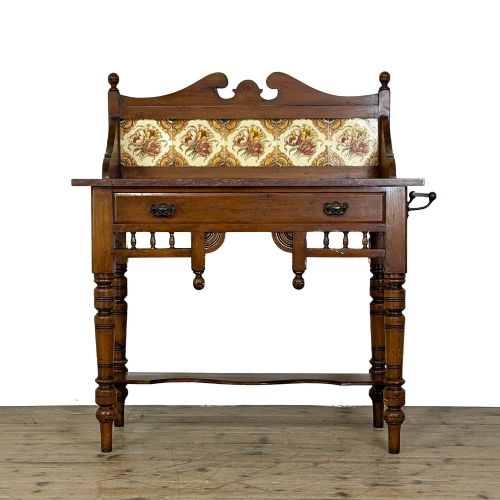
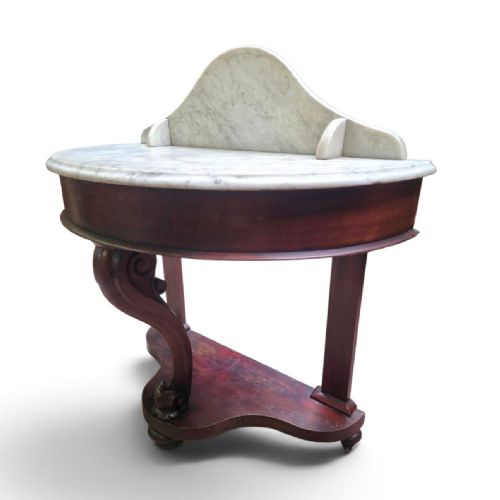
Beyond formal console tables, the evidence includes related forms such as side tables, centre tables, washstands, and enfilades. These pieces demonstrate how stone tops were integrated into diverse domestic furniture types across the Victorian, Edwardian, and Regency periods.
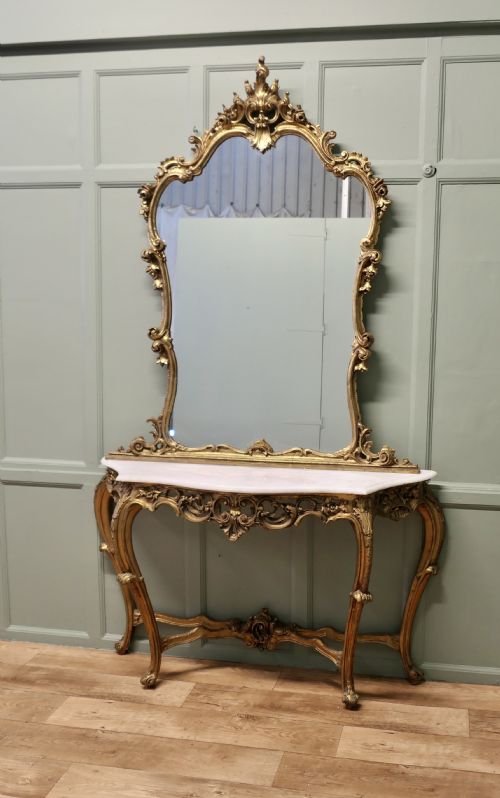
Italian and French workshops dominate the provenance, utilising carved giltwood, walnut, and mahogany structures beneath heavy marble surfaces. Buyers frequently meet demilune and serpentine shapes designed to fit flush against a wall.
Materials and construction
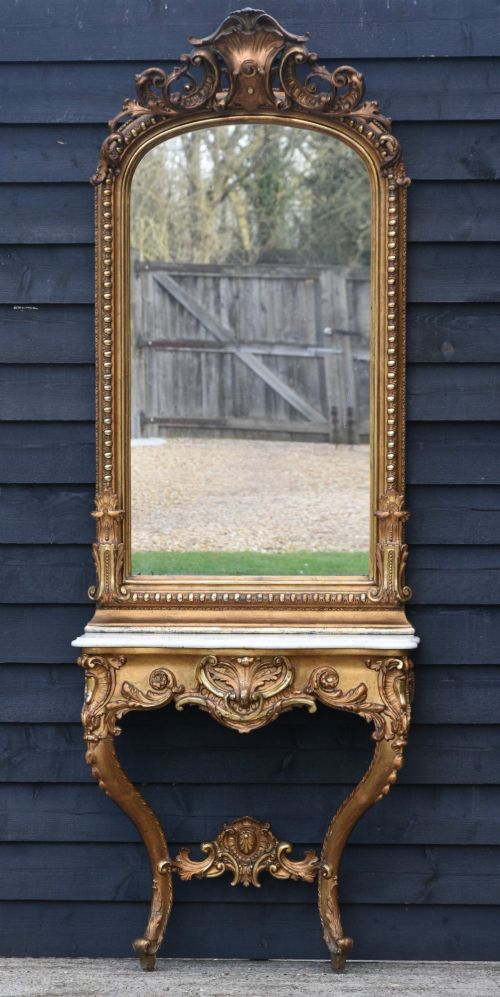
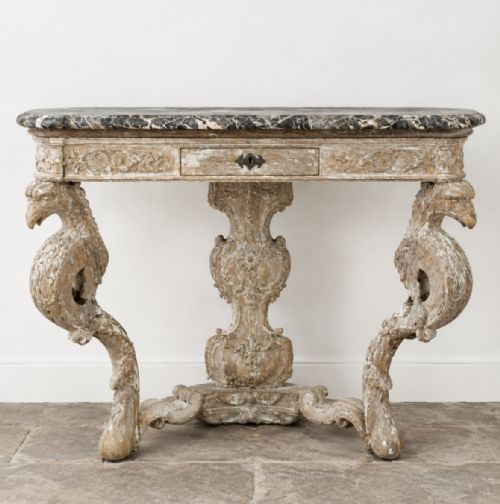
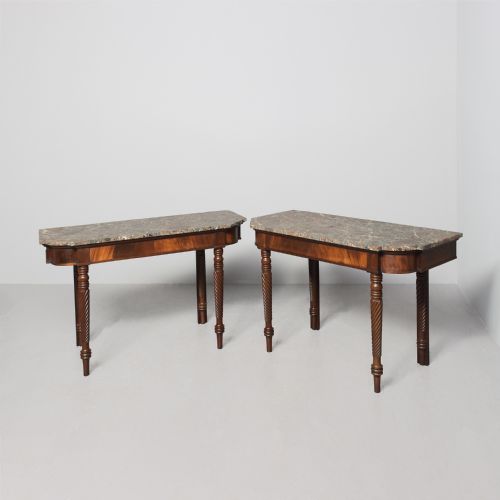
Carved timber frames in mahogany, walnut, oak, and giltwood provide the structural support for heavy stone surfaces. Giltwood and gesso pieces often feature intricate hand-carved ornamentation finished with gold leaf or silver gilt.
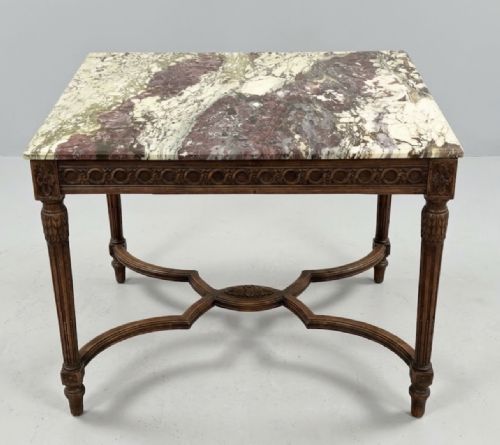
Marble slabs, including rouge, breccia, and onyx varieties, are shaped to fit the profile of the timber base, whether rectangular, demilune, or serpentine. Secondary materials like wrought iron and brass mounts appear in specific French and regional examples.
Joinery techniques reflect the period of manufacture, from eighteenth-century cabinet making to nineteenth-century industrial framing. Iron brackets and braces frequently stabilise heavier stone tops upon console bases.
Some nineteenth-century French tables arrived with mirrors attached, ensuring guests could check their cravats before entering the parlour.
Craftsmanship and finish
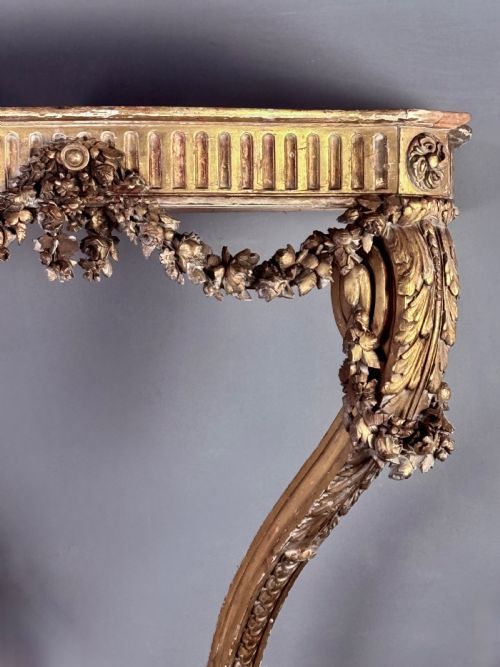
The refinement of the wood or giltwood carving dictates the standing of a piece, distinguishing fluid hand-carved acanthus and scrollwork from repetitive machine moulding. Crisp execution in the gilt layers and gesso preparation indicates superior workshop output.
The choice and thickness of the marble slab establish another tier of distinction, with figured stones like breche d'alep or violetta commanding greater presence than plain slabs. The precision of the fit between the stone edge and the timber frame measures the maker's skill.
Felix-Alfred Ternisien·Maison Millet·Amleto Bertoni
The Marble Topped Console Glossary
- Demilune
- Half-moon shape in furniture design. This curved profile allows console tables to sit compactly against flat walls.
- Giltwood
- Timber coated with fine gold leaf over a prepared gesso ground. It provides a brilliant reflective surface on formal eighteenth and nineteenth-century frames.
- Serpentine
- A line of furniture front that curves inward centrally and outward at the sides. It requires advanced timber shaping skills.
- Enfilade
- A long sideboard or cabinet designed for formal dining rooms. These pieces frequently incorporate marble tops above panelled doors.
- Breccia
- A composite marble formed from angular rock fragments embedded in a fine-grained matrix. It displays a highly variegated pattern across the tabletop.
Marble Topped Console: Frequently Asked Questions
Where should I place a console table?
These tables suit hallways, entrance foyers, and living rooms where surface space is required against a flat wall.
Their shallow depth ensures they do not obstruct walkways while providing a solid platform for lamps or decorative objects.
How do I clean a marble top?
Use a damp cloth with mild, pH-neutral soap to wipe down the stone surface.
Avoid acidic cleaners and harsh chemical solvents that can etch or dull the polished marble finish over time.
Are these tables heavy?
The combination of dense timber frames and thick stone slabs makes these pieces substantial in weight.
Two people are typically required to lift and position them safely within a room.
Can I use a washstand as a console?
Washstands share the same basic construction of a timber base and marble top as console tables.
Their proportions and heights allow them to function effectively as narrow serving or hall tables in modern interiors.