
Marble Topped Console Table
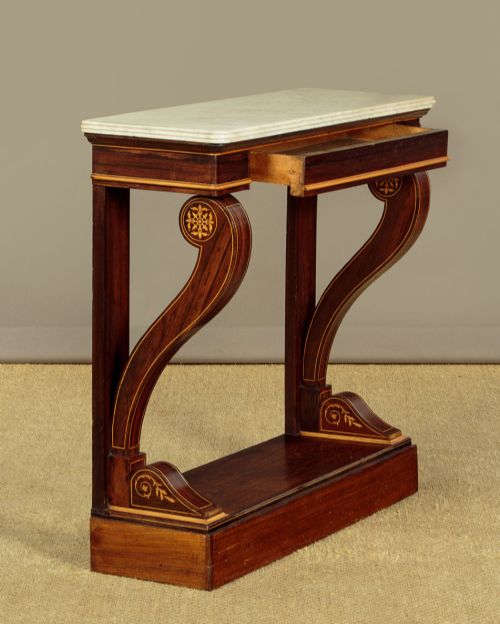
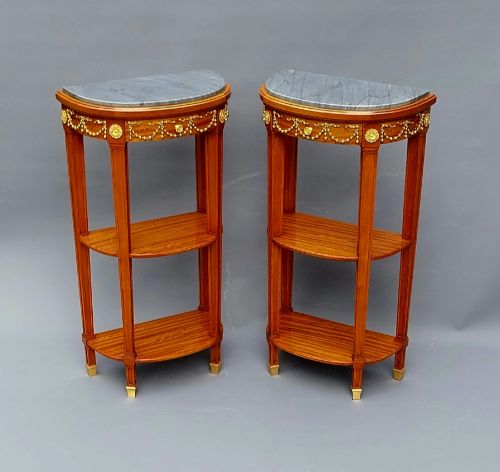
A marble topped console table brings structural stone and refined woodwork together against a wall, offering a surface for display that anchors a room.
Marble Topped Console Table
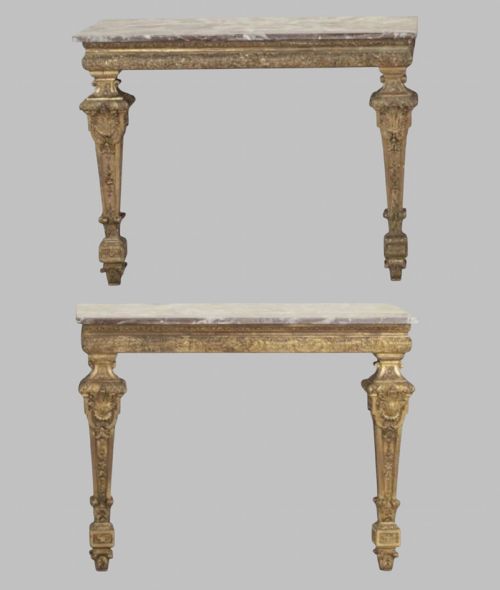
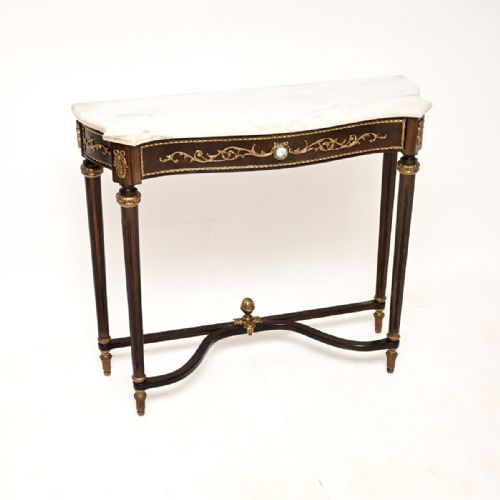
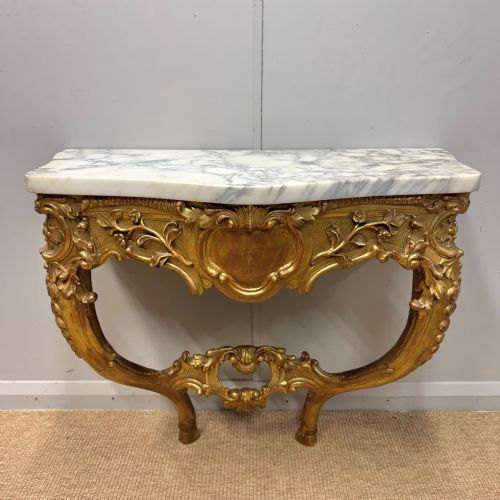
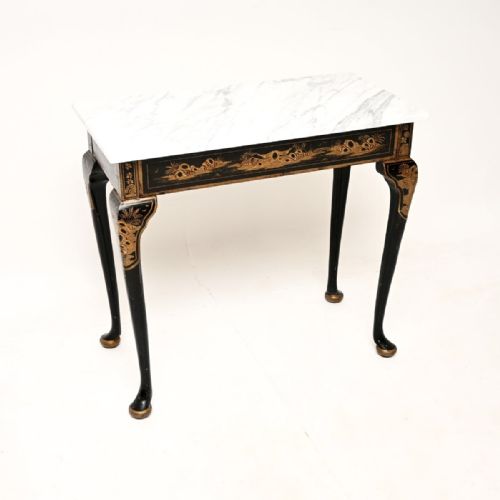
A marble topped console table combines a heavy stone slab with a wooden or iron base designed to stand against a wall, frequently seen in eighteenth and nineteenth-century European interiors.
The most common examples on this page hail from French and Italian workshops, spanning neoclassical, baroque, and Victorian periods with rectangular or serpentine shapes.
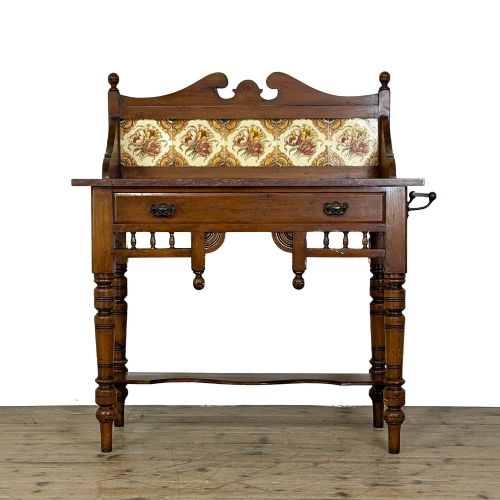
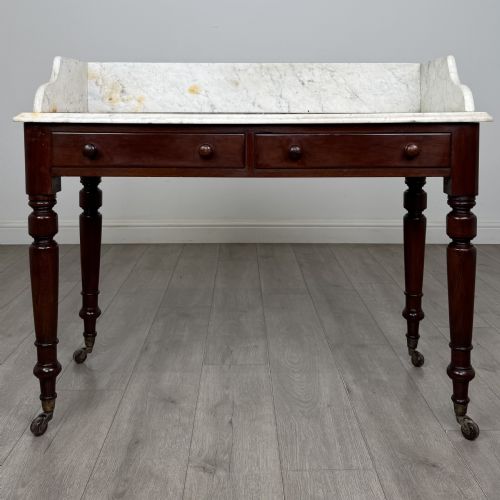
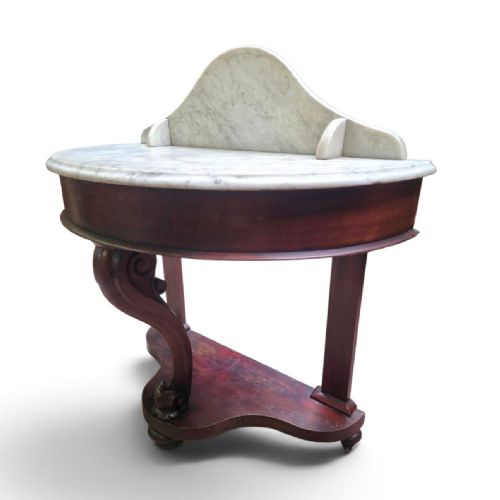
While primarily built as decorative side or pier tables for formal reception rooms, similar forms served practical functions as washstands or serving tables.
How They Were Made
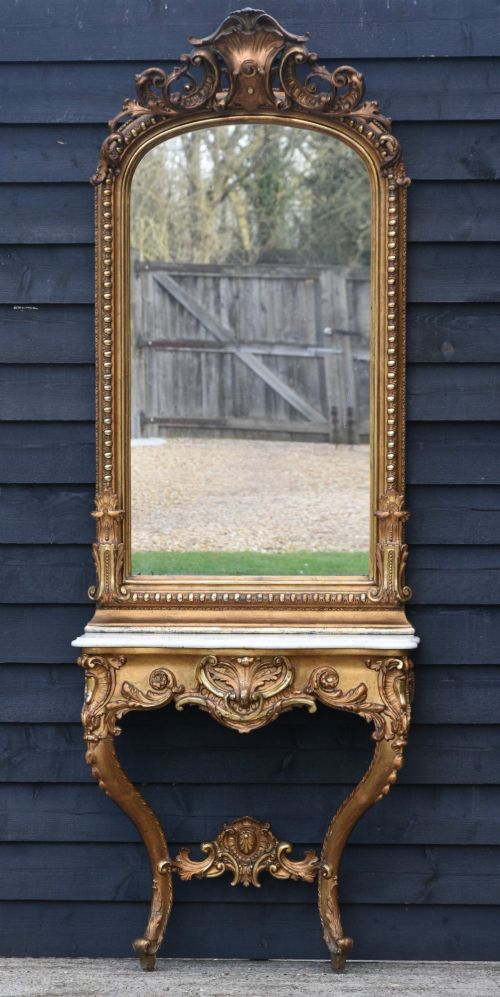
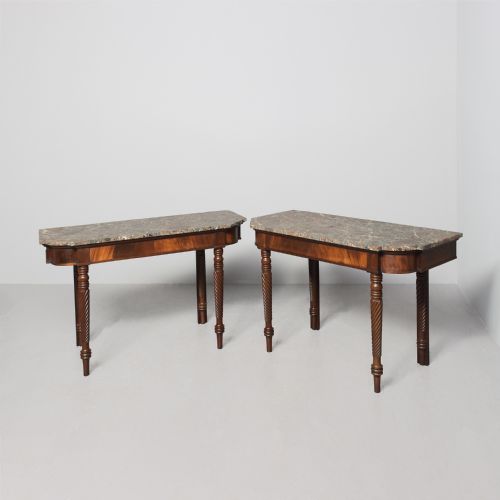
Carpenters and cabinetmakers utilised dense timbers such as mahogany, walnut, and oak, alongside wrought iron for structural frames, frequently applying gold leaf, gesso, or paint to wooden surfaces.
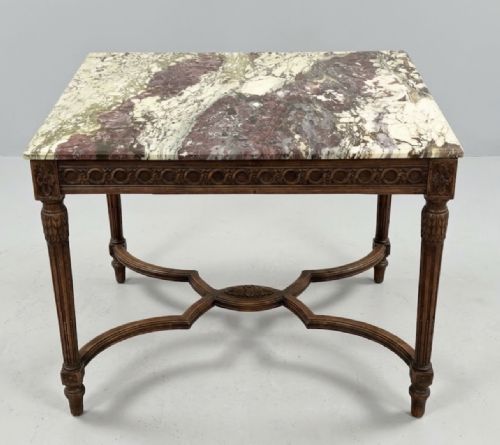
Slabs of marble, including Carrara and figured varieties like breche d'alep, were cut and polished to fit precisely over the wooden or metal base, sometimes resting on top without permanent fixings.
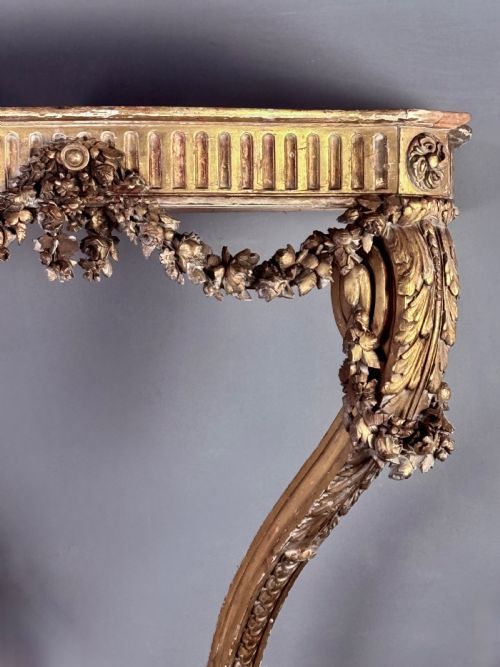
Carvers shaped elaborate giltwood and gilt-bronze mounts in French Empire, Rococo, and Neoclassical styles to adorn the aprons and legs.
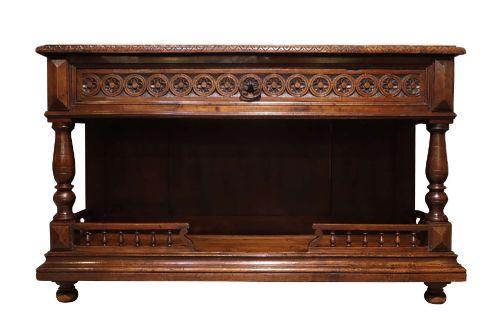
Some butcher tables snuck into the lineup, trading formal gilded parlours for heavy chopping blocks.
What Varies in Quality
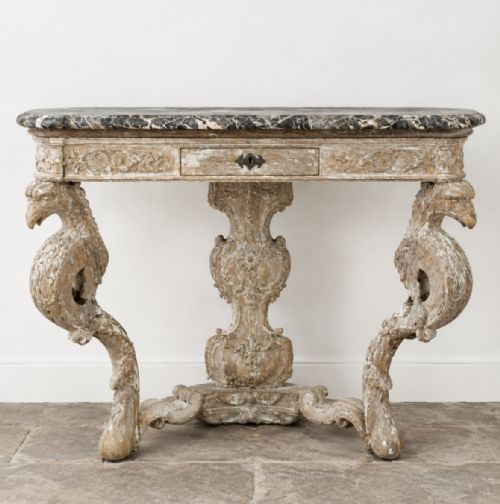
The sophistication of the hand-carving on the wooden or giltwood frame distinguishes standard production from exceptional pieces, particularly in the depth and fluidity of floral or scroll motifs.
The selection and thickness of the marble slab matter greatly, with figured or coloured stones indicating higher ambition than plain white slabs.
Makers' signatures or stamps from recognised Parisian workshops or cabinetmakers elevate the historical importance of a piece considerably.
Maison Millet·Amleto Bertoni·Krieger Paris
The Marble Topped Console Table Glossary
- Console table
- A table designed to stand flat against a wall, historically secured with wall brackets or resting on front legs.
- Giltwood
- Timber coated with a thin layer of gold leaf over a prepared gesso ground, common in eighteenth and nineteenth-century decorative frames.
- Serpentine
- A furniture front or marble top curving inward centrally and outward at the ends in a gentle 'S' shape.
- Pier table
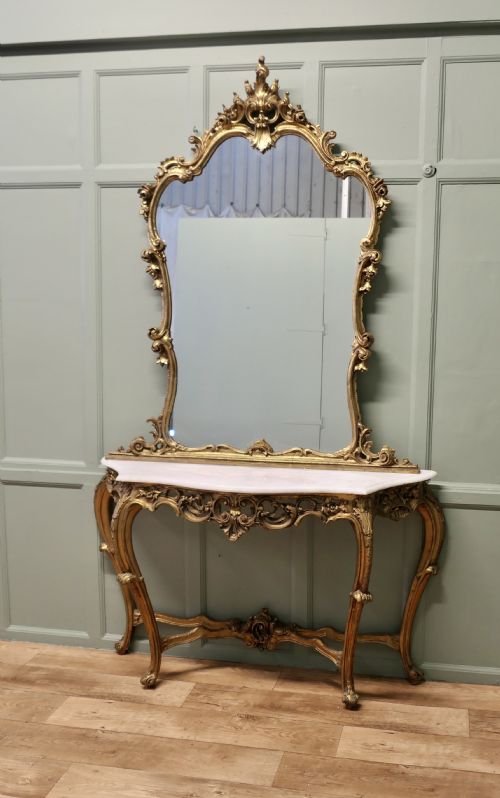
- A table specifically built to stand against the wall space or pier between two windows, often paired with a matching mirror.
- Ormolu
- Cast bronze mounted with a fine gold-mercury amalgam finish, frequently utilised on French furniture frames.
Marble Topped Console Table: Frequently Asked Questions
Were these tables attached to walls?
Many historical console tables were constructed with only two front legs, requiring iron brackets or wall fixings to remain upright and stable.
Four-legged freestanding variants also exist, though the two-legged form designed to anchor against a wall remains characteristic of the type.
How do I care for the marble top?
Marble is a porous stone that stains easily from acids, oils, and coloured liquids, requiring prompt wiping with a damp cloth and mild soap.
Avoid placing acidic items directly on the stone surface to protect the polished finish over decades of daily use.
Where should I place a console table?
These narrow tables suit entrance halls, narrow corridors, and living rooms where floor space is limited yet a display surface is desired.
They sit comfortably beneath large mirrors or paintings, echoing the traditional eighteenth-century arrangement in formal reception rooms.
How do I identify a French piece?
French examples often display distinctive regional styling such as Louis XV curves, Ormolu mounts, or specific timber selections like burr walnut and mahogany.
Maker stamps on the wooden chassis or distinct proportions can further clarify continental origins.