



Marble Top Dining Buffet
A marble top dining buffet brings solid stone utility to the dining room, offering a durable surface for service that timber alone cannot match.
Marble Top Dining Buffet
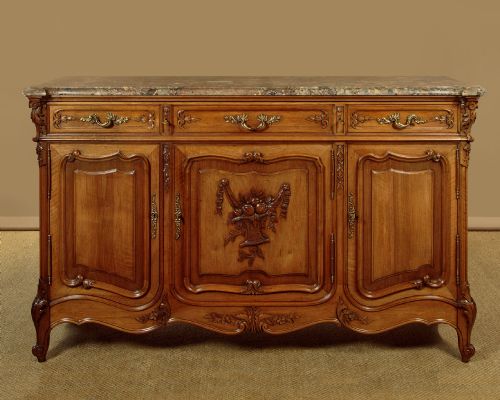
When you search for a marble top dining buffet, you are looking at substantial timber server units topped with heavy stone slabs designed for practical domestic service. These pieces combine the storage capacity of sideboards, credenzas, and servers with an impervious stone plateau suited to food and drink preparation.
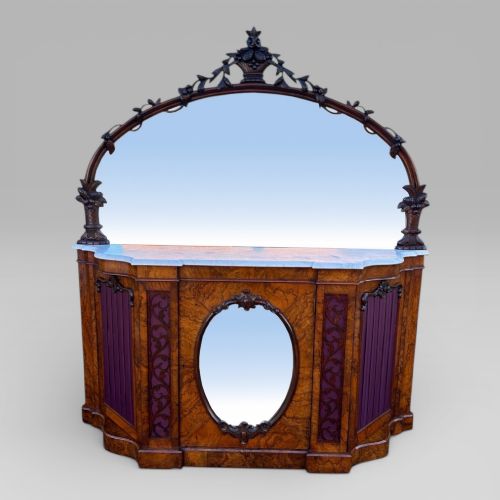
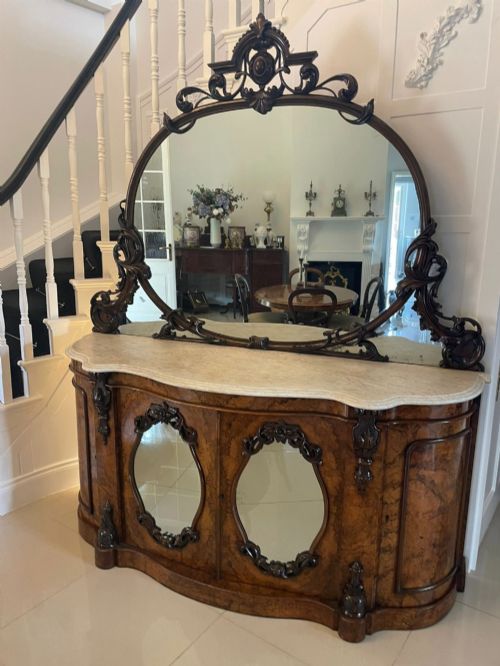
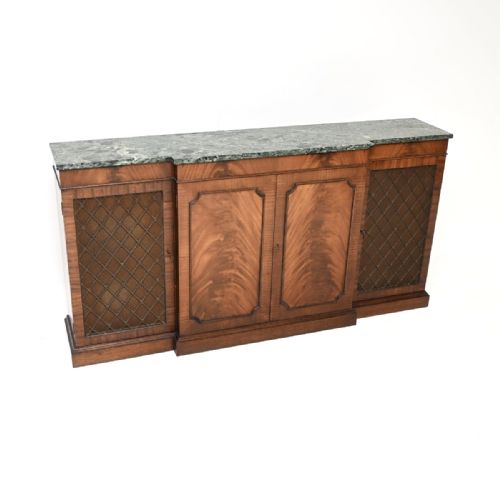
The versions you are most likely to meet on this page span the Victorian era through the early twentieth century, drawing on French Provincial, Louis Philippe, Regency, and Art Deco design vocabularies. Walnut, burr walnut, and mahogany form the primary timber carcases, often paired with mirror backs or grill fronts.
Origin and period dictate the character of these items, ranging from heavily carved mid-nineteenth-century Revival styles to cleaner geometric lines of the 1920s and 1930s. French examples in walnut and mahogany sit alongside robust Victorian credenzas, each providing a broad serving shelf of polished stone.
How they were made
Cabinetmakers constructed the carcases using dense hardwoods such as walnut, mahogany, and burr walnut, frequently applying intricate marquetry inlay to enhance the visual weight of the timber. Brass hardware, mirror glass, and woven metal grilles were integrated into doors and backsplashes to complement the primary wood.
Heavy marble slabs were selected to form the functional top, resting directly upon the timber framework to provide a cool, stain-resistant surface for dining service. Carved wooden ornamentation, shaped mirror frames, and moulded paneling were executed by hand to define the distinct period styles.
Marble Top Dining Buffet Retail Price Guide 2026
Typical asking prices for marble top dining buffet among the pieces listed under this phrase on Sellingantiques today, from the lower quarter to the upper quarter. They describe what is for sale here now, not the wider market.
Several pieces include brass grilles behind their doors, originally intended to let heat from the dining room circulate around stored linens.
What varies in quality
The selection of timber veneer determines much of the visual merit, with figured burr walnut and rich mahogany demanding greater skill in matching and application than plain surfaces. Finer examples display meticulous joinery in the carcase and refined hand-carving on the mirror frames and supports.
The quality of the marble itself, along with the thickness of the slab and the precision of its edge profiling, separates standard utility servers from grander reception room credenzas. Integrated details such as brass grilles, bevelled mirror glass, and complex marquetry inlay further elevate the distinction between pieces.
The Marble Top Dining Buffet Glossary
- Credenza
- A dining room side cabinet traditionally used for displaying plate and serving food, often featuring central cupboards flanked by curved glass or open shelves.
- Burr walnut
- A highly prized timber veneer taken from the knotted growths of walnut trees, displaying swirling, highly decorative grain patterns.
- Marquetry
- Decorative woodwork in which small pieces of various coloured veneers are fitted together to form geometric or pictorial designs on a furniture surface.
- Louis Philippe style
- A mid-nineteenth-century French design movement known for restrained curves, subdued ornamentation, and a focus on the natural beauty of the timber.
Marble Top Dining Buffet: Frequently Asked Questions
How do I clean a marble top?
Wipe the stone surface regularly with a soft damp cloth using neutral soap, avoiding acidic cleaners that can etch the polish.
Dry the marble thoroughly after washing to prevent water spotting and maintain the natural lustre of the stone.
Where should I place a buffet?
Position the piece against a dining room wall where the stone top can serve practical functions during meals and gatherings.
Ensure the location avoids direct, intense sunlight to protect polished timber finishes and delicate veneer work over time.
How do I date a sideboard?
Examine the secondary timbers inside drawers and the construction methods used for the carcase and back panels.
Compare stylistic elements such as mirror frame carving, foot shapes, and hardware styles against known period characteristics.
Are mirror backs original?
Most mirror backs integrated into Victorian and later credenzas are original components designed to reflect light and display decorative objects.
Check the silvering behind the glass and the rebate construction in the wooden frame to verify period execution.