


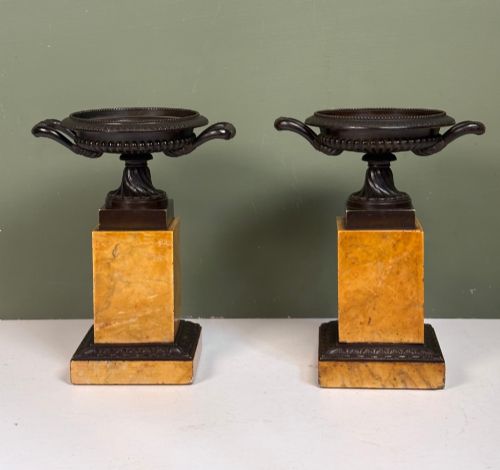
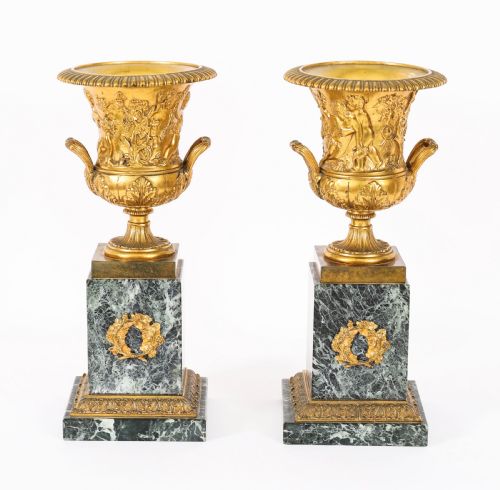
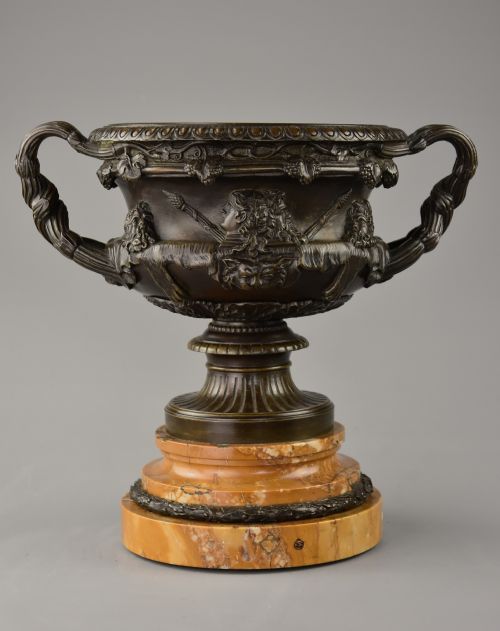
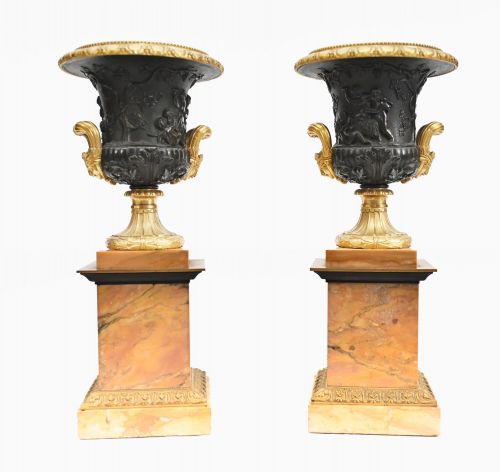
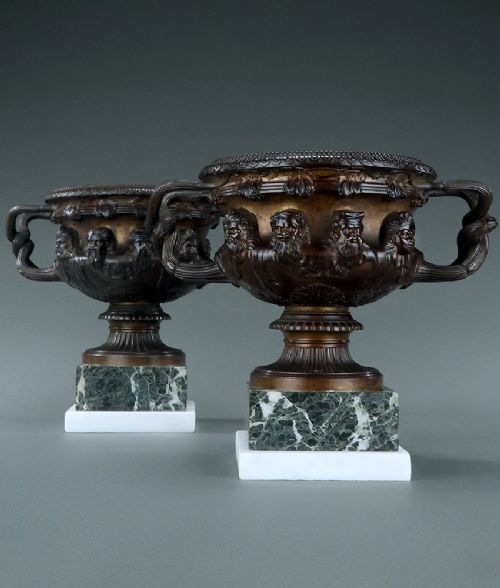


Marble Plinth Vase
A marble plinth vase combines carved stone and cast metal to recreate classical architecture in miniature.
Marble Plinth Vase
When you search for a marble plinth vase, you are looking at decorative urns and pedestals rooted in neoclassical design. These objects typically feature a carved stone body mounted upon a matching or contrasting architectural base.
You are most likely to meet nineteenth-century examples influenced by the Grand Tour or French taste. These pieces borrow the profiles of ancient vessels like the Warwick or Albani vases, translated into decorative domestic ornaments.
The materials span white marble, black marble, green marble, and Ashford black marble, often paired with bronze, gilt metal, or gilt bronze mounts. Forms range from campana shapes and tazza vases to dedicated urns set atop pedestals.
Materials and construction
The stone bodies are lathe-turned or hand-carved from solid blocks of marble, creating smooth profiles and recessed architectural plinths. Scagliola also appears as a composite material mimicking natural stone.
Metal elements are cast in bronze or gilt metal using traditional foundry methods. Mounts, handles, and decorative friezes are then attached to the stone, occasionally incorporating cherub or classical motifs.
Marble Plinth Vase Retail Price Guide 2026
Typical asking prices for marble plinth vase among the pieces listed under this phrase on Sellingantiques today, from the lower quarter to the upper quarter. They describe what is for sale here now, not the wider market.
Bronze cherubs occasionally cling to the rims, proving that even classical antiquity had a sense of mischief.
Judging quality and execution
Quality rests primarily in the crispness of the bronze chasing and the density of the marble. Finer examples show sharp relief in cast details like Bacchic masks and handles, rather than soft or smoothed outlines.
Selim Bright
The Marble Plinth Vase Glossary
- Grand Tour
- A period of travel undertaken by wealthy Europeans to study classical antiquity, generating a demand for miniature bronzes and stone vases. These souvenirs mimic famous ruins and sculptures found in Italy.
- Tazza
- A shallow cup or vase set upon a stem and a foot, often rendered in bronze and marble for display. These pieces function as decorative table ornaments.
- Ashford black marble
- A dark limestone from Derbyshire used for inlay and carved decorative objects, frequently associated with nineteenth-century makers. It takes a high polish and accepts inlaid mineral specimens.
- Scagliola
- A composite material made from pigmented selenite, glue, and plaster, applied to mimic genuine marble. Artisans carve and polish the mixture to replicate complex stone veining.
Marble Plinth Vase: Frequently Asked Questions
What is a marble plinth vase?
A marble plinth vase is a decorative urn mounted on a stone base, drawing inspiration from classical architecture and antiquities.
These pieces were produced primarily during the nineteenth century as ornamental objects for European interiors.
How were these vases used?
These vessels served as decorative mantel ornaments, centrepieces, and display items in nineteenth-century drawing rooms and libraries.
They were intended to signal classical learning and refined taste through references to ancient sculpture.
How do I style them at home?
Place these urns on sideboards, mantels, or dedicated pedestals where their silhouette and contrasting materials remain visible.
Keep surrounding decor simple to let the carved stone and bronze mounts command visual attention.
How do I tell periods apart?
Nineteenth-century pieces often display hand-chased bronze details and heavy, natural marble bases reflecting revivalist movements.
Later adaptations may incorporate lighter alloys or composite materials like scagliola rather than solid stone.