

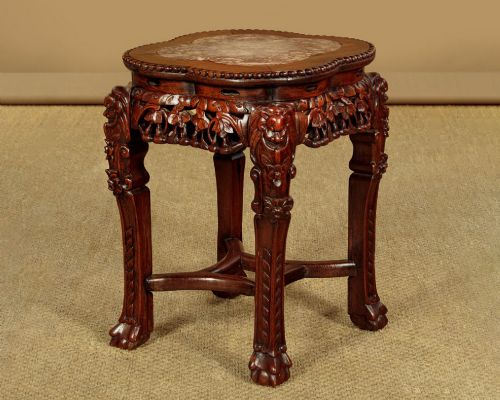

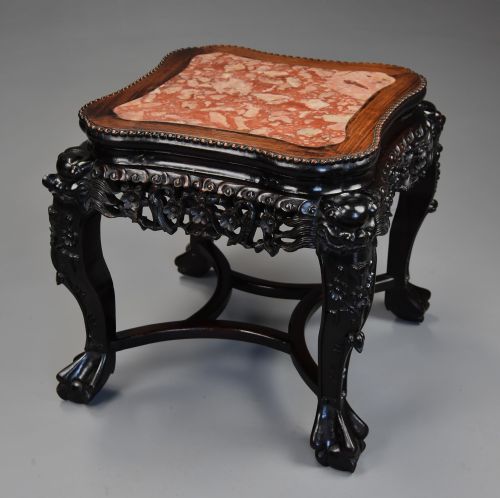
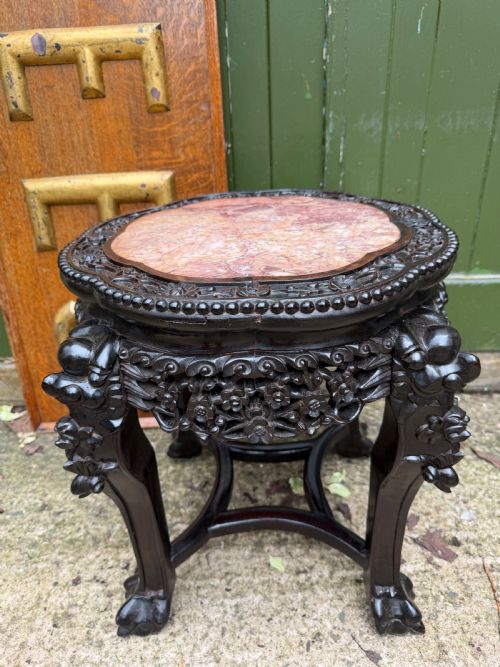


Marble Inset Stand
A marble inset stand brings solid timber and cool stone together to elevate plants, lamps and ornaments.
Marble Inset Stand
A marble inset stand combines a solid timber frame with a fitted stone surface to hold plants, vases and ornaments. These pieces span the nineteenth century, including Victorian and Edwardian iterations alongside earlier George IV examples.
The dominant form on this page is the Chinese export plant or jardiniere stand, frequently carved from dense exotic hardwoods during the late nineteenth century and the Qing dynasty. Alongside these sit French neoclassical and empire designs in mahogany, walnut and rosewood.
Makers produced these tables in various heights, ranging from low barrel-form stools to tall display stands. They function equally well as side tables and occasional tables in modern interiors.
How they were made
Carpenters constructed the frames using dense timbers such as mahogany, rosewood, padouk, ebonised wood and hongmu, often shaping and carving the wood with intricate detail. These sturdy structures provide the necessary support for heavy stone tops.
Workers inset polished marble slabs, including variegated rouge varieties, directly into recessed wooden tops to create a stable and heat-resistant surface. French examples incorporate brass and gilt elements alongside timber and marble.
Marble Inset Stand Retail Price Guide 2026
Typical asking prices for marble inset stand among the pieces listed under this phrase on Sellingantiques today, from the lower quarter to the upper quarter. They describe what is for sale here now, not the wider market.
Listings feature nineteen-century pieces alongside specific nineteenth-century years including 1890 and 1900, spanning Victorian and Edwardian periods.
What varies in quality
The refinement of the timber carving distinguishes finer examples from simpler production, particularly in the pierced work and floral motifs seen on Chinese export pieces. Crisply executed details indicate superior craftsmanship by skilled joiners.
The choice and figuring of the materials also dictate the tier of the piece, from highly grained rosewood and hongmu to uniform ebonised finishes. The quality of the marble insert, including its colouration and polish, completes the assessment.
The Marble Inset Stand Glossary
- Hongmu
- A dense, dark traditional Chinese hardwood frequently utilised for carved furniture and stands. It polishes to a deep lustre.
- Jardiniere
- A decorative container or stand designed to hold a plant or flower pot. These items often feature shaped marble tops to resist moisture.
- Padouk
- A heavy tropical hardwood known for its strength and rich reddish-brown colour. Makers selected it for substantial carved furniture.
- Etagere
- A set of open shelves or multi-tiered small tables used for displaying ornaments. Examples incorporate marble surfaces within timber frames.
- George IV period
- The stylistic era spanning the early nineteenth century, associated with figured rosewood and classical revival forms. Pieces from this time display refined cabinet-making.
Marble Inset Stand: Frequently Asked Questions
What is a marble inset stand used for?
These pieces traditionally served to display heavy ceramic planters, vases, lamps and ornamental objects in nineteenth-century interiors. The stone surface protected the underlying timber from water damage and damp soil.
Today they function effectively as lamp tables, side tables and bedside surfaces in contemporary rooms. Their compact footprints allow them to fit into narrow spaces while holding substantial decorative items.
How do I tell Chinese export stands apart from European ones?
Chinese export stands typically utilise dense Asian hardwoods like hongmu and padouk, featuring characteristic carvings and sometimes barrel or plant-form silhouettes. They frequently date to the Qing dynasty or the late nineteenth century.
European pieces from the same era generally employ mahogany, walnut or rosewood, following French neoclassical, empire or Edwardian design canons. These tend to rely on gilt bronze, brass mounts and polished veneers rather than deep wood carving.
Are all marble tops removable?
Most marble inserts sit snugly within a recessed wooden rebate carved directly into the frame of the stand. While they are often held in place purely by gravity and weight, they are fitted precisely to the surrounding timber.
Lifting the stone requires care, particularly on older or heavier items where tight tolerances keep the slab secure. It is best to leave the marble in place during normal handling and cleaning.
How do I care for the timber and stone surfaces?
The timber frame benefits from occasional dusting with a soft cloth and sparing application of appropriate furniture wax to nourish the wood. Avoid placing the stand in direct sunlight or near heat sources to prevent timber movement.
The marble insert requires only a damp cloth for cleaning, avoiding acidic or abrasive household cleaners that can etch or dull the polished stone surface. Using coasters prevents staining from condensation.