


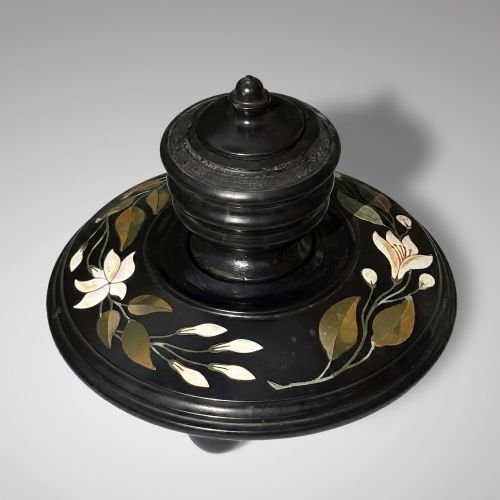


Marble Inkwell Stand
A marble inkwell stand brings stone and metal together on the desk, offering a weighty foundation for correspondence.
Marble Inkwell Stand
A marble inkwell stand is a substantial desk accessory designed to hold one or more inkwells alongside pen trays or candle holders. When you search for marble inkwell stand, you encounter pieces spanning the nineteenth century into the twentieth century, built for writing desks and library tables.
The objects on this page typically combine a turned or slabbed stone base with cast metal mounts, hinged lids, and glass or ceramic liners. Common forms range from simple rectangular trays in green onyx or Ashford black marble to elaborate French Empire and Art Nouveau desks stands featuring patinated bronze, gilt brass, ormolu, and hardstone inlay.
How they were made
The foundation of each piece relies on masonry and lapidary work, shaping natural stone such as marble, onyx, and lapis lazuli into plinths and wells. Stonemasons cut and polished these materials to create smooth writing surfaces and fitted recesses.
Metalwork complements the stone through sand-casting or lost-wax techniques in bronze, brass, and ormolu. Artisans then mounted these gilt or patinated metal figures, lion ornaments, and hinged inkwell lids directly onto the stone bases, sometimes securing them with threaded bolts.
Marble Inkwell Stand Retail Price Guide 2026
Typical asking prices for marble inkwell stand among the pieces listed under this phrase on Sellingantiques today, from the lower quarter to the upper quarter. They describe what is for sale here now, not the wider market.
Napoleon occasionally glares across the desk from his own cast-bronze bust atop an ink stand.
What varies in quality
Quality reveals itself in the grade of the stone and the crispness of the metal casting. Heavy, finely figured marbles and richly detailed ormolu mounts indicate superior workshop production compared to plain stone slabs and coarse brass.
The integration of decorative elements also sets pieces apart, such as meticulous hardstone inlay, precise silver mounts, or signed bronze work by known founders. Original glass liners and well-fitted hinged lids that close flush further distinguish finer library pieces.
Albert Marionnet·Zimmermann
The Marble Inkwell Stand Glossary
- Ormolu
- Gilt bronze ornament applied to furniture and decorative objects. This technique uses a mercury amalgam to bond gold to a bronze base, producing a dull golden finish.
- Ashford Black Marble
- A dark limestone from Derbyshire that takes a high polish and accepts inlaid floral motifs in coloured stones. This material is frequently found on nineteenth-century desk pieces.
- Grand Tour
- Souvenirs and decorative objects acquired by travellers in Europe during the eighteenth and nineteenth centuries. These pieces often incorporate classical architectural motifs and patinated bronze.
- Hardstone Inlay
- The technique of embedding thin slices of coloured stones into a stone matrix to form pictorial or geometric designs. It requires precise cutting and polishing.
- Patinated Bronze
- Bronze treated with chemicals or heat to alter its surface colour. This process creates brown, green, or near-black tones on sculptural desk accessories.
Marble Inkwell Stand: Frequently Asked Questions
What is a marble inkwell stand?
A marble inkwell stand is a desk accessory that combines a heavy stone base with receptacles for ink, pens, and blotting sand. They served as permanent fixtures on writing desks in studies and libraries.
These stands protected fine wood furniture from ink spills while providing a stable, decorative platform for daily correspondence.
How do I date a marble inkwell stand?
Dating relies on stylistic clues, materials, and manufacturing techniques visible in the stone and metal. Nineteenth-century examples often feature neoclassical bronze mounts or Ashford black marble, while twentieth-century pieces lean towards Art Deco geometric onyx forms.
Maker signatures on the bronze mounts or hallmarks on silver components can also narrow down the exact period of production.
Are the inkwells inside removable?
Most stands feature removable glass or ceramic inserts nestled inside the metal collars or stone bores. These liners lifted out easily for cleaning and refilling.
Missing liners are common in older desk pieces, so checking whether the inserts match the age and scale of the stand is standard practice.