



Marble Inkwell Set
A marble inkwell set anchors a desk with undeniable weight, bringing carved mineral and metal together for the daily act of writing.
Marble Inkwell Set
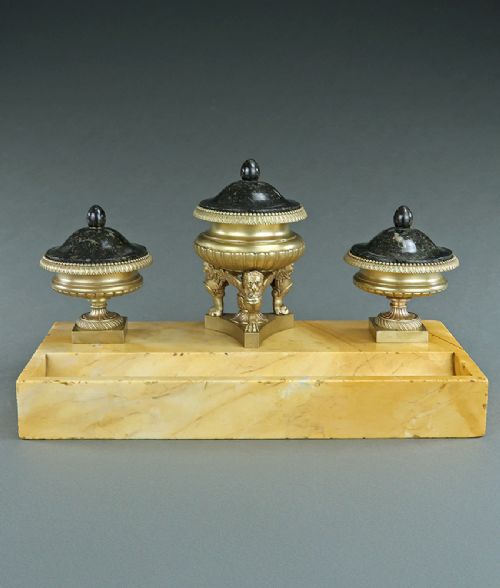
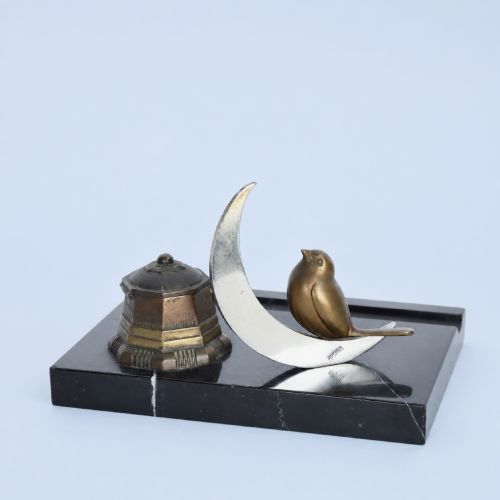
A marble inkwell set gathers stone, metal reservoirs, and pen rests onto a single polished base designed for the nineteenth or early twentieth-century desk. You will most frequently encounter French Empire, Art Deco, and Neoclassical examples that pair carved stone with cast mounts.
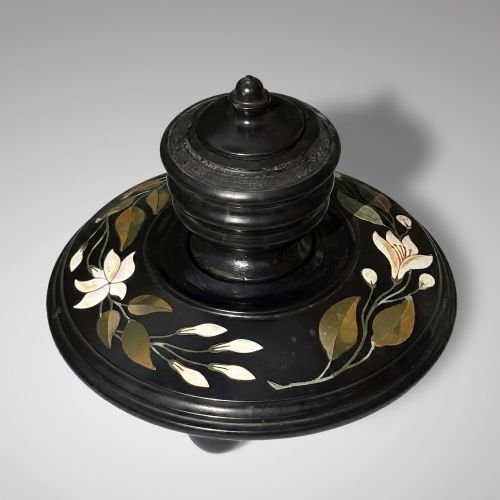
The objects take the form of substantial desk stands, inkstands, and ink-tidies fitted with hinged lids and glass or ceramic liners. Pieces range from simple polished slabs of Sienna or black marble to elaborate Grand Tour souvenirs adorned with lava cameos and gilt bronze figures.
Materials and Construction
Makers shaped heavy blocks of marble, onyx, and lapis lazuli into plinths, combining natural stone with cast bronze, brass, and ormolu mounts. The stone bases were cut, turned, and polished to a high sheen, while metalwork details were cast and often fire-gilded.
Artisans applied inlaid sections of contrasting minerals and mounted bronze figures, birds, or portrait cameos directly onto the stone surfaces. Glass or ceramic inserts were fitted within the metal collars to hold the liquid ink safely.
Marble Inkwell Set Retail Price Guide 2026
Typical asking prices for marble inkwell set among the pieces listed under this phrase on Sellingantiques today, from the lower quarter to the upper quarter. They describe what is for sale here now, not the wider market.
Distinctions in Quality
The refinement of the stonework and the crispness of the bronze or ormolu casting separate standard desk accessories from exceptional studio pieces. Deep, hand-chased metal mounts and carefully chosen variegated marbles indicate superior craftsmanship.
Lefebvre of Belgium·Albert Marionnet·Jules Dalou·Zimmermann
The Marble Inkwell Set Glossary
- Ormolu
- Gilded bronze produced by applying a mercury-gilding amalgam to cast bronze, creating a warm golden surface that does not tarnish easily.
- Grand Tour
- A cultural journey undertaken by wealthy Europeans in the nineteenth century, often resulting in the purchase of souvenir desk sets incorporating local carved stones and intaglios.
- Sienna marble
- A distinctive yellow-gold Italian marble marked with dark brownish-purple veins, frequently utilised in Neoclassical and Empire desk furnishings.
- Encrier
- The French term for an inkstand or inkwell set designed to hold writing materials on a desk.
- Desk tidy
- A compartmented desk stand or tray intended to organise pens, nibs, and writing accessories alongside the ink reservoir.
Marble Inkwell Set: Frequently Asked Questions
Are these inkwells still usable today?
Many of these pieces retain their original glass or ceramic liners, allowing them to hold ink if handled carefully. However, dried ink residue from past use can be stubborn and difficult to clear completely.
Most modern buyers prefer to display these sets as decorative desk sculptures rather than functional writing instruments.
How do I date an antique marble inkstand?
Examine the prevailing artistic style, such as the classical motifs of the Empire period or the geometric lines of Art Deco. The style of the cast bronze mounts and the type of marble also offer strong clues to the decade of manufacture.
Signed pieces or foundry marks stamped into the bronze can sometimes be traced to specific makers active around nineteen hundred.
What is prato verde marble?
Prato verde is a green marble variety often associated with Italian stonework and nineteenth-century souvenirs. It provides a rich, dark green backdrop that contrasts sharply with gilt bronze mounts.
This stone was frequently chosen for Grand Tour pieces produced in Naples and Rome.