









Marble Display Urns
Marble display urns bring classical form and substantial weight to interior spaces, anchoring corners and elevating plants or ornaments with architectural presence.
Marble Display Urns
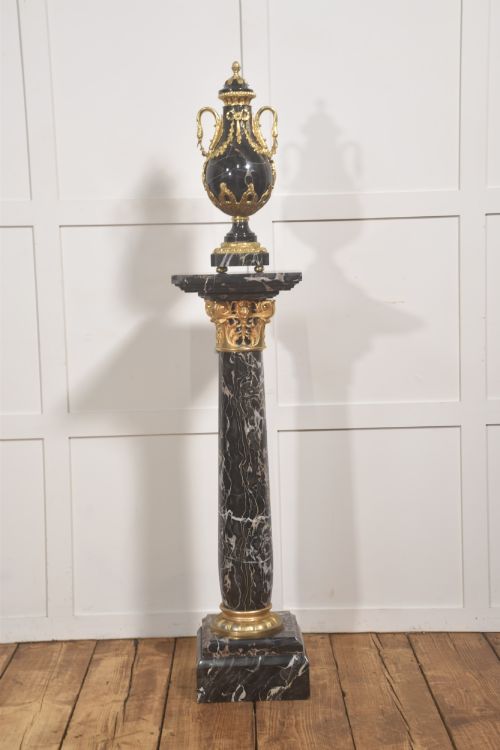
Marble display urns encompass heavy stone vessels and the elevated pedestals, columns, and stands designed to support them within domestic interiors. These objects merge sculpted mineral bodies with functional support structures intended to showcase decorative items.
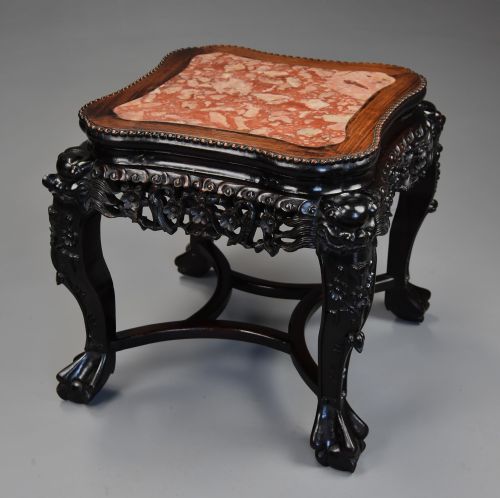
The selections available here lean heavily toward nineteenth-century production, spanning Victorian iterations alongside significant groups of Chinese hardwood and marble-inset plant or vase stands. Buyers encounter both European Neoclassical interpretations and export-oriented Asian furnishings sharing the characteristic stone insert or vessel form.
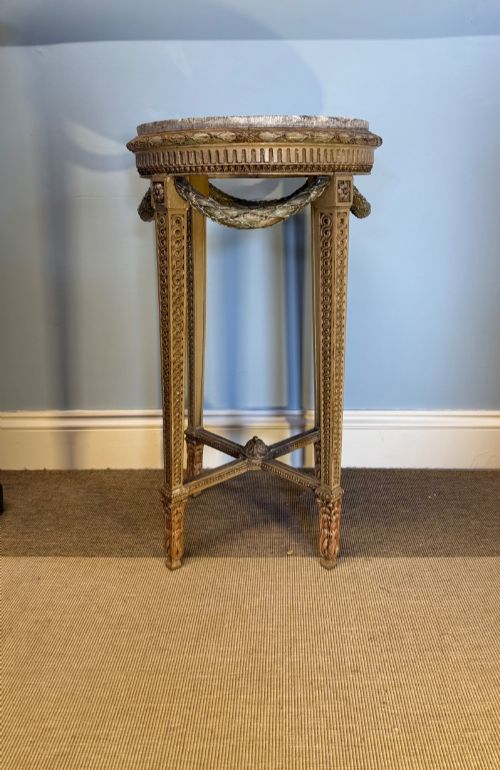
Forms range from low pot stands and occasional tables to tall pedestals and columns outfitted with rouge, black, or green marble tops. This variety allows collectors to source either a standalone plinth for sculptural display or a matched pair of stands for balanced room placement.
Materials and construction methods
Makers utilised dense natural stones including black, green, and rouge marble alongside alabaster, turning and polishing the mineral surfaces to reveal striking veining and smooth tactile finishes. These stone elements were frequently paired with durable structural timbers such as hardwood, rosewood, padouk, and walnut.
Joinery and carving techniques reflect both Western cabinetmaking traditions and intricate Chinese woodworking methods, utilising mortise and tenon joints to secure heavy stone insets safely within wooden frames. Metal elements such as gilt-bronze or brass mounts occasionally secure or accent the stone and wood components.
Marble Display Urns Retail Price Guide 2026
Typical asking prices for marble display urns among the pieces listed under this phrase on Sellingantiques today, from the lower quarter to the upper quarter. They describe what is for sale here now, not the wider market.
Listings feature items spanning the eighteenth through the early twentieth centuries, incorporating Victorian, Edwardian, and Qing Dynasty eras.
Evaluating craftsmanship and distinction
Quality rests in the depth and crispness of the hand-carved wood details or the precision of the stone turning, where superior examples exhibit fluid organic motifs and perfectly fitted marble slabs. The choice of dense, highly figured exotic timbers or richly variegated marbles elevates certain pieces above standard utilitarian stands.
Proportion and structural integrity define the upper tier of these objects, ensuring that heavy stone tops sit flush and stable within robust frames capable of supporting substantial weight over centuries of use.
The Marble Display Urns Glossary
- Campana urn
- A bell-shaped vessel with a flared rim and pedestal foot, derived from ancient Roman metal and ceramic prototypes. It serves as a classic ornamental form for garden and interior display.
- Jardiniere stand
- A tall piece of furniture specifically designed to elevate potted plants and floral arrangements off the floor. These stands frequently incorporate inset stone tops to resist moisture damage from watering.
- Padouk
- A heavy, durable tropical hardwood prized for its dense grain and deep reddish-brown colour. Makers utilised this timber extensively for fine nineteenth-century Chinese export furnishings.
- Rouge marble
- A decorative limestone featuring deep red tones mixed with white and grey veining. This striking material appeared frequently on European and Chinese export stands of the nineteenth century.
- Torchere
- A tall ornamental stand or candlestick designed to hold a light source or decorative object at an elevated height. They often take the form of slender carved wooden columns.
Marble Display Urns: Frequently Asked Questions
What were marble display urns used for?
These objects served primarily to elevate and display decorative plants, urns, or sculptural lamps within formal reception rooms and parlors. Their sturdy construction allowed them to bear the substantial weight of stone and ceramic vessels safely.
In domestic interiors, they functioned as architectural accents that brought height and classical symmetry to empty corners or flanking spaces between windows.
How do I clean a marble top?
Maintenance requires simple dusting with a soft cloth and occasional wiping with a damp sponge using mild, pH-neutral soap. Harsh chemical cleaners and acidic substances must be avoided to protect the polished stone surface from etching.
Applying a specialist stone wax periodically helps preserve the sheen and protects the natural pores of the marble against accidental moisture rings.
Can these stands support heavy vases?
The sturdy hardwood frames and solid stone insets are engineered to carry considerable weight, making them well-suited for heavy ceramic planters and large decorative urns. The primary consideration is ensuring the base of the object distributes its weight evenly across the inset top.
Care should be taken with tall, narrow pedestals to position heavy items centrally to maintain overall balance and stability on floor surfaces.
How do I distinguish Chinese export stands from European pieces?
Chinese export examples typically employ dense Asian hardwoods like padouk, rosewood, or hongmu, featuring intricate hand-carved floral or scrollwork motifs unique to eastern craftsmanship. The integration of the marble inset into the wooden frame often follows traditional joinery methods distinct from Western cabinetmaking.
European pieces from the same era more frequently adopt established classical revival vocabularies such as Neoclassical or Louis XVI styling, utilising walnut, giltwood, or applied metal mounts.