

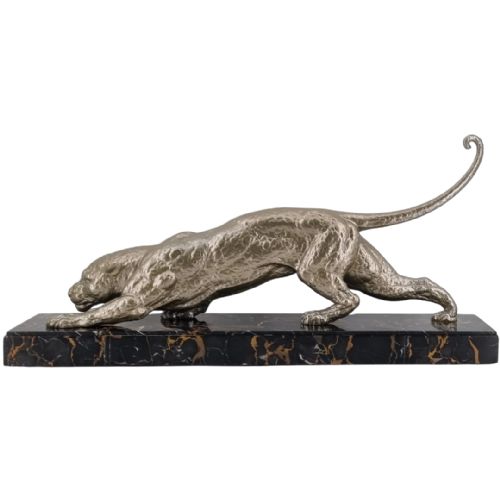
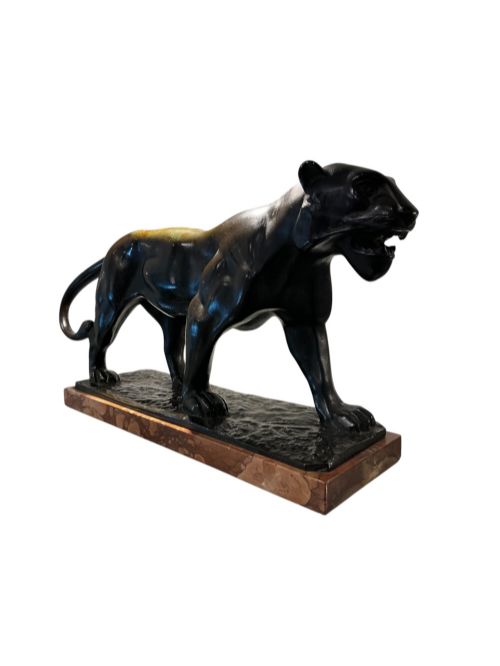


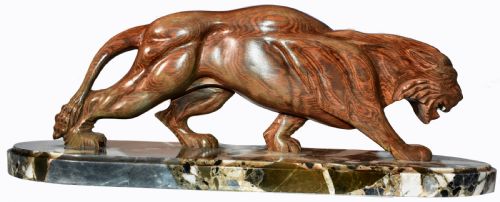


Marble Base Panther Statue
A marble base panther statue brings raw feline grace into a room through striking Art Deco animalier sculpture.
Marble Base Panther Statue
A marble base panther statue captures the predatory tension of big cats through Art Deco animalier sculpture. These figures combine sculpted metal or wood with substantial stone plinths.
Most examples date from the early decades of the twentieth century, particularly the nineteen twenties and nineteen thirties. Sculptures emerge from French workshops during the height of the modern decorative movement.
Forms range from prowling hunters and stalking cats to resting figures. The design centres on dynamic movement balanced by the heavy geometric lines of the stone base.
How they were made
Foundries cast figures in bronze, spelter, or patinated metal, sometimes applying silvered bronze finishes or carving wooden bodies directly. Artisans mount these animals onto heavy slabs of marble, including contrasting Portoro marble or simple black stone.
Makers achieve texture through chiselled metalwork or detailed hand-carving in wood. The combination of dense stone plinths and metal or wooden fauna creates a sturdy architectural composition.
Marble Base Panther Statue Retail Price Guide 2026
Typical asking prices for marble base panther statue among the pieces listed under this phrase on Sellingantiques today, from the lower quarter to the upper quarter. They describe what is for sale here now, not the wider market.
Materials recorded across the inventory include bronze, spelter, onyx, wood, and multiple varieties of marble.
What varies in quality
Quality rests in the anatomical precision of the cat and the harmony between figure and plinth. Sculptors who capture sinew and tension elevate a piece far above rigid castings.
The choice of stone defines the finish, with variegated or polished marble bases offering greater visual depth than plain slabs. Clear signatures from recognised modellers distinguish exceptional foundry work from anonymous production.
D. H. Chiparus·Notari·Eugene Emile Borga·Michel Decoux·Andrey
The Marble Base Panther Statue Glossary
- Animalier
- Art depicting animals, particularly nineteenth and twentieth-century sculpture focusing on realistic anatomy and movement. This tradition informs the spirited stance of the big cats.
- Spelter
- A zinc alloy commonly used as a cost-effective alternative to bronze in decorative figures. It takes patination well to simulate heavier metals.
- Portoro marble
- A black limestone with distinctive golden-yellow veining originating from Italy. It provides a dramatic, high-contrast foundation for dark metal sculptures.
- Patinated metal
- Metal treated with chemical solutions to produce a specific surface colour or aged finish. This technique enhances the muscular definition of the feline forms.
Marble Base Panther Statue: Frequently Asked Questions
What periods do these statues come from?
These sculptures originate primarily from the early twentieth century, specifically spanning the nineteen tens to the nineteen forties. The majority date to the interwar decades of the nineteen twenties and nineteen thirties.
This era coincides with the height of the Art Deco movement in France, when animalier subjects gained immense popularity among modern decorators.
What materials make up the bases?
Bases consist mainly of solid marble, including polished black varieties and richly veined Portoro stone. Some pieces incorporate carved wooden elements alongside the stone.
These heavy plinths provide essential stability for the dynamic metal or wooden figures mounted upon them.
How do bronze and spelter figures differ?
Bronze provides a durable, weighty metallic medium favoured for fine detail and lasting value in sculpture. Spelter offers a lighter zinc-based alternative that mimics bronze through applied patination.
Both materials appear frequently across French animalier figures from the interwar period.
Where were these sculptures made?
French studios and foundries produced the vast majority of these decorative animal figures. Parisian workshops drove much of the stylistic innovation during the Art Deco period.
Artisans and sculptors working in France signed many of the surviving bronzes and spelter castings.