

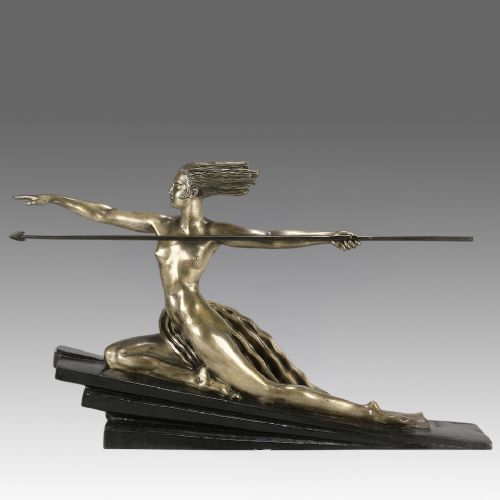





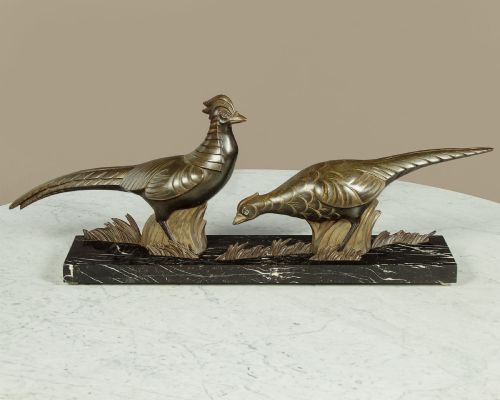
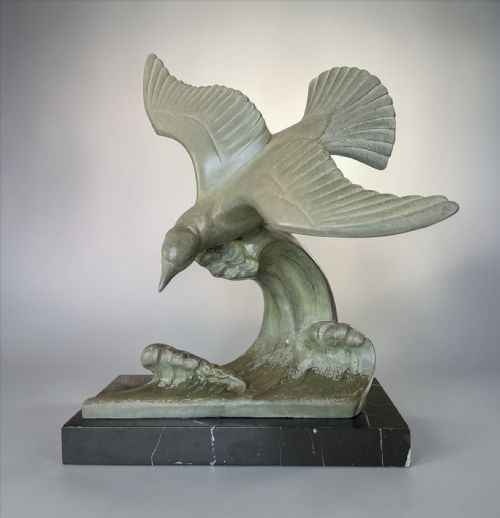




Marble and Spelter Sculpture
Marble and spelter sculpture combines metallic figures with stone plinths to capture dramatic twentieth-century subjects.
Marble and Spelter Sculpture
Marble and spelter sculpture brings together cast metal figures and heavy stone bases, most frequently emerging from French workshops during the early twentieth century. When exploring this category, collectors encounter figural groups, dancers, athletes, animals, and functional objects such as lamps and mantel clocks.
The dominant aesthetic belongs to the Art Deco period, alongside Art Nouveau and nineteenth-century French traditions. Figures cast in spelter receive patinated, silvered, or gilded surface treatments before mounting onto marble or onyx plinths.
Beyond standalone statuary, these pieces often incorporate glass elements, bronze accents, or timepieces into the overall composition. The combination provides a sturdy architectural foundation for dynamic metallic subjects.
Materials and construction methods
Spelter serves as the primary metal for the sculptural figures, chosen for its ability to accept fine detail during casting. Because spelter is a softer alloy of zinc and lead, makers applied patination and metallic finishes to simulate bronze or silver.
The finished metal figures are secured to heavy bases cut from marble or onyx, often utilising threaded rods running through the stone. This combination anchors the top-heavy metal castings securely to the dense mineral plinths.
Marble and Spelter Sculpture Retail Price Guide 2026
Typical asking prices for marble and spelter sculpture among the pieces listed under this phrase on Sellingantiques today, from the lower quarter to the upper quarter. They describe what is for sale here now, not the wider market.
Materials recorded across these items include patinated metal, brass, silvered metal, onyx, and crystal glass alongside marble and spelter.
Evaluating craftsmanship and execution
The selection and polishing of the stone base also determine the standard of the object. Superior examples employ solid slabs of veined marble or translucent onyx cut to complement the geometry of the metal figure above.
Jean de Roncourt·Uriano·P. Sega·C Masson·Geo Maxim·H. Bal·Chiparus·Auguste Moreau
The Marble and Spelter Sculpture Glossary
- Spelter
- A zinc alloy commonly utilised in the nineteenth and twentieth centuries as a cost-effective alternative to bronze. It accepts surface patination readily to resemble more expensive metals.
- Onyx
- A banded variety of chalcedony frequently used alongside marble for heavy sculptural plinths and clock cases. Its translucent layers provide a distinctive decorative texture.
- Patination
- The surface treatment or chemical colouring applied to metal castings. It creates antique bronze effects, dark tones, or highlighted metallic sheens.
- Plinth
- The heavy stone base upon which the metal figure stands. It gives structural stability and visual weight to the composition.
Marble and Spelter Sculpture: Frequently Asked Questions
How do I clean marble and spelter sculpture?
Dust the metal and stone surfaces gently with a soft, dry cloth. Avoid using water, liquid cleaners, or chemical solvents that can damage the delicate patinated finish on the spelter.
Keep the pieces out of direct sunlight and away from excessive moisture to preserve the stone polish and prevent metal degradation.
Are these figures made of bronze?
Most of these pieces utilise spelter, which is a softer zinc alloy rather than true bronze. Makers cast these figures to imitate bronze while offering a lighter and more accessible medium.
Close inspection of the base metal or a discreet examination near the mounting points usually reveals the lighter, softer nature of spelter.
How do I date a marble and spelter sculpture?
Dating relies heavily on the stylistic indicators of the sculpture, such as Art Deco geometric lines or Art Nouveau organic curves. The materials, clothing styles of the figures, and maker signatures provide further chronological clues.
Most surviving examples date from the late nineteenth century through the Art Deco period of the nineteen-thirties.
Can I use these figural lamps safely?
Vintage electrical components should be inspected by a qualified professional before plugging them in. Rewiring preserves the original lamp body while ensuring modern safety standards are met.
Handle the fragile glass shades and metal components with care when changing bulbs or repositioning the lamp.