

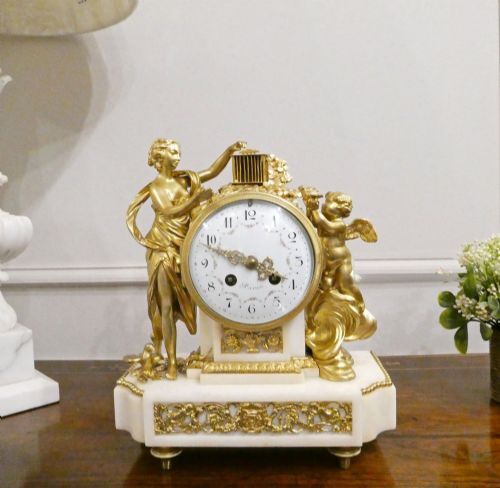
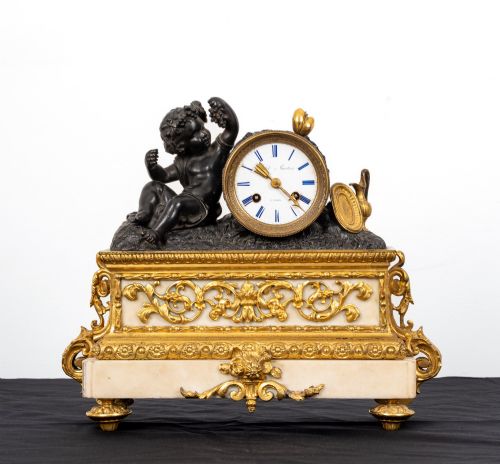
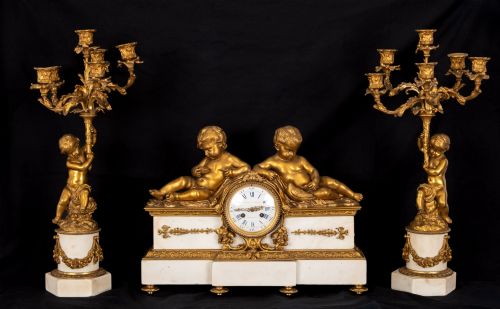
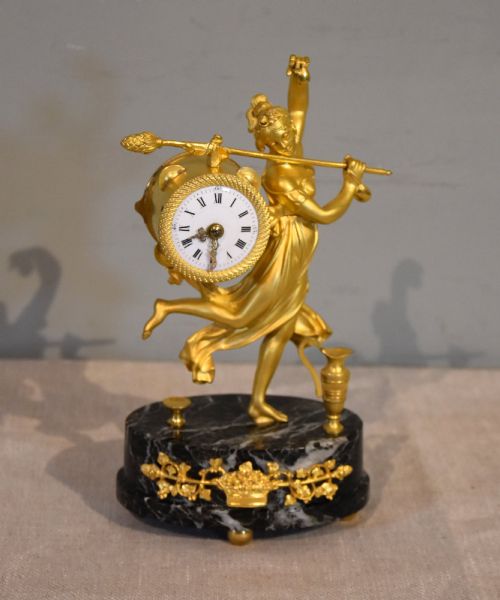
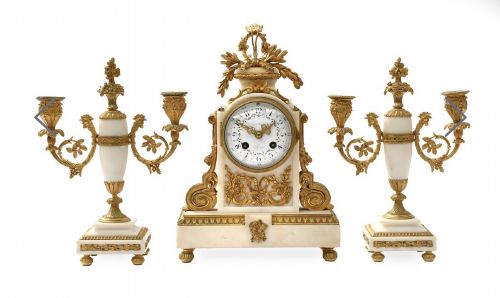



Marble and Gilt Bronze Clock
A marble and gilt bronze clock brings the heavy presence of nineteenth-century French reception rooms straight onto a modern mantelpiece.
Marble and Gilt Bronze Clock
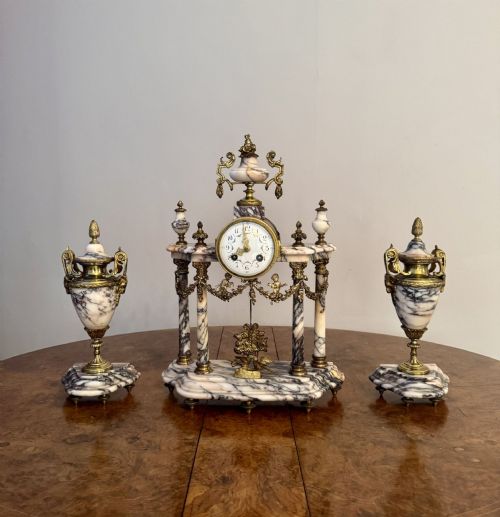
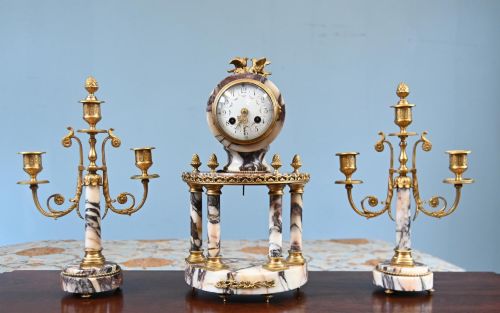
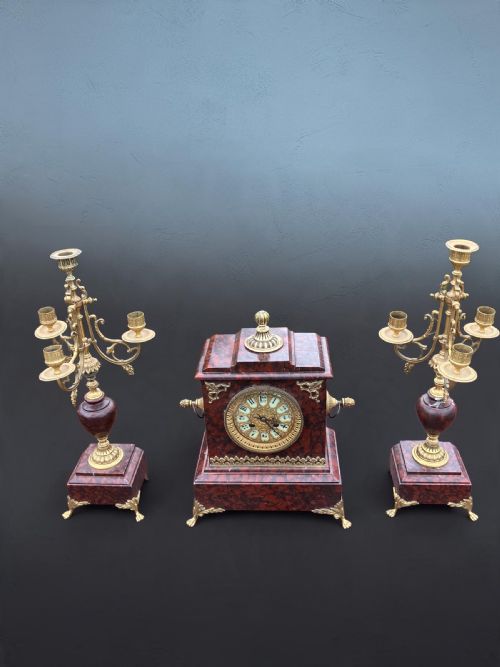
A marble and gilt bronze clock combines carved stone bodywork with cast metallic mounts, appearing most frequently in nineteenth-century French formats. Buyers encounter standalone mantel pieces alongside substantial garniture sets that include matching side candelabras or urns.
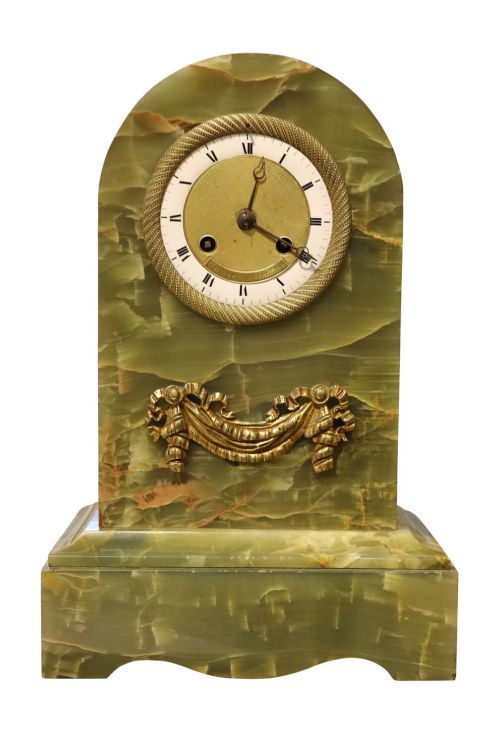
The prevalent design vocabulary draws heavily on Louis XVI and French Empire revivals, anchored by white, green, or red marble varieties. Many examples date from the Victorian decades between 1850 and 1890, driven by prolific Parisian clockmakers.
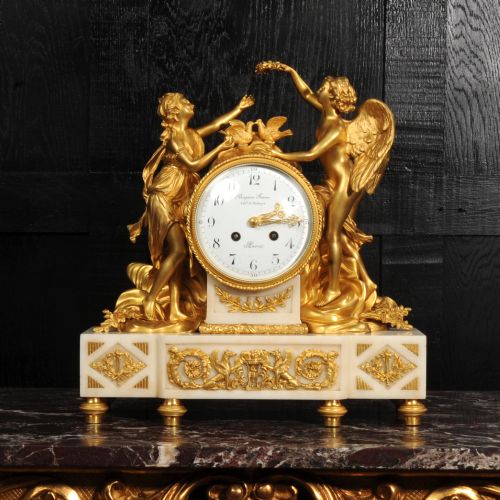
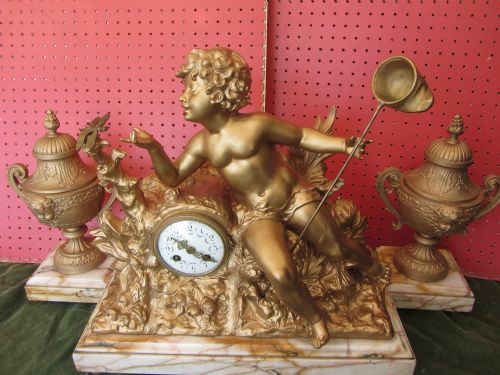
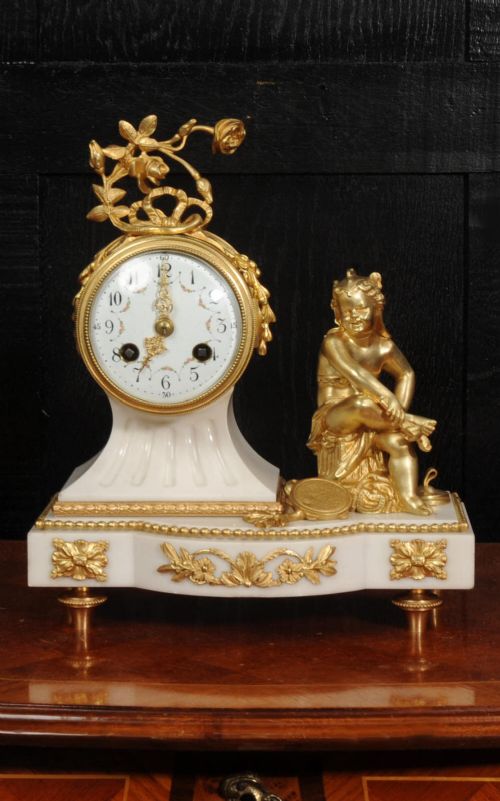
Formats range from straightforward architectural timepiece cases to elaborate figural compositions featuring cherubs, astronomical themes, and lyre-shaped pendulum housings. These pieces served as centrepieces for formal rooms, combining timekeeping with sculptural display.
Materials and construction
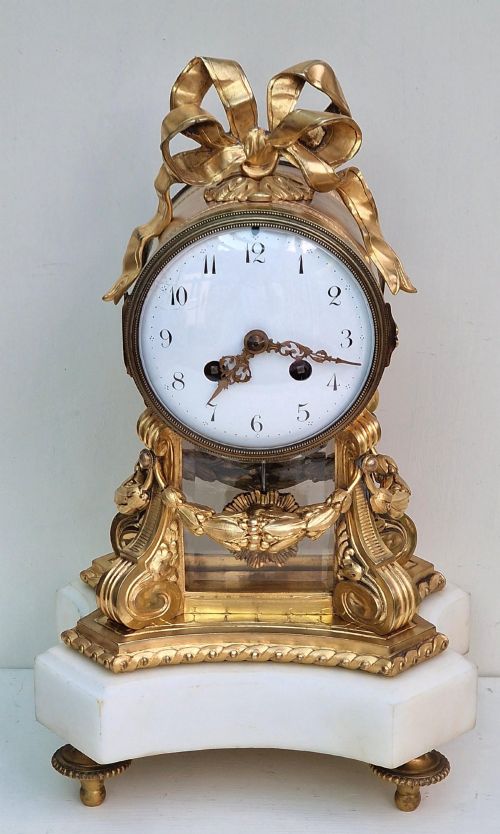
Construction relies on heavy natural stone bases combined with cast bronze elements finished in gilt or ormolu. Enamel dials, often fitted with delicate hand-painted numerals, sit protected behind glass doors or bezels.
Foundries cast the bronze mounts in detailed sections using traditional lost-wax or sand-casting methods before applying gold leaf or mercury gilding. Stonemasons cut and polished the marble bodies to house mechanical eight-day brass movements driven by springs or weights.
Marble and Gilt Bronze Clock Retail Price Guide 2026
Typical asking prices for marble and gilt bronze clock among the pieces listed under this phrase on Sellingantiques today, from the lower quarter to the upper quarter. They describe what is for sale here now, not the wider market.
Astronomical dials and lounging greyhounds share mantel space with solemn cherubs in these eclectic nineteenth-century lineups.
Quality differences
The standard of a marble and gilt bronze clock rests on the crispness of the bronze chasing and the depth of the gilding. Superior examples display sharp, hand-finished foliage and figures, whereas weaker pieces show soft, generalised casting details from worn moulds.
The selection and matching of the marble body further separate standard productions from finer work. Heavy, richly veined red, green, or white stone fitted flush against substantial, heavy-gauge brass movements represents the upper tier of period output.
Japy Freres·Vincenti·Philippes Paris·Louis Goret·Charles a Orleans
The Marble and Gilt Bronze Clock Glossary
- Ormolu
- A technique of applying finely ground high-karat gold to a bronze object using a mercury amalgam. It produces a warm, deep metallic lustre that differs visibly from modern electroplate.
- Garniture
- A set of matching decorative objects designed to be displayed together on a mantelpiece. It typically comprises a central clock flanked by two matching vases or candelabras.
- Movement
- The internal mechanical assembly of wheels, gears, and escapements that drives the clock. Eight-day versions require winding roughly once a week.
- Bezel
- The metal ring that holds the glass door protecting the clock face. It is often hinged and cast with decorative beaded or leaf patterns.
Marble and Gilt Bronze Clock: Frequently Asked Questions
How do I wind the clock?
Most mechanical pieces use a dedicated winding key inserted directly into winding holes on the enamel dial. Turning the key clockwise or anticlockwise tensions the internal springs.
Care must be taken not to over-wind the movement, stopping as soon as resistance is felt to protect the internal gear train.
Are these clocks fully working?
Operational status varies across individual pieces, with some retaining fully serviced eight-day movements while others require professional attention. Checking individual descriptions clarifies whether a movement runs and strikes.
Transporting these heavy mechanical objects often disturbs the delicate balance of the pendulum, meaning fine adjustment is frequently necessary after delivery.
How do I clean the marble and bronze?
Dusting with a dry, soft microfibre cloth prevents grime accumulation on both stone and metal surfaces. Liquid cleaners and polishes must be avoided entirely, as they damage fragile gilt and ormolu finishes.
Marble benefits from occasional wiping with a damp cloth followed by immediate drying, while gilt bronze requires no moisture to retain its surface character.
How do I spot a later reproduction?
Period nineteenth-century pieces display heavy cast bronze components with hand-chiseled surface details rather than uniform machine finishing. The weight of the genuine marble and the hand-painted numbers on enamel dials offer further period indicators.
Screws, pins, and movement stamps matching known nineteenth-century Parisian makers provide reliable confirmation of age against modern cast copies.