




Maple Top Tables
Maple top tables bring striking grain patterns and robust utility into a room, spanning periods from Regency elegance to Art Deco clean lines.
Maple Top Tables
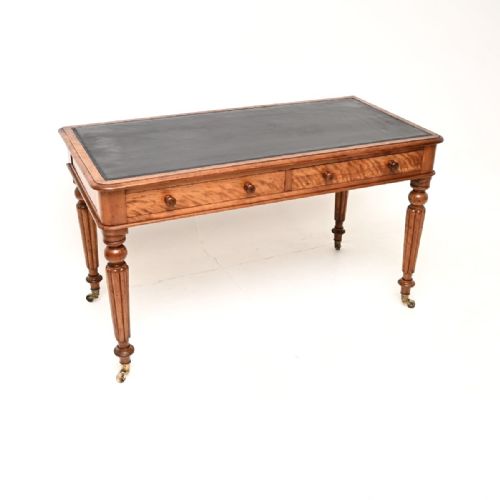
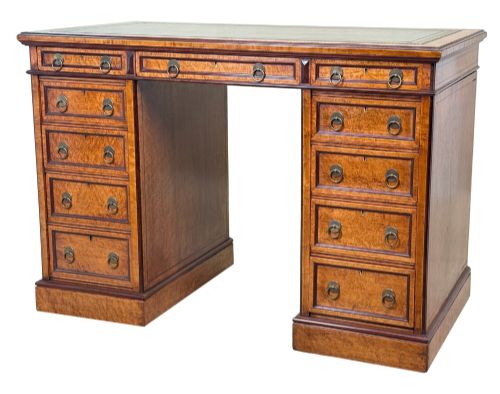
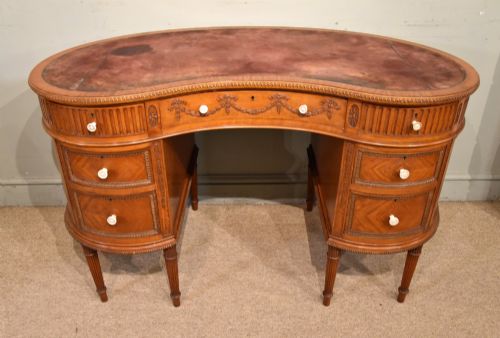
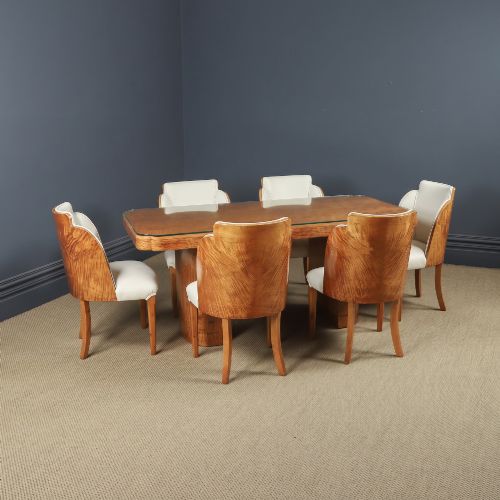
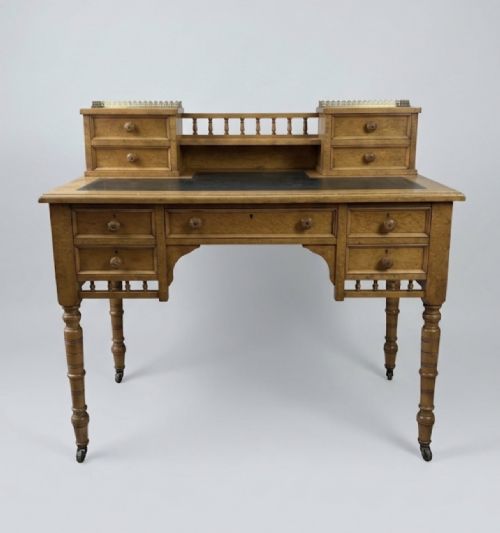
Maple top tables encompass a variety of practical forms, most frequently appearing here as writing desks, occasional pieces, and card tables. Buyers seeking maple top tables encounter diverse expressions across the nineteenth and early twentieth centuries, including Victorian pedestal formats and streamlined Art Deco designs.
The selection leans heavily toward nineteenth-century craftsmanship, alongside Edwardian and 1930s examples. Makers such as Maple and Co feature prominently, shaping the character of these functional items through fitted drawers, leather inserts, and freestanding layouts.
Materials and construction
Makers utilised striking timbers, pairing birds-eye maple and satinwood with structural woods like mahogany, walnut, and oak. Veneers and solid boards were selected for figured grain, creating visually rich surfaces on desks and occasional tables.
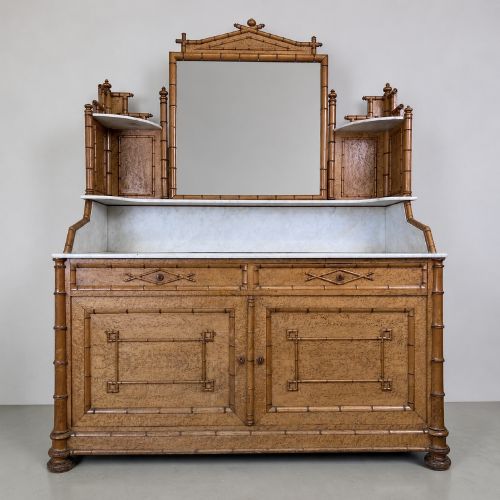
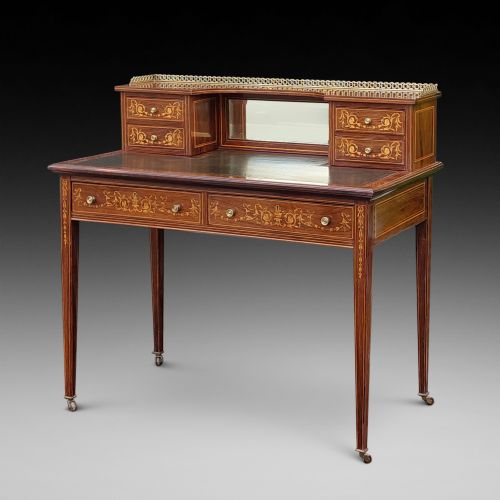
Inlay work, brass hardware, and tooled leather surfaces frequently complement the timber tops. Secondary materials like marble and silvered glass appear on specific washstands and coffee tables, demonstrating varied approaches to surface finishing.
Maple Top Tables Retail Price Guide 2026
Typical asking prices for maple top tables among the pieces listed under this phrase on Sellingantiques today, from the lower quarter to the upper quarter. They describe what is for sale here now, not the wider market.
Some nineteenth-century tables cleverly disguise themselves as ordinary desks before revealing hidden drawers, keys, and folding card surfaces for evening entertainment.
Distinctions in craftsmanship
Quality rests in the selection of the timber grain and the precision of the joinery, particularly in pedestal desks and nesting tables. Higher tier pieces exhibit careful timber matching and refined inlay work.
The integration of secondary elements, such as brass mounts, fitted superstructures, and leather writing surfaces, separates standard utility items from more ambitious cabinet-maker output.
Maple and Co
The Maple Top Tables Glossary
- Birds Eye Maple
- A figure in maple wood that resembles small, swirling dots or eyes. This natural grain variation occurs due to local stress in the growing tree.
- Pedestal Desk
- A heavy desk featuring two supporting columns of drawers beneath the work surface. These freestanding pieces often incorporate leather-lined writing tops.
- Biedermeier
- A Central European style from the first half of the nineteenth century prioritising utilitarian comfort and clean lines. Pieces from this aesthetic highlight native timber grains without excessive ornamentation.
- Superstructure
- A set of small drawers and pigeonholes mounted on top of a desk surface. This addition provides extra storage while maintaining a compact footprint.
Maple Top Tables: Frequently Asked Questions
What periods do these tables cover?
The listings span from the Regency period through Victorian, Edwardian, and Art Deco eras. This timeline demonstrates shifting tastes in domestic furniture design.
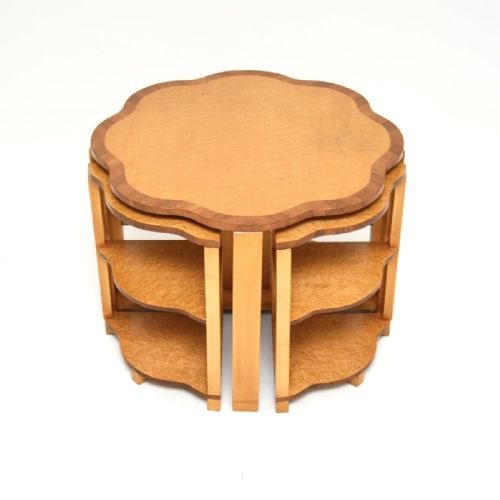
Nineteenth-century examples often emphasise heavy timber and intricate drawers, while 1930s pieces lean towards clean lines and nesting formats.
How were these tables used originally?
They served multiple domestic functions, primarily as writing desks, card tables, and occasional furniture for receiving guests. Many incorporated specialised compartments for correspondence.
Washstands and dressing tables also feature in this category, showing how varied maple surfaces were adapted for daily personal care.
How should I care for a maple surface?
Keep wooden surfaces away from direct sunlight and consistent moisture to protect the grain and prevent veneer lifting. Regular dusting with a soft cloth maintains the finish.
Avoid harsh chemical cleaners, utilising mild beeswax preparations where appropriate to nourish older timber.
How do I identify different styles?
Victorian and Edwardian versions often feature traditional turned legs, brass hardware, and leather inserts. Art Deco pieces show simpler geometric profiles and sometimes incorporate glass or rosewood.
Examining the underlying construction and timber choices helps clarify the likely era of manufacture.