




Maple Study Table
These maple study table pieces are practical writing desks and tables built for serious work, bringing handsome timber and traditional craftsmanship into your room.
Maple Study Table
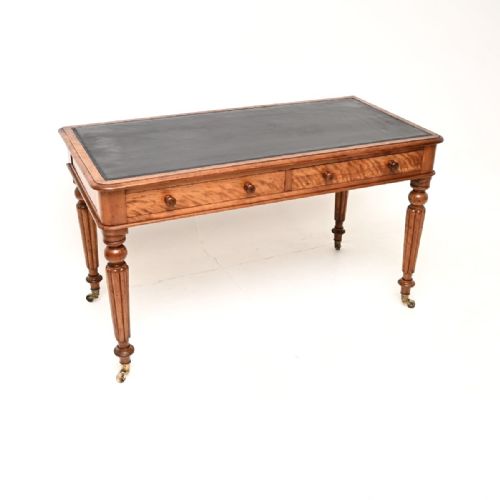
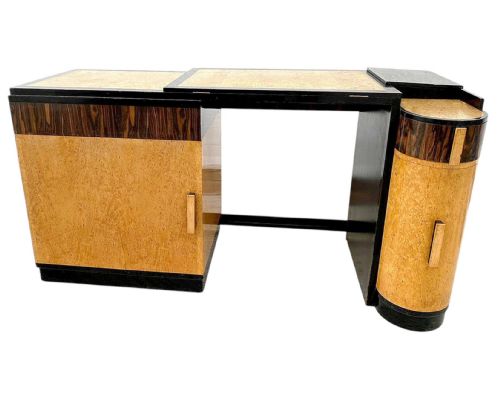
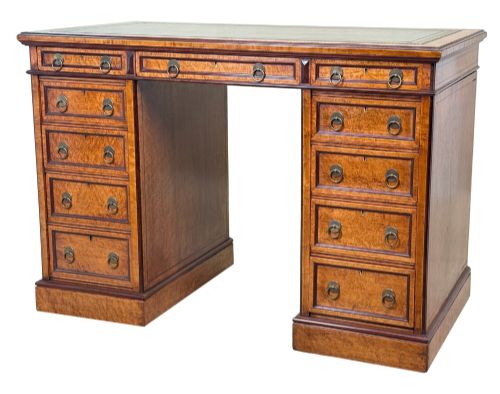
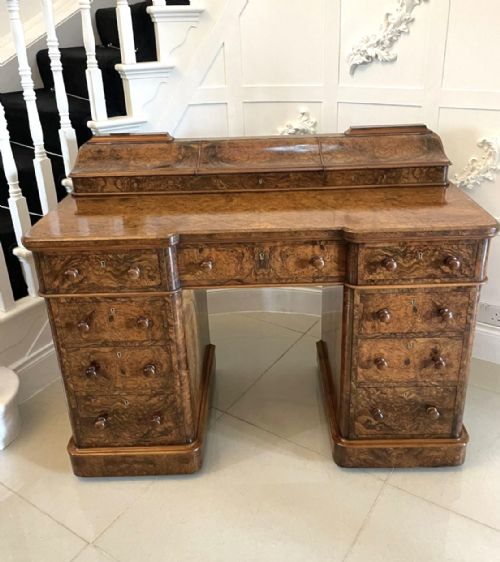
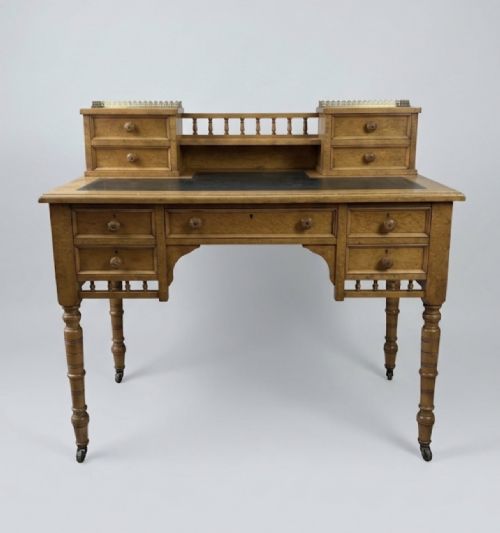
When you search for a maple study table, you are looking at nineteenth and early twentieth-century writing furniture designed for domestic studies and libraries. The selection on this page centres primarily on pedestal desks, writing tables, and kneehole desks originating from Victorian, Edwardian, and Art Deco periods.
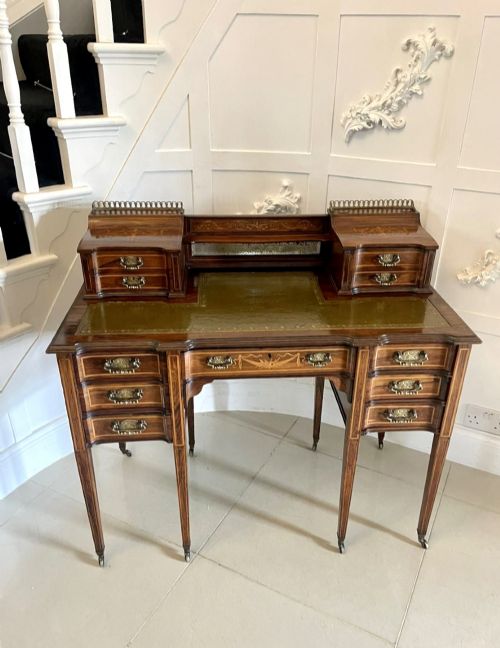
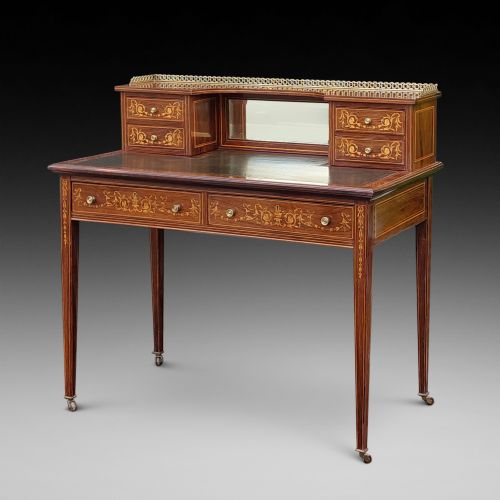
Most examples you will meet here are substantial pieces made by notable makers such as Maple and Co, alongside works executed in similar high Victorian and Edwardian styles. These desks frequently incorporate leather writing surfaces, brass hardware, and specialised storage configurations like superstructures with internal drawers.
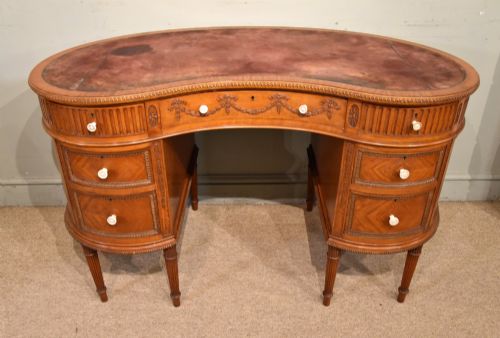
Forms range from traditional twin pedestal formats to kidney shapes and compact freestanding writing tables. Woods vary beyond maple itself to include satinwood, walnut, and mahogany, often enhanced with contrasting stringing and inlay work.
How they were made
The construction of these desks relies on sturdy cabinet-making techniques utilising solid timber frames combined with figured wood veneers. Birdseye maple, satinwood, and burr walnut are chosen for their decorative grain patterns, often paired with mahogany or oak for structural stability.
Writing surfaces are typically inset with tooled leather, providing a durable and traditional top for daily use. Brass handles, escutcheons, and hinges furnish drawers and cabinets, whilst inlaid stringing in contrasting woods defines the borders and panels.
Maple Study Table Retail Price Guide 2026
Typical asking prices for maple study table among the pieces listed under this phrase on Sellingantiques today, from the lower quarter to the upper quarter. They describe what is for sale here now, not the wider market.
Listings feature woods including birdseye maple, satinwood, walnut, and mahogany across Victorian, Edwardian, and Art Deco periods.
What varies in quality
Quality in these desks shows in the selection of the timber veneer and the precision of the cabinet work. Superior pieces display book-matched grain patterns across drawer fronts and tops, alongside crisp inlay and dovetail joints that remain tight after generations of use.
The reputation of the maker also influences the standing of a piece, with documented workshop output commanding attention for refined proportions and well-executed interior fittings. Original hardware, functional locking mechanisms, and well-preserved leather inserts further distinguish the higher tiers of the range.
Maple and Co·Gillows
The Maple Study Table Glossary
- Birdseye maple
- A figured timber showing small, circular eye patterns caused by local disruptions in the wood grain. It is prized for its decorative appearance on cabinet fronts and tabletops.
- Superstructure
- A set of small drawers and compartments fitted to the rear surface of a desk top. It provides additional storage for stationery without increasing the footprint of the base.
- Kneehole desk
- A compact desk featuring a central recessed space for the legs beneath the writing surface. This design typically includes flanking stacks of drawers.
- Stringing
- Thin lines of contrasting wood inlaid into the surface of furniture to create geometric borders. It is a common decorative detail on Victorian and Edwardian pieces.
Maple Study Table: Frequently Asked Questions
What is a pedestal desk?
A pedestal desk is a freestanding piece of furniture supported by two columns of drawers with a central opening for seating. These units provide substantial storage and a large working surface.
They appear frequently in nineteenth-century domestic studies and offices, designed to sit away from the wall as the focal point of the room.
How do I care for a leather desk top?
Leather writing surfaces require gentle cleaning with a slightly damp cloth followed by a suitable leather cream to maintain flexibility. Avoid using harsh chemical cleaners or excess water.
Keeping the leather conditioned prevents cracking and preserves the gold tooling usually applied around the perimeter.
What is birdseye maple?
Birdseye maple is a distinct mutation in sugar maple trees that produces tiny knots resembling small bird eyes across the timber. Cabinet makers slice this wood into veneers to cover large flat surfaces.
Its striking pattern made it a favourite choice for decorative Victorian and Edwardian furniture.
How do I identify an Edwardian desk?
Edwardian desks often display lighter proportions and borrowing from earlier eighteenth-century aesthetics like Sheraton revival designs. They frequently feature satinwood or mahogany with delicate inlay work.
Construction methods from this era also tend to show machine-assisted precision alongside traditional hand finishing.