

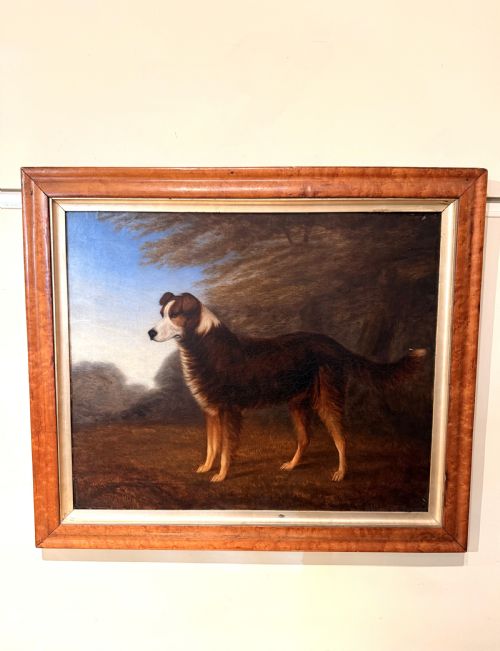
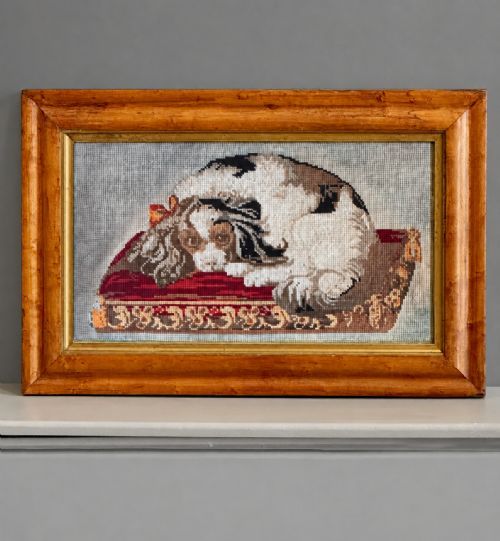
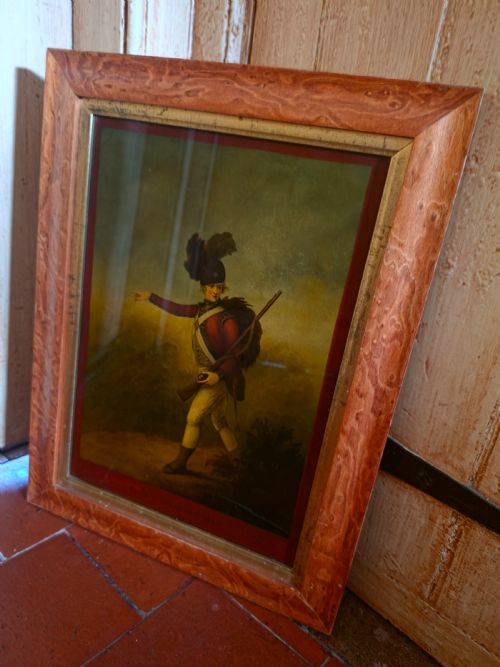
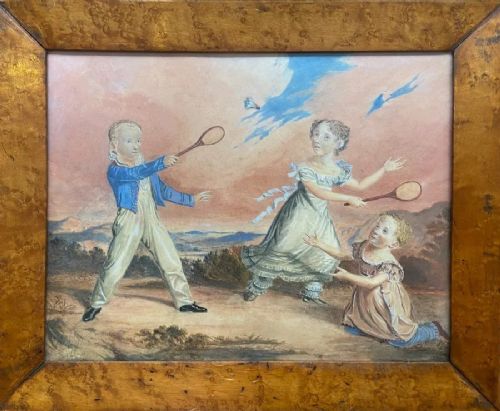
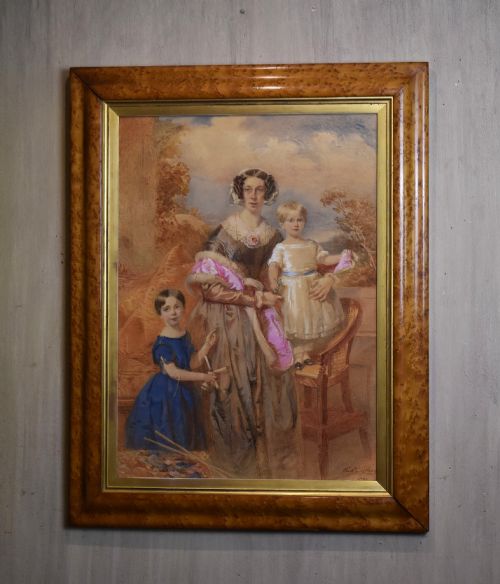
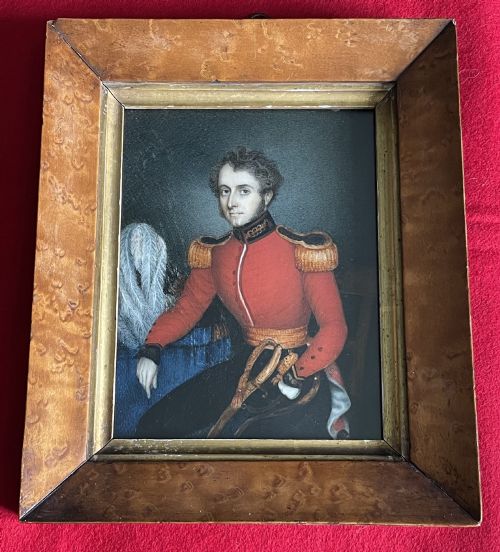


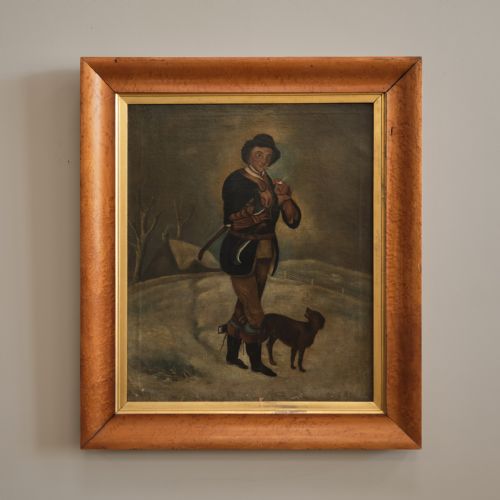


Maple Frame Portrait
A maple frame portrait brings warmth to a wall through figured timber enclosing nineteenth-century watercolours, silhouettes and oils.
Maple Frame Portrait
When you search for a maple frame portrait, you encounter works produced across the nineteenth century, including the Regency, William IV and Victorian eras. These pieces typically take the form of watercolours, silhouettes, pastels and oil paintings enclosed in distinctive wood housings.
The most common examples on this page combine portrait miniatures or watercolours depicting gentlemen, ladies and children with figured timber mouldings. Many retain their glass and original backing papers, presenting domestic likenesses from Georgian and Victorian parlours.
How they were made
Makers constructed the enclosures using native woods, selecting maple and its figured variants such as birds-eye and burr to provide a decorative grain pattern around the artwork. These timbers were polished or varnished to highlight the natural eyes and swirls in the wood.
Within these surrounds, artists worked in watercolour, ink, oil, and gouache on paper, canvas, panel, or glass, often applying gold leaf or gilding to highlights in silhouettes and needlework. The completed artworks sat under protective glass, secured by early framing techniques.
Maple Frame Portrait Retail Price Guide 2026
Typical asking prices for maple frame portrait among the pieces listed under this phrase on Sellingantiques today, from the lower quarter to the upper quarter. They describe what is for sale here now, not the wider market.
What varies in quality
The depth of figure in the timber dictates much of the visual appeal, with tightly knotted birds-eye or burr maple commanding greater presence than plain grain. The crispness of execution in the enclosed watercolour or cut silhouette further separates standard works from finer hand-drawn examples.
Preservation plays a central role in the standing of a piece, particularly the survival of original gilding, glass, and untrimmed paper. Intact backing materials and legible contemporary inscriptions add historical weight to the physical object.
Frederick Frith·Henry Travis·Frederick Tatham·J F Marie Huet Villiers·Augustin Edouart·Robert Faulkner·W A Clark·Edward Smyth·Josiah Gilbert·John Ferneley Jnr
The Maple Frame Portrait Glossary
- Birds-eye maple
- A figure in maple wood where small, dot-like knots create a pattern resembling birds' eyes. This timber was frequently polished to form distinct picture frames during the nineteenth century.
- Burr maple
- The irregular, swirling growth taken from a maple tree, highly prized for veneer and solid framing. It yields a rich, mottled texture around portrait subjects.
- Silhouette
- A solid black or dark profile likeness cut from paper or painted on card, often enhanced with gold leaf. Artists mounted these profiles inside maple housings.
- Reverse glass painting
- An artwork painted directly onto the back of a glass sheet to be viewed from the front. These delicate pieces appear frequently in nineteenth-century decorative contexts.
- Watercolour
- A paint consisting of pigment suspended in a water-based solution, widely applied to paper for portrait miniatures and domestic scenes. It forms the primary medium seen within these frames.
Maple Frame Portrait: Frequently Asked Questions
Are these frames original to the portraits?
Many pieces retain their original maple or birds-eye maple surrounds, fitted during the nineteenth century when the artwork was created. The alignment of backing papers and fixings often confirms this period pairing.
Over the decades, some watercolours and silhouettes have found new homes in period-appropriate timber frames. Examining the rebate and glass helps determine whether the assembly has remained together since the Victorian era.
How should I hang a maple frame portrait?
These pieces suit rooms with traditional decor, where the warm honey tones of the timber complement neutral or period wall colours. Direct sunlight should be avoided to protect watercolour pigments and paper from fading.
Secure picture wire or rings attached to the original wooden backing should support the weight safely. Keeping the piece away from damp environments ensures the wood and enclosed paper remain stable.
What periods do these portraits cover?
The selection spans the Georgian, Regency, William IV, and Victorian eras, stretching from around eighteen hundred into the early twentieth century. Each period brought subtle shifts in portraiture style and framing profiles.
Early nineteenth-century examples often feature tighter moulding profiles and naive painting styles. Later Victorian items tend to showcase more elaborate watercolours and broader veneered frames.