



Maple Bedroom Chest
A maple bedroom chest brings quiet warmth to a room through distinctive pale timbers and clean grain patterns.
Maple Bedroom Chest
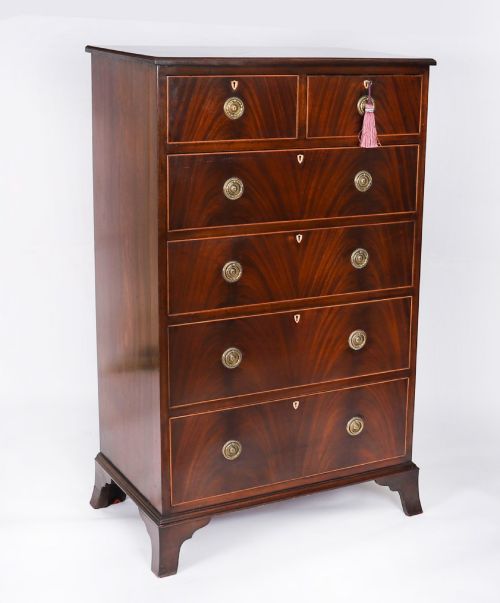
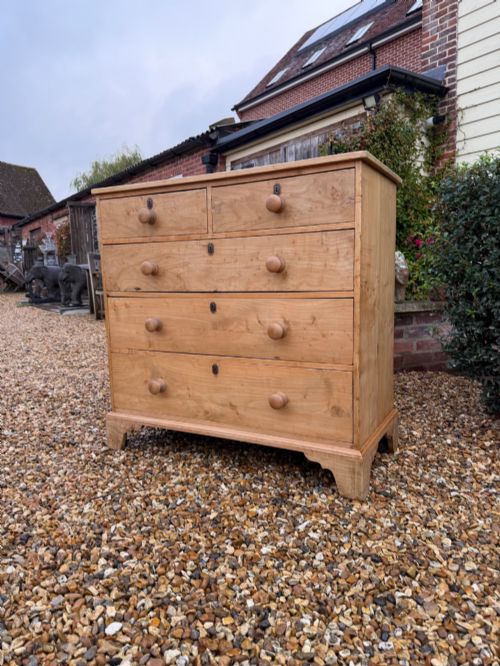
A maple bedroom chest encompasses storage pieces built primarily from maple, including chests of drawers, dressing tables, tallboys, and gentleman's chests. These items span periods from the Victorian era through the Edwardian years and into the geometric forms of Art Deco.
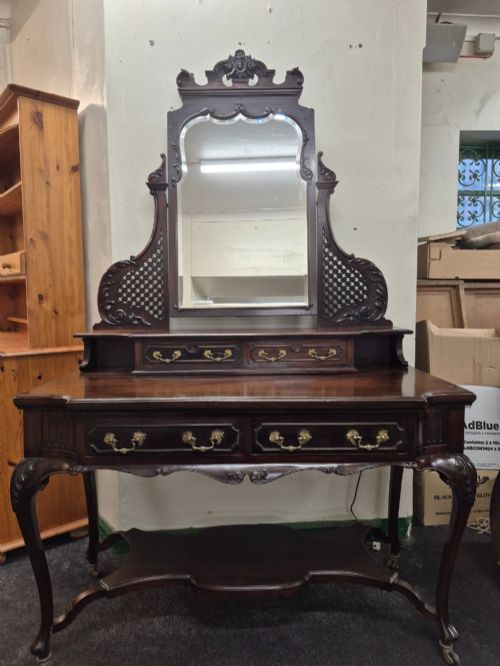
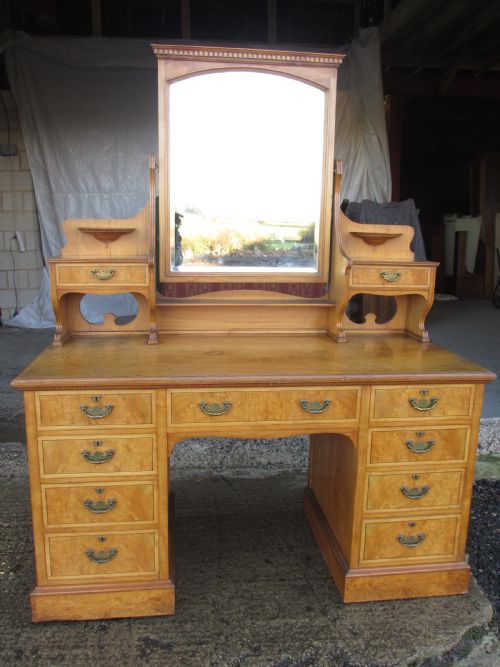
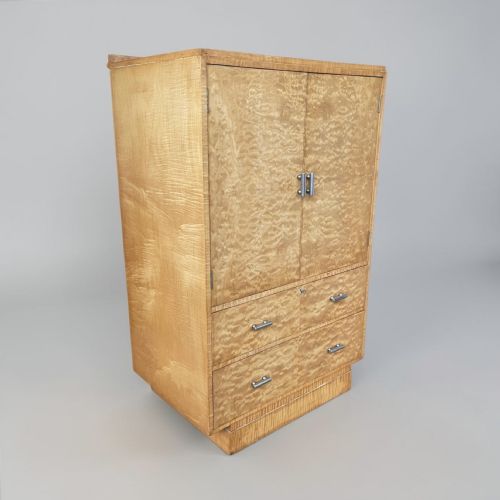
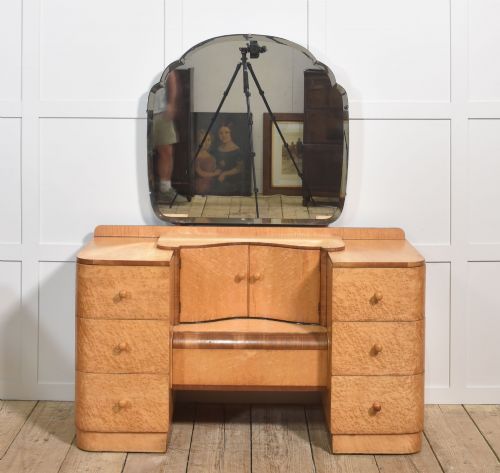
Buyers will most frequently encounter pieces finished in birds eye maple or blonde maple veneer, particularly from the early twentieth century. These examples range from tallboy cabinets and mirrored chests of drawers to compact bedside cabinets and twin dressing tables.
Forms vary from the robust proportions of nineteenth century furniture to the streamlined, modernist profiles of nineteen-thirty design. Each piece serves the traditional function of bedroom storage while displaying the distinct figuration characteristic of the timber.
Materials and construction
Makers utilised solid maple and decorative birds eye maple veneer applied over secondary woods to achieve striking surface patterns. Selected sections were chosen for their natural figuring, creating lively movement across drawer fronts and cabinet doors.
Fittings such as brass handles, metal pulls, and integrated glass mirrors were incorporated into dressing tables and tallboys. Internal framing frequently employed supportive timbers like ash to ensure structural stability within larger wardrobes and press cupboards.
Maple Bedroom Chest Retail Price Guide 2026
Typical asking prices for maple bedroom chest among the pieces listed under this phrase on Sellingantiques today, from the lower quarter to the upper quarter. They describe what is for sale here now, not the wider market.
Some nineteenth century wardrobe designs were dubbed sentry boxes because of their narrow, upright proportions designed to fit tight corners.
Assessing quality and finish
Superior examples display a careful matching of veneer grain across multiple drawer fronts, creating a cohesive visual pattern rather than a random assembly of timber. The intensity and regularity of the birds eye figuring also distinguish finer specimens from simpler plain wood surfaces.
Construction integrity is evident in the precision of the joinery, the smooth operation of heavy drawers, and the retention of original brass or metal hardware. The integration of auxiliary elements, such as hinged mirrors on dressing tables, shows the joiner's skill in balancing utility with decorative proportion.
Maple and Co
The Maple Bedroom Chest Glossary
- Birds Eye Maple
- A figure in maple wood where the grain swirls around small spots resembling bird eyes. This desirable pattern occurs naturally and appears frequently in decorative veneer work.
- Tallboy
- A tall chest of drawers, often constructed by stacking a smaller set of drawers upon a larger base cabinet. These pieces maximise vertical storage space in the bedroom.
- Gentleman's Chest
- A combined storage unit featuring both drawers for folded garments and upper cupboard space for hanging or shelf storage. They were traditionally designed for male attire.
- Press Cupboard
- A large enclosed storage piece used for linens and clothing, sometimes featuring sliding internal trays. They offer deep capacity behind panelled doors.
Maple Bedroom Chest: Frequently Asked Questions
What periods do these chests come from?
The pieces span from the mid-nineteenth century through the Victorian and Edwardian eras, extending into the nineteen-twenties and thirties.
Art Deco and Victorian examples form the primary stylistic groups found in this selection.
How do I care for birds eye maple?
Keep the wood away from direct sunlight and excessive heat to prevent the veneer from drying or fading.
Regular dusting with a soft, dry cloth maintains the polish without harming the delicate grain.
What is the difference between a tallboy and a standard chest?
A standard chest of drawers remains low enough to use the top surface comfortably as a shelf or dressing area.
A tallboy rises higher, prioritising vertical storage capacity over surface accessibility.
Are these pieces made of solid wood?
Many items utilise decorative veneers applied to secondary woods to highlight specific grain patterns like birds eye maple.
Structural frames and internal components often combine solid timbers such as ash or maple for durability.