

Mantel Clock with Cherub
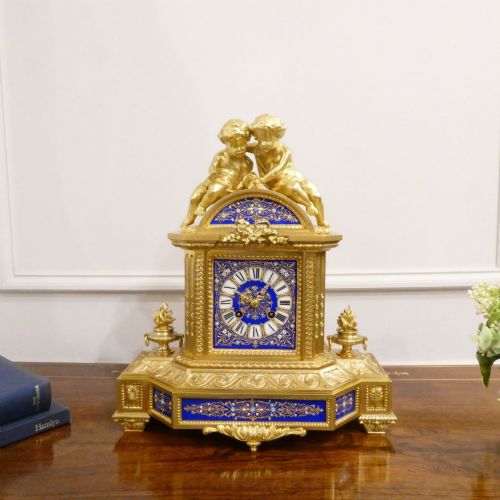
A mantel clock with cherub brings sculptural charm to a room, cast in gilt bronze and marble during the nineteenth century.
Mantel Clock with Cherub
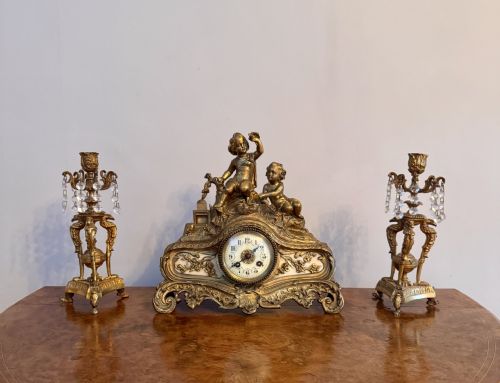
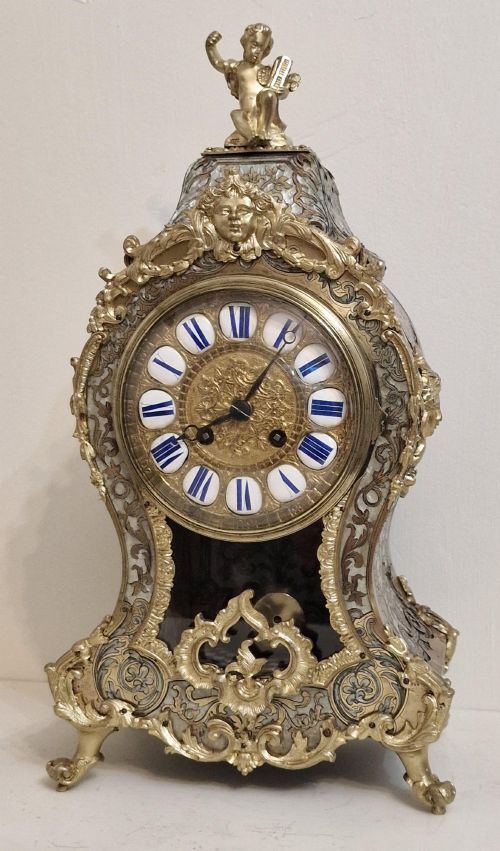
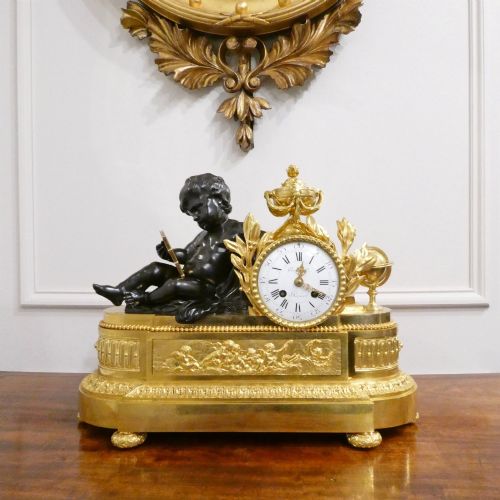
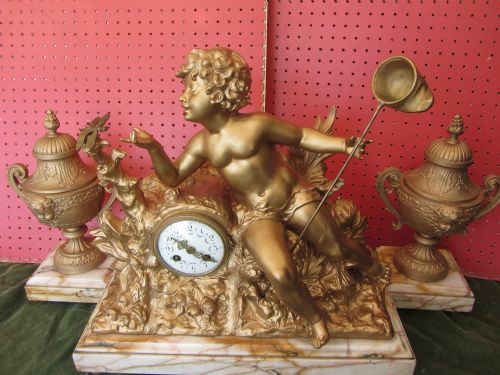
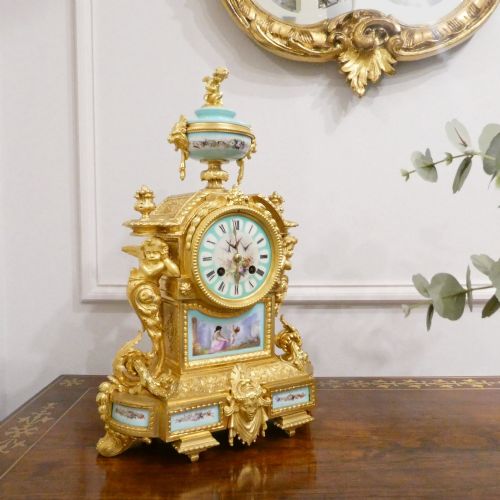
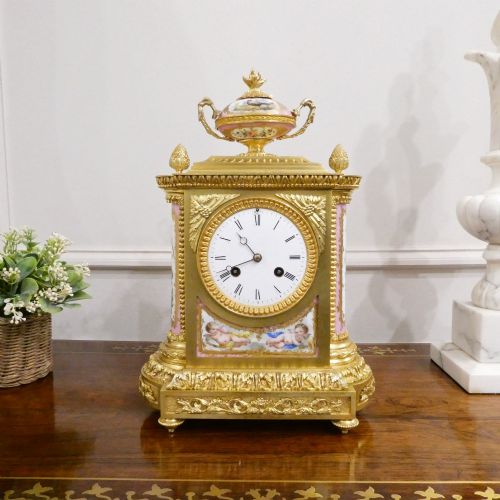
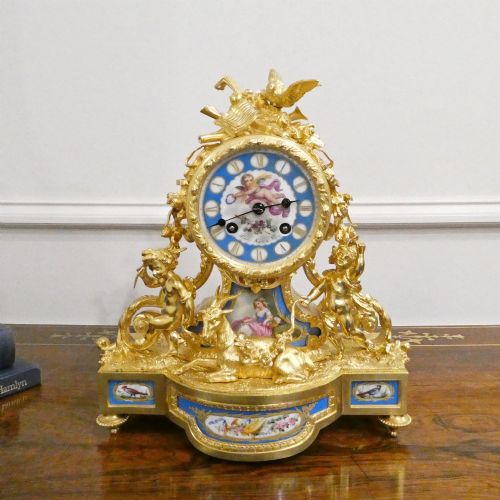
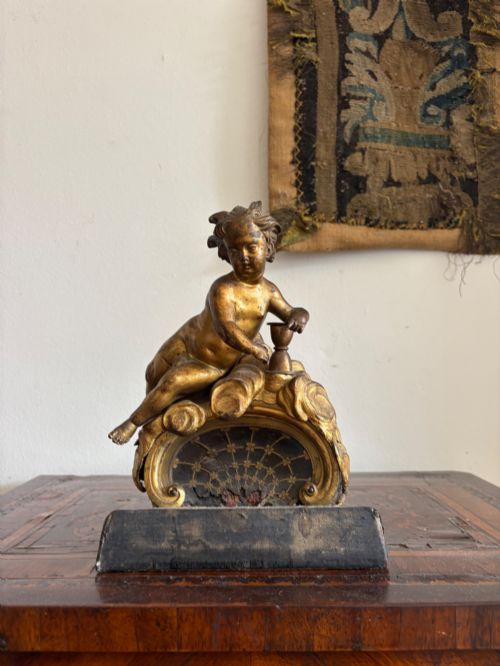
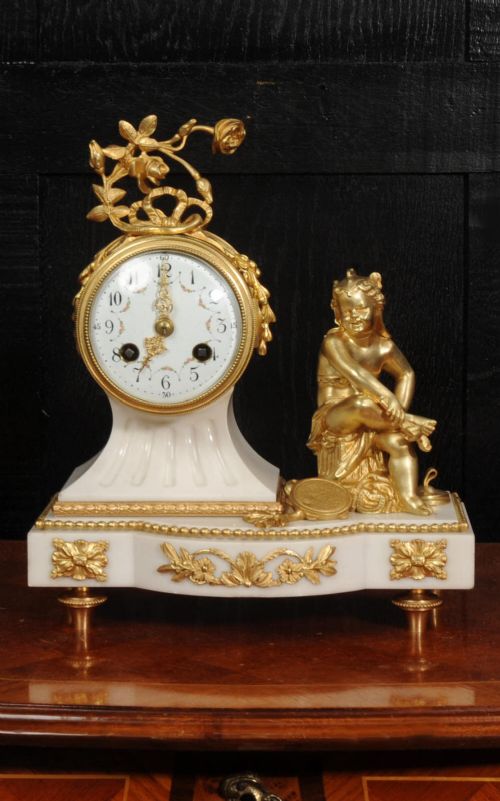
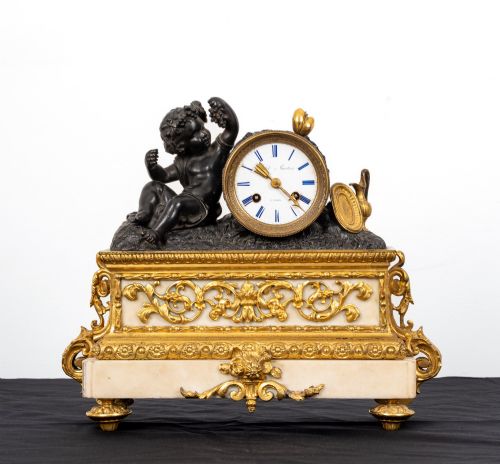
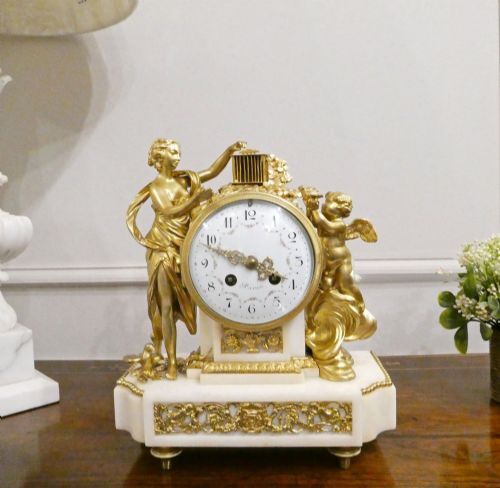
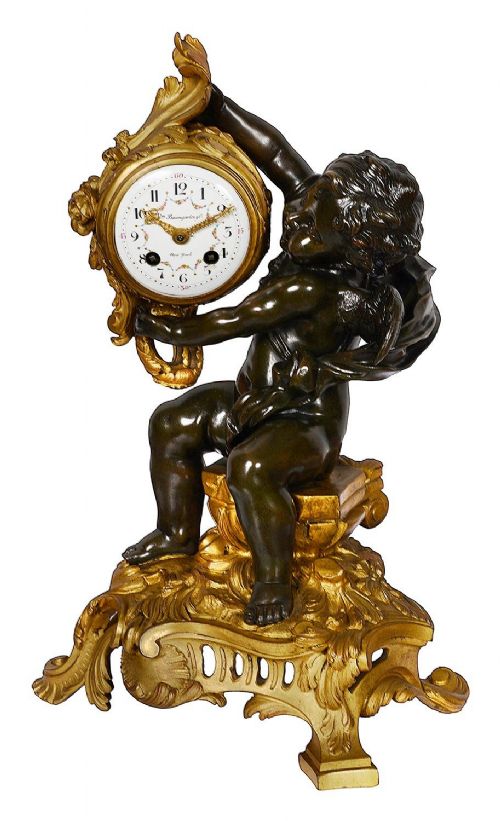
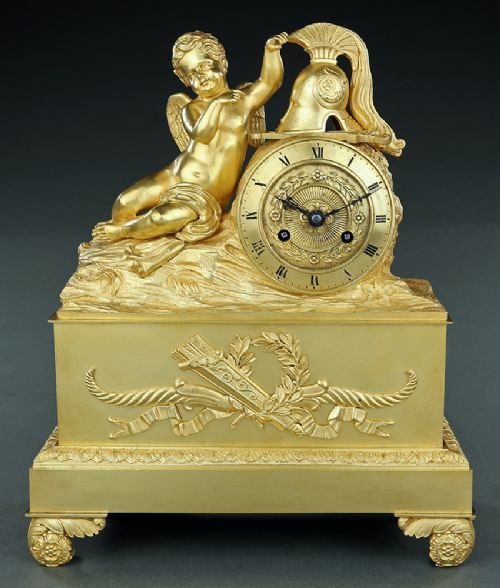
A mantel clock with cherub takes the form of a nineteenth-century timepiece featuring figural cast work of putti, cupids, and cherubs alongside maidens or animals. These works originate predominantly from French ateliers in styles such as Louis XVI Revival, Neoclassical, Rococo Revival, and Second Empire.
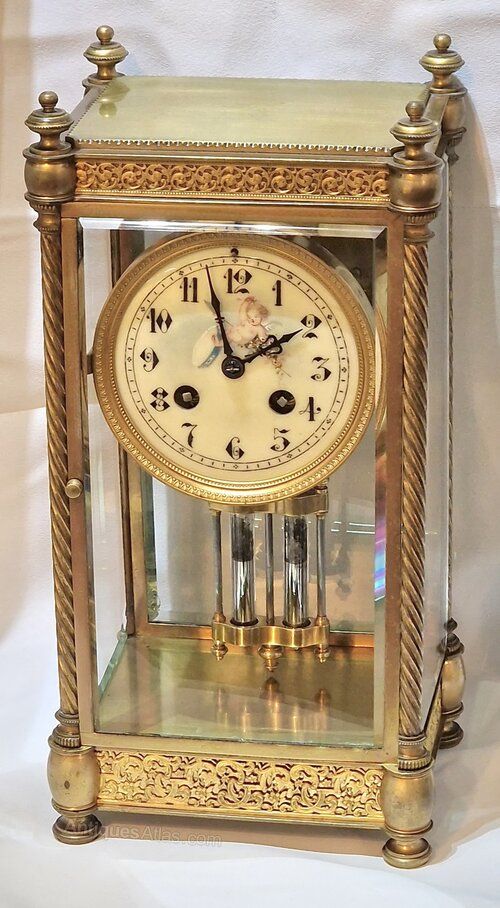
The objects combine timekeeping with decorative sculpture, often mounted on substantial marble, brass, or rosewood stands. Certain iterations incorporate silk suspension movements, visible pendulums, portrait plaques, or swinging elements.
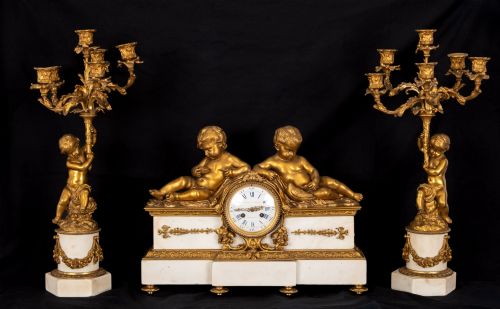
Buyers encounter miniatures alongside larger garniture or clock sets paired with side pieces. The metalwork ranges from patinated bronze to bright ormolu and gilt bronze, frequently accented with enamel dials.
How they were made
Maker-craftsmen formed the sculptural bodies of a mantel clock with cherub using bronze, brass, or gilt ormolu, employing lost-wax casting and hand-chiselling to define the cherubic figures. Artisans then applied fire gilding or patination to the metal surfaces.
Clockmakers fitted mechanical movements driven by springs or fuses, incorporating enamel chapters and dials, while stone-masons prepared heavy marble and specimen marble bases to anchor the substantial weight of the cast metal.
Mantel Clock with Cherub Retail Price Guide 2026
Typical asking prices for mantel clock with cherub among the pieces listed under this phrase on Sellingantiques today, from the lower quarter to the upper quarter. They describe what is for sale here now, not the wider market.
Listings show items spanning the nineteenth century, utilising gilt bronze, marble, ormolu, and enamel.
What varies in quality
The refinement of the chasing and hand-chiselling on the cherub figures distinguishes standard production from exceptional work, where facial expressions and wing feathers remain crisp and detailed. The choice of base material also separates items, with heavy variegated or specimen marble stands indicating higher ambition than plain timber.
The presence of a signed movement by a known maker or Parisian foundry adds distinction to the mechanism. Furthermore, integrated details like hand-painted enamel portrait plaques or complex swinging pendulum mechanisms elevate the overall execution.
Leon Message·Jollet et Cie·BELLENOT PARIS·Henry Berkeley Square London·Dumont·F Marti·Farcot·P.H. Mourey
The Mantel Clock with Cherub Glossary
- Ormolu
- Gilded bronze produced by applying a mixture of mercury and gold to metal and firing it. This technique creates a rich, durable golden finish found on nineteenth-century French clock cases.
- Putto
- A plump, naked male child depicted as a cherub or cupid in classical art. These figures form the primary sculptural motif on these mantel clocks.
- Fusee
- A conical pulley used in clock movements to maintain even tension on the chain as the mainspring unwinds. This mechanism improves the timekeeping accuracy of the clock.
- Silk suspension
- A method of hanging the pendulum from a fine loop of silk thread rather than a metal spring. This delicate system appears on earlier nineteenth-century movements.
- Garniture
- A set of matching ornamental objects consisting of a clock flanked by matching vases or candelabra. These sets were designed to sit together on a mantelpiece.
Mantel Clock with Cherub: Frequently Asked Questions
What is a mantel clock with cherub?
A mantel clock with cherub is a nineteenth-century decorative timepiece featuring cast metal figures of putti or cupids. These clocks combine functional clockwork with sculptural ornamentation.
Most examples reflect French decorative styles including Rococo Revival, Neoclassical, and Second Empire aesthetics. They incorporate materials such as marble, gilt bronze, and ormolu.
How do I wind the clock?
Wind the clock using the appropriate key inserted into the winding holes on the enamel dial. Turn the key gently until you feel resistance.
Avoid overwinding the spring mechanism to prevent damage. Consult the specific movement type, as fusee and eight-day movements require distinct handling.
Where should I place the clock?
Place the clock on a sturdy, level surface such as a mantelpiece, sideboard, or heavy table. The considerable weight of the marble and bronze cases requires secure support.
Keep the clock away from direct sunlight, moisture, and extreme temperature fluctuations. A stable environment protects both the metal patination and the internal mechanical parts.