




Male Nude Sketch
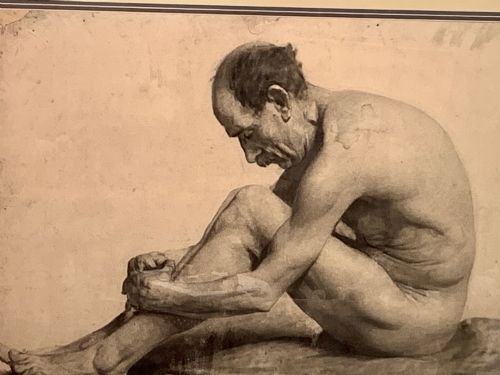
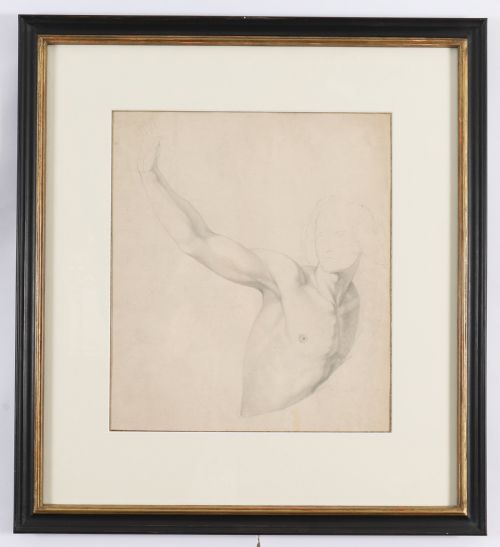
A male nude sketch captures the human form with direct draftsmanship, offering collectors an intimate view of academic training and modernist expression alike.
Male Nude Sketch
A male nude sketch represents the core of traditional draftsmanship and academic training, translating the human anatomy directly onto paper. Collectors seeking a male nude sketch will encounter framed drawings and works on paper spanning from the eighteenth century through the mid twentieth century.
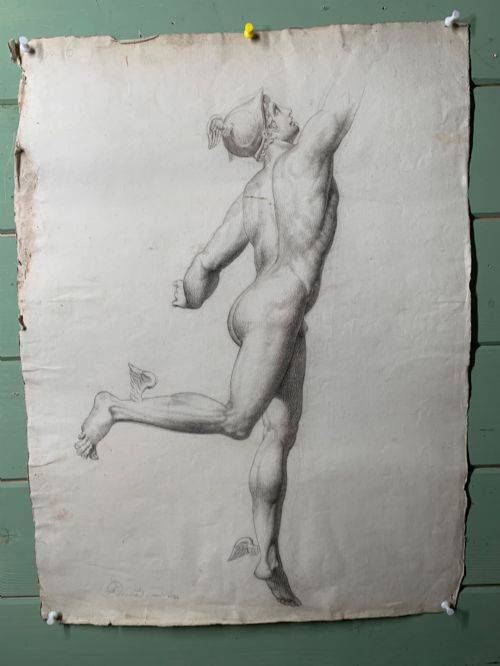
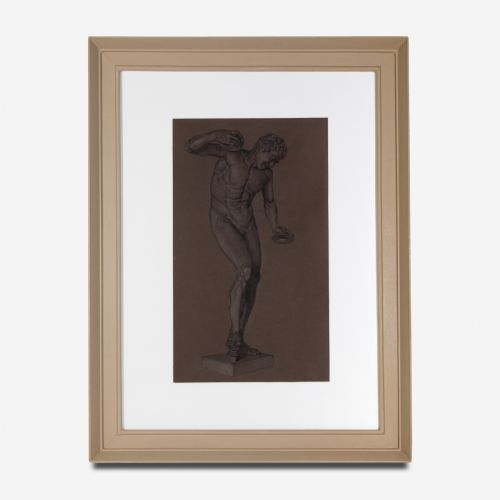
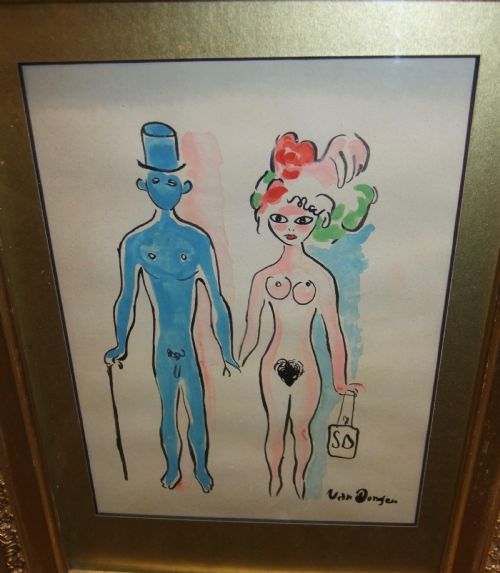
The selection ranges from rigorous academic studies of classical figures to modernist interpretations and loose watercolours. Pieces originating from the nineteenth century and the Georgian era dominate the current offerings, often depicting mythological or canonical subjects.
Works attributed to named artists sit alongside anonymous school pieces, providing varied approaches to proportion, shadow, and contour. Each framed artwork preserves a specific moment of figure drawing, whether executed as a precise graphite study or a fluid watercolour composition.
Materials and methods
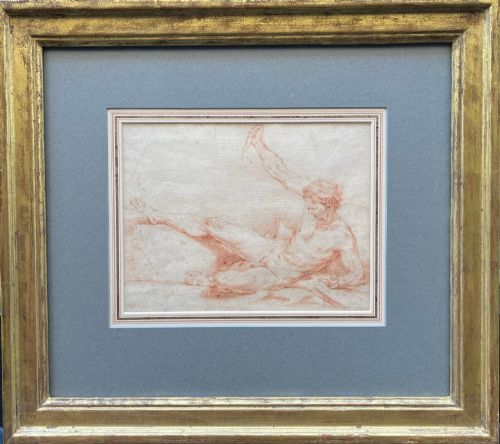
Draftsmen relied primarily on charcoal, graphite, ink, wash, and red chalk applied directly to paper. These dry and wet media allowed artists to build tone, define muscle structure, and capture gesture with varying degrees of immediacy.
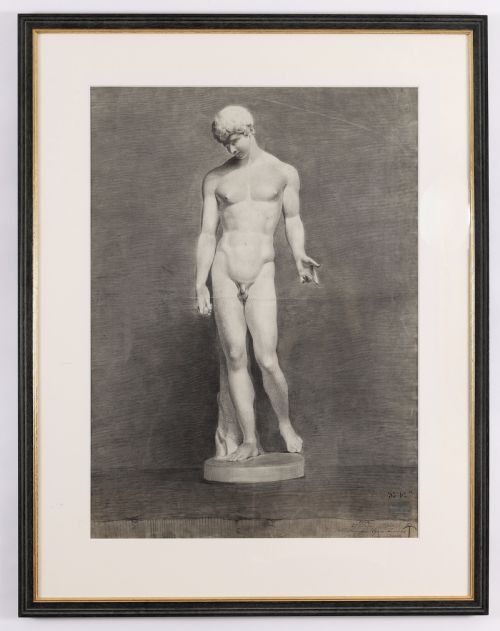
Works were frequently executed in studio settings during life-drawing sessions or as copies after antique sculpture and classical masters. Finished drawings were subsequently mounted behind glass within wooden frames to protect the delicate paper surface.
Male Nude Sketch Retail Price Guide 2026
Typical asking prices for male nude sketch among the pieces listed under this phrase on Sellingantiques today, from the lower quarter to the upper quarter. They describe what is for sale here now, not the wider market.
Media represented across the drawings include graphite, charcoal, red chalk, ink, wash, and watercolour.
Markers of distinction
Quality rests upon the sureness of the line and the precision of anatomical rendering achieved by the artist. Masterful handling of shadow and light gives volume to the figure, whereas lesser works remain stiff and unconvincing in proportion.
The sophistication of the draughtsmanship separates routine student exercises from accomplished academic or modernist pieces. Materials also contribute, as finely ground pigments, stable papers, and period framing enhance the survival and visual impact of the work.
Hyacinthe Colin de Vermont·Samuel Rabin·Henry Arthur Roberts·Kees van Dongen
The Male Nude Sketch Glossary
- Academic Realism
- A style of painting and drawing produced under the influence of European academies of art, prioritising accurate anatomy and classical proportions.
- Graphite
- A form of crystalline carbon used as a drawing medium, encased in wood or utilised in stick form to produce grey lines and tonal shading.
- Wash
- A thin layer of translucent watercolour or ink applied with a brush to create tonal depth and shadow behind drawn lines.
- Red chalk
- A brownish-red drawing material made from iron oxide and clay, widely utilised for figural studies and sketching from the human form.
Male Nude Sketch: Frequently Asked Questions
What defines an academic life study?
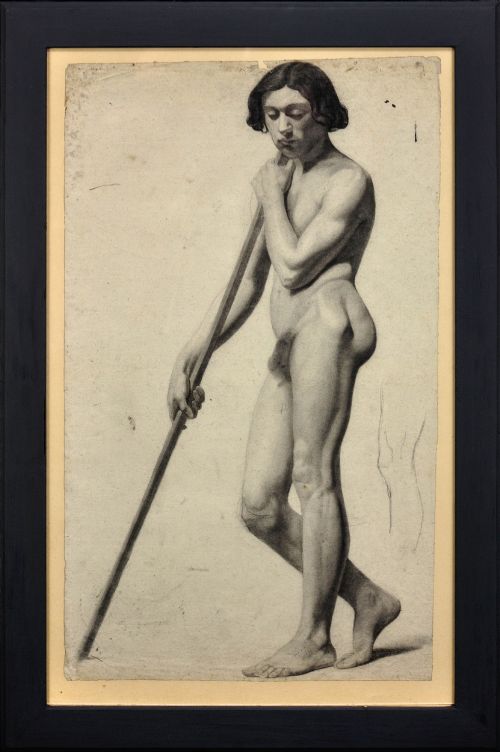
An academic life study is a detailed drawing produced from a live human model within a structured training environment. These pieces focus on accurate proportion, muscular structure, and tonal modelling.
Such works reflect the rigorous standards imposed by European art academies during the eighteenth and nineteenth centuries.
How should framed drawings be displayed?
Framed drawings on paper require placement away from direct sunlight to prevent the fading of graphite, ink, and watercolour media. Maintaining stable indoor humidity protects both the paper substrate and the historical wooden frame.
Glazing should remain intact to shield the delicate surface from dust and atmospheric pollutants.
How do period styles differ?
Earlier periods such as the Georgian and nineteenth century favour strict adherence to classical anatomy and sculptural precedents. Later works from the twentieth century introduce modernist and fauvist interpretations that prioritize expressive colour and simplified form over strict realism.
Comparing the handling of line reveals the stylistic shift from academic precision to modernist abstraction.
What subjects typically appear in these drawings?
Common subjects include direct studies of standing or crouching male models captured during studio sessions. Other works reference classical antiquity, depicting mythological figures and antique sculptures such as the Capitoline Antinous.
These varied subjects highlight both the educational methods of past artists and their engagement with classical tradition.