

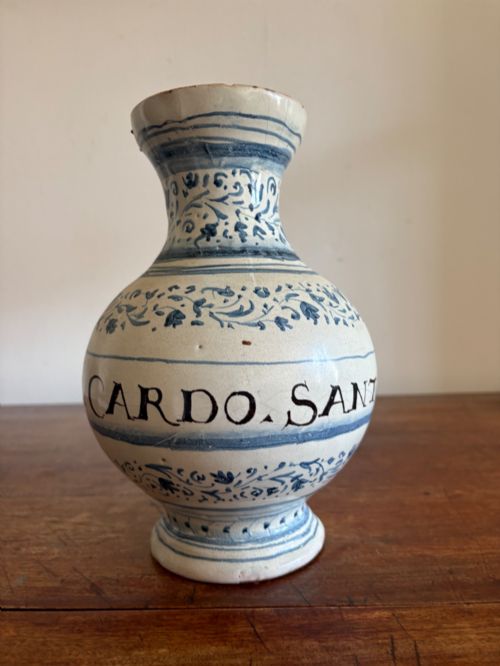


Majolica Pottery Vase
Majolica pottery vase pieces deliver tin-glazed earthenware forms in rich palettes, bringing historical revival styles and vibrant colour into domestic interiors.
Majolica Pottery Vase
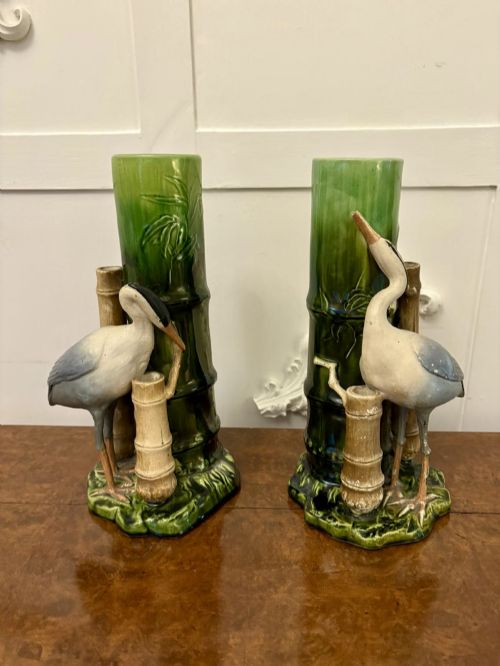
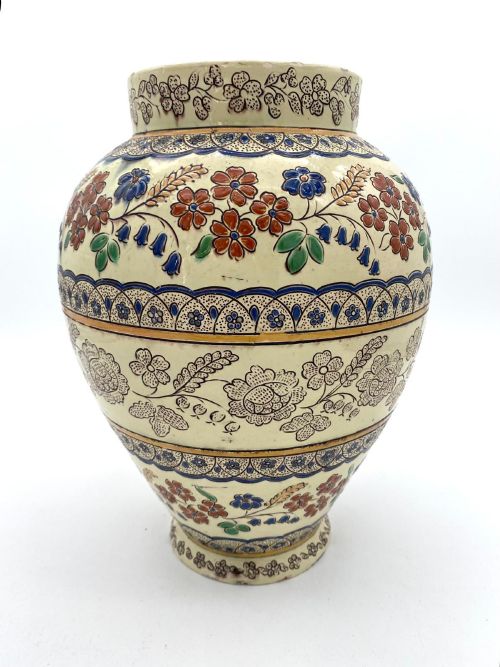
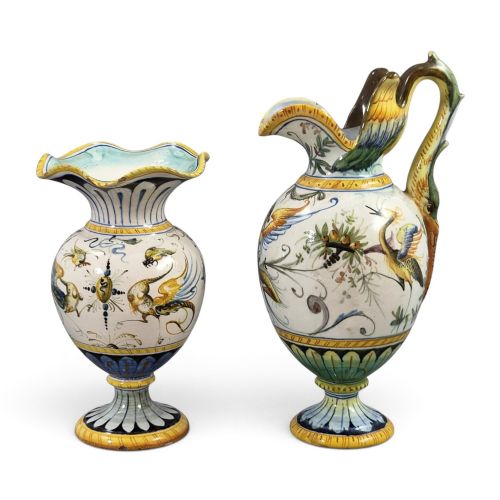
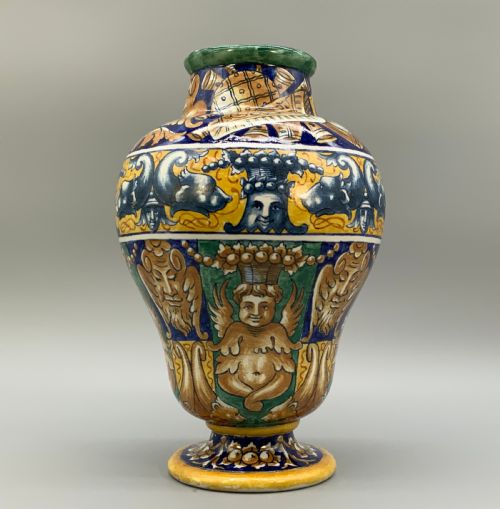
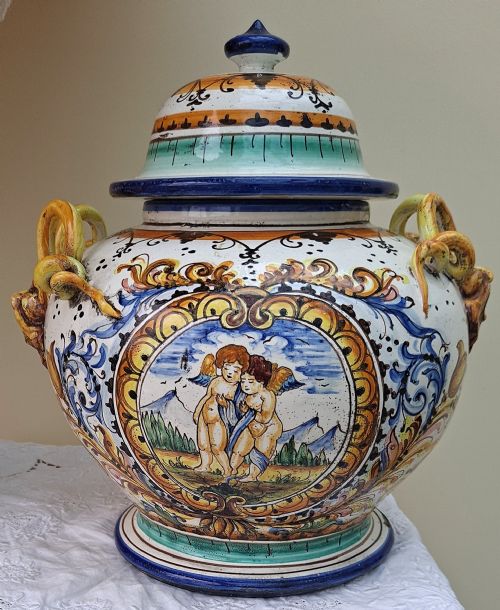
A majolica pottery vase brings together tin-glazed earthenware and faience vessels spanning the eighteenth and nineteenth centuries, alongside revival expressions like Italian Baroque and Renaissance Revival. Buyers encounter forms ranging from apothecary jars and pilgrim flasks to monumental lidded urns and table lamps.
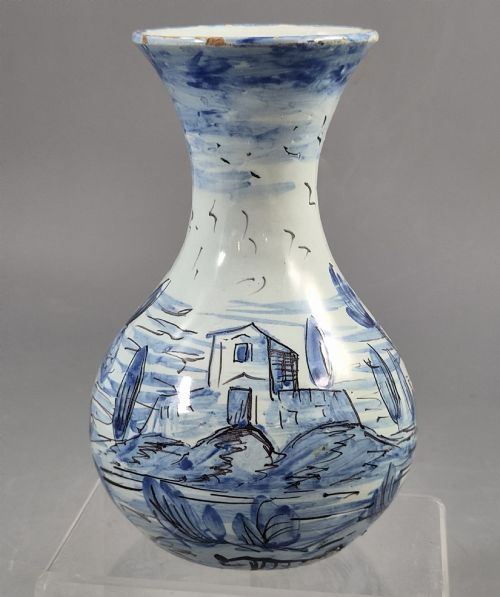
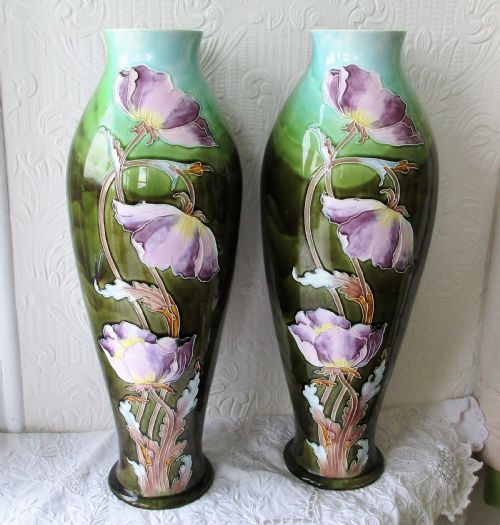
The selection on this page leans heavily towards nineteenth-century production, particularly Victorian interpretations and continental European manufactories. Traditional Italian blue and white designs sit alongside French faience and striking Art Nouveau creations.
Vessels take diverse shapes, including bulbous cabinet pieces, handled ewers, and tall stick stands. Collectors select these items for their strong decorative presence and historical continuity.
How they were made
Potters shaped these objects primarily from earthenware, terracotta, and ceramic bodies before applying an opaque tin glaze. This white or tinted base provided a smooth canvas for subsequent painted decoration.
Artisans applied metallic oxide pigments directly onto the unfired or raw glaze in techniques associated with traditional majolica, faience, and delftware. Subsequent kiln firing fixed the polychrome or blue and white palette permanently into the surface.
Majolica Pottery Vase Retail Price Guide 2026
Typical asking prices for majolica pottery vase among the pieces listed under this phrase on Sellingantiques today, from the lower quarter to the upper quarter. They describe what is for sale here now, not the wider market.
Listings feature tin-glazed earthenware and terracotta forms spanning the eighteenth and nineteenth centuries, including Renaissance Revival and Art Nouveau styles.
What varies in quality
Quality rests upon the crispness of the painted detail and the depth of the tin glaze. Superior examples display confident brushwork and rich polychrome or blue and white pigments without muddy blending.
The ambition of the form distinguishes standard production from exceptional works. Sculptural elements, intricate handles, and balanced proportions elevate pieces from simple containers to significant works of ceramic art.
Cantagalli·Minton·Eichwald·Bretby·Gien
The Majolica Pottery Vase Glossary
- Majolica
- Tin-glazed earthenware decorated with opaque metal oxide glazes fired on a prepared body. It embraces both Italian Renaissance traditions and nineteenth-century revival styles.
- Faience
- European tin-glazed pottery, particularly associated with French and continental workshops. The term describes earthenware covered in an opaque white glaze and painted with coloured pigments.
- Albarello
- A cylindrical earthenware jar used by apothecaries to store drugs and dry medicines. These pieces often feature waisted bodies to allow easy handling on pharmacy shelves.
- Pilgrim Flask
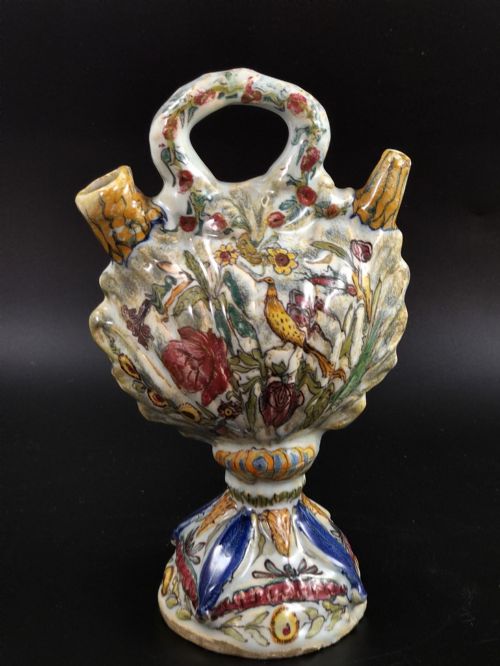
- A flattened globular vessel equipped with side loops for suspension cords, modeled after travellers' leather or metal canteens. Ceramic versions served decorative functions in cabinet collections.
- Tin Glaze
- A ceramic coating made opaque by the addition of tin oxide to lead glaze. It creates a white, glossy surface suitable for direct brush painting.
Majolica Pottery Vase: Frequently Asked Questions
How do I clean a majolica pottery vase?
Dust the surface gently with a soft, dry cloth to prevent accumulation in recessed areas. Avoid water immersion or chemical cleaning agents, as moisture can penetrate old earthenware bodies through microscopic glaze crazing.
Keep pieces away from direct sunlight and damp environments to protect the tin glaze and painted pigments over time.
What is an apothecary jar?
An apothecary jar is a cylindrical or waisted ceramic container utilised by historical pharmacists to store dry herbs, ointments, and medicinal compounds. These vessels often carry painted labels or botanical motifs.
Collectors prize them for their distinct pharmaceutical history and bold decorative lettering.
How do I identify Renaissance Revival pieces?
Renaissance Revival ceramics borrow motifs from sixteenth-century Italian majolica, including grotesque scrolls, mythological figures, and vibrant polychrome palettes. Makers in the nineteenth century reinterpreted these classical forms with considerable technical skill.
Look for tin-glazed earthenware bodies paired with architectural shapes such as ewers and lidded urns.
Where were these vases made?
Production centres span Italy, France, and Britain, reflecting diverse regional ceramic traditions. Italian workshops revived historic majolica techniques in Florence, while French factories produced refined faience.
British potteries contributed innovative forms, ranging from utilitarian stick stands to elaborate exhibition pieces.