



Majolica Pedestals and Stands
Majolica pedestals and stands bring bold colour and sculptural plant display to Victorian and Edwardian interiors through richly glazed earthenware.
Majolica Pedestals and Stands
Majolica pedestals and stands combine a planting vessel with a matching column or figural base designed to elevate flora within reception rooms and conservatories. These ceramic furnishings unite the garden and the drawing room through elaborate floral, animal and architectural motifs.
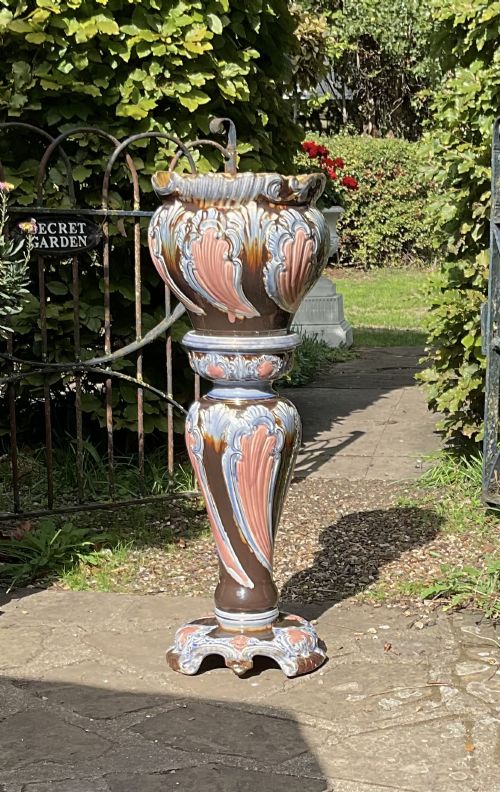
Buyers seeking majolica pedestals and stands encounter matched sets comprising a jardiniere paired with its columnar support, alongside individual plant stands and comports. The selection spans the nineteenth century through the early twentieth century, taking in Victorian naturalism and Italian Renaissance revival forms.
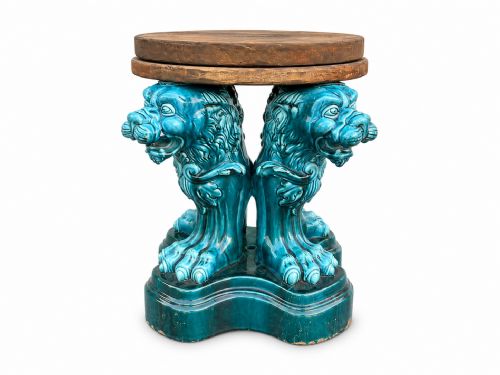
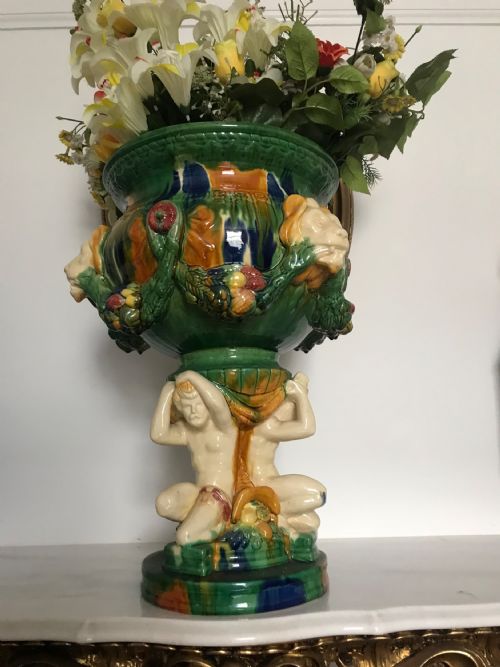
The dominant configurations on this page pair tall ceramic columns with deep planting bowls, often enriched with figural supports, griffins or lion heads. These pieces served as monumental interior focal points for ferns and palms in period homes.
How they were made
Potters shaped earthenware bodies by hand or in moulds, building up complex figural columns and botanical relief decoration before firing. The resulting heavy ceramic forms provided the structural stability required to support large decorative plant containers.
Artisans applied opaque tin glazes and translucent lead glazes mixed with metallic oxides to achieve the characteristic vibrant palette of greens, browns, blues and yellows. Subsequent kiln firings fused these majolica glazes into glossy, light-reflecting surfaces that highlighted every moulded detail.
Majolica Pedestals and Stands Retail Price Guide 2026
Typical asking prices for majolica pedestals and stands among the pieces listed under this phrase on Sellingantiques today, from the lower quarter to the upper quarter. They describe what is for sale here now, not the wider market.
Glazed griffins and bacchanalian cupids quietly guard the roots of your indoor ferns.
What varies in quality
Quality rests in the crispness of the moulded relief and the complexity of the figural modelling, distinguishing ambitious sculptural stands from simpler fluted columns. Stronger examples feature detailed lions, griffins or cherubs integrated seamlessly into the architectural form.
The depth and brilliance of the coloured glaze separation determine visual success, with superior pieces displaying rich, even pooling without distracting surface flaws. The alignment between the jardiniere and its pedestal further marks the care taken during manufacture.
Burmantofts·Clement Massier·Julius Dressler·Minton·Woodlesford Art Pottery
The Majolica Pedestals and Stands Glossary
- Majolica
- Earthenware decorated with opaque tin glazes and vibrant metallic oxide colours. This technique produces rich, glossy surfaces that define nineteenth-century revival ceramics.
- Jardiniere
- An ornamental ceramic pot or bowl designed to hold indoor plants. These vessels sit atop pedestals or function as centrepieces.
- Comport
- A raised decorative bowl used for fruit or centrepiece display on tables. These footed dishes often share decorative vocabularies with larger plant stands.
- Glaze
- A glassy coating fused to ceramic bodies through firing to seal the porous clay and provide colour. Lead and tin variations create the characteristic finish on these wares.
- Faience
- Tin-glazed earthenware produced across European potteries. The term groups similar glazed ceramic traditions alongside majolica.
Majolica Pedestals and Stands: Frequently Asked Questions
How do I clean a majolica stand safely?
Dust surfaces gently with a dry, soft cloth to prevent scratching the glossy glaze finish. Avoid submerging historical earthenware in water or using harsh modern detergents.
Take care around unglazed areas underneath or old hairline fractures where moisture might penetrate the porous clay body. Regular gentle maintenance preserves the metallic oxide colours intact.
Can these stands support heavy plants today?
These nineteenth-century earthenware columns were engineered to bear the weight of substantial ferns and palms in period conservatories. Their heavy ceramic bases provide considerable stability on solid flooring.
Inspect the weight distribution and ensure the jardiniere sits securely on its pedestal before adding soil and plants. Placing a protective liner inside the bowl prevents water damage to the historic ceramic glaze.
How do I identify Victorian naturalism pieces?
Victorian naturalism relies on direct botanical and animal forms such as cascading leaves, swans, and tree trunks rather than classical architectural revival motifs. Look for moulded details that mimic growing foliage and organic textures across the ceramic body.
These pieces often employ earthy greens and browns alongside brighter majolica tones to evoke living garden plants. The style flourished during the late nineteenth century across major European potteries.
Where were pedestals placed in period homes?
Homeowners positioned majolica plant stands and pedestals in entrance halls, drawing rooms, and glazed conservatories where natural light caught the vibrant glazes. They stood freely in corners or flanking doorways to frame architectural openings.
Pairing a tall column with a large jardiniere created a vertical focal point that brought outdoor greenery directly into domestic living spaces.