



Majolica Jardiniere Pedestal
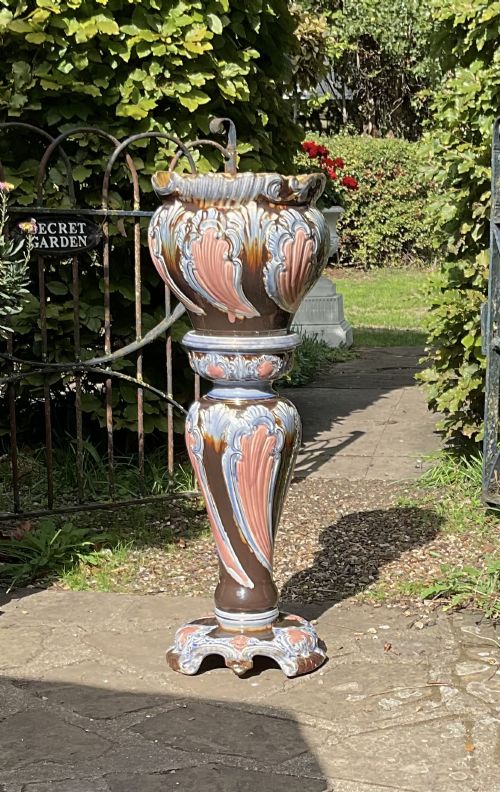
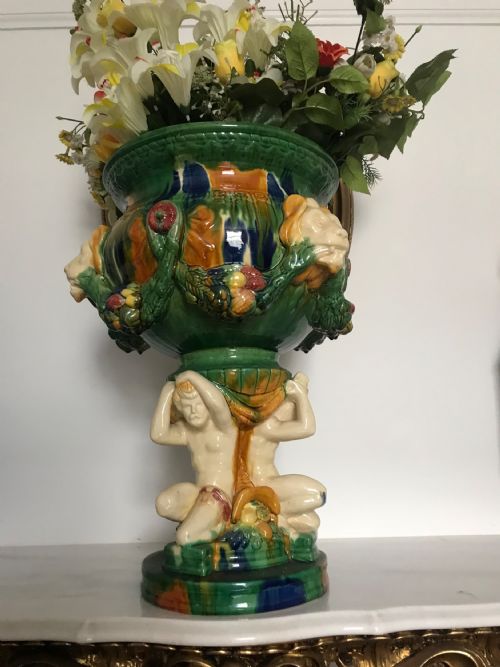
These majolica jardiniere pedestal sets bring dramatic botanical display and vibrant coloured glaze to a hall or conservatory.
Majolica Jardiniere Pedestal
A majolica jardiniere pedestal pairs a deep plant container with a matching floor-standing base, designed as a single coordinated display unit. These pieces span the nineteenth and early twentieth centuries, drawing on Victorian, Edwardian, and Art Nouveau tastes.
The most frequent version encountered on this page combines a modelled earthenware planter with a matching column or figural stand. Origins stretch from British potteries to continental workshops in Italy and France.
Forms range from classical urns and columns to naturalistic designs incorporating foliage, swans, and lions. Collectors look for matched sets where both the jardiniere and its supporting pedestal survive together.
Materials and Construction
Makers shaped these jardiniere and pedestal combinations from earthenware and terracotta, forming the bodies either by throwing on a wheel or by pressing clay into moulds. Moulded production allowed for high relief decoration such as animal figures, griffins, and foliate motifs.
Artisans applied opaque tin or lead glazes over the clay body, often incorporating lustre techniques to achieve a metallic sheen. Firing at high temperatures fused the coloured metallic oxides into rich green, brown, and ochre finishes.
Majolica Jardiniere Pedestal Retail Price Guide 2026
Typical asking prices for majolica jardiniere pedestal among the pieces listed under this phrase on Sellingantiques today, from the lower quarter to the upper quarter. They describe what is for sale here now, not the wider market.
Keep an eye out for watchful ceramic griffins and lions holding up the flower pots.
Judgements of Quality
Quality in a majolica jardiniere pedestal rests on the crispness of the moulded relief and the depth of the coloured glaze. Superior examples retain sharp detail in complex figural elements such as griffins or lions' heads rather than softened contours from worn moulds.
The cohesion of the design between the upper bowl and the lower stand dictates the visual success of the piece. Matching glaze coverage across both sections separates standard production from exceptional studio outputs.
Clement Massier·Minton Secessionist·Julius Dressler·Burmantofts·Woodlesford
The Majolica Jardiniere Pedestal Glossary
- Majolica
- Earthenware pottery decorated with opaque coloured lead glazes fired over a white slip. This technique produces vibrant greens, yellows, and purples with high gloss.
- Jardiniere
- A large ornamental pot or container designed to hold indoor plants or flowers. They often sit upon matching ceramic columns.
- Pedestal
- A supporting column or base that elevates a jardiniere or urn above floor level. These stands frequently mirror the decorative motifs of the bowl above.
- Terracotta
- Unglazed or glazed fired red clay used for sculptural garden ornaments and planters. The porous material provides a solid structural base for heavy decorative pieces.
- Lustre glaze
- A metallic surface finish applied to ceramics to create an iridescent sheen. This technique reflects light across the contours of the moulded earthenware.
Majolica Jardiniere Pedestal: Frequently Asked Questions
How do I care for my majolica jardiniere pedestal?
Clean the glazed earthenware surface gently with a soft, damp cloth and avoid harsh chemical cleaners that can dull the original finish. Use a waterproof liner inside the bowl to protect the historic ceramic from moisture damage.
Position the pedestal away from heavy foot traffic where the base might be knocked or chipped. Because these pieces are heavy, ensure the floor surface is level and stable before placing the stand and planter in position.
Can I use these planters outdoors?
Most antique majolica jardiniere pedestals were manufactured for indoor use in conservatories, halls, or parlours. Subjecting historic earthenware to frost and freezing temperatures risks cracking the ceramic body and damaging the glaze.
Keep these ceramic sets inside sheltered spaces to preserve the integrity of the terracotta and earthenware bodies. If placed in a garden room, protect them from damp ground and extreme temperature fluctuations.
How do I match a separated bowl and stand?
Matching a jardiniere to a pedestal requires careful comparison of the clay body, glaze palette, and decorative style. Differences in the shade of the glaze often indicate that pieces were paired together long after manufacture.
Look for matching wear patterns and consistent manufacturing marks on the undersides of both sections. True matched sets share identical proportions and complementary relief decoration.
What periods do these pedestals date from?
The listed pieces date primarily from the nineteenth and early twentieth centuries, spanning the Victorian and Edwardian eras. Production methods shifted from classical revival designs to flowing Art Nouveau forms around nineteen hundred.
Earlier examples from the mid-nineteenth century often favour Italian Renaissance revival themes, while later pieces embrace naturalistic animal and plant forms. Stylistic details and manufacturing stamps help narrow down the decade of production.