

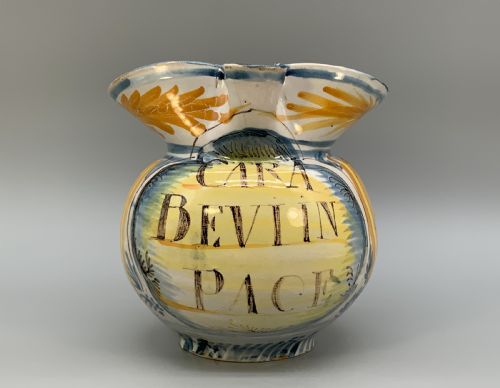


Majolica Glazed Jug
These majolica glazed jugs bring rich Victorian colour and spirited sculptural forms straight to the table.
Majolica Glazed Jug
A majolica glazed jug combines functional earthenware vessels with the vivid sculptural modelling seen across the nineteenth century. Buyers searching for a majolica glazed jug will find vibrant decorative pitchers, ewers, and pharmacy vessels spanning the eighteenth to the early twentieth century.
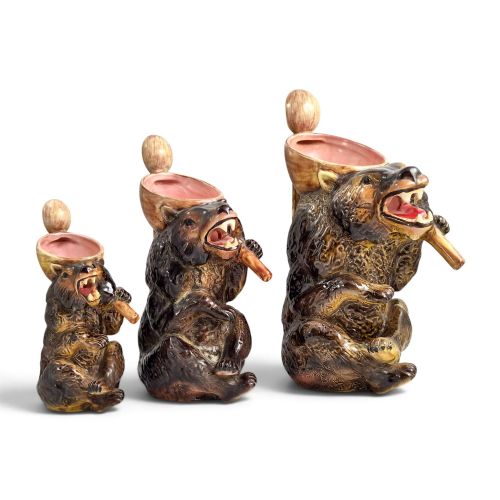
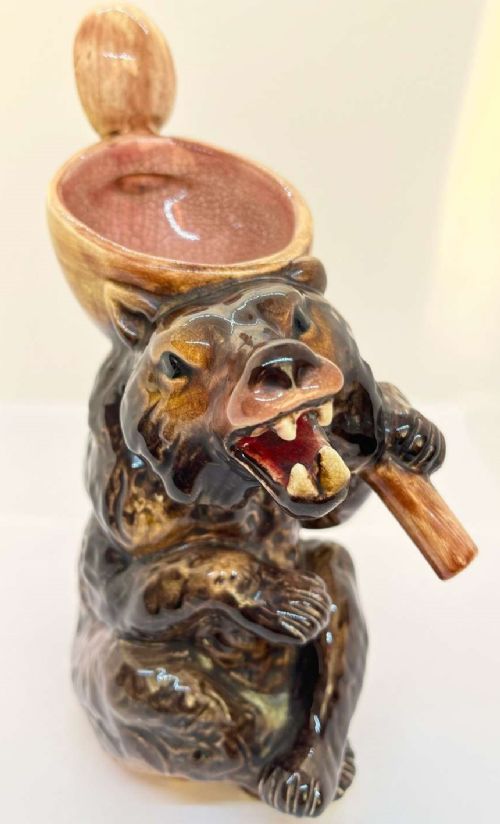
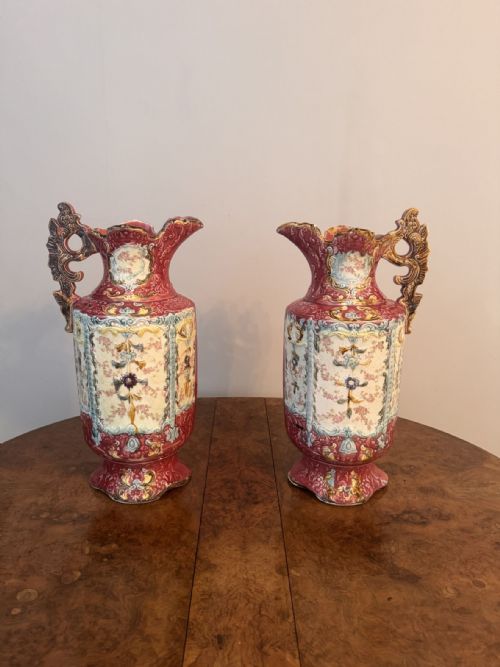
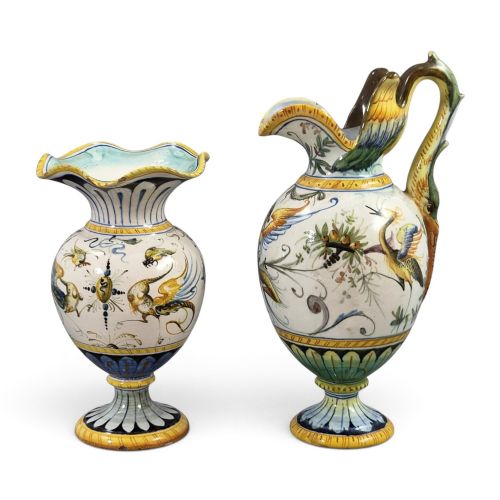
The pieces appearing here lean heavily towards Victorian British production alongside continental European faience and Italian Renaissance revival workshops. Naturalistic animal and plant forms, such as bears, bullrushes, and lilies, dominate the physical shapes alongside classical revival motifs.
Origins stretch from English factories like Minton and George Jones to French faience centres and Italian kilns in Florence. Most examples seen on this page date from the Victorian era of the eighteen-seventies and eighteen-eighties.
Materials and manufacture
Potters shaped these vessels from earthenware clay before applying opaque tin glazes or lead glazes that accepted vibrant metallic oxide pigments. Polychrome palettes utilising manganese, yellow, and rich green enamel flowed over the relief-moulded surfaces during firing.
Techniques relied on careful hand-painting over tin-glazed earthenware and faience, allowing colours to pool in the recesses of moulded relief. This method produced the characteristic glossy sheen and deep colour saturation defining nineteenth-century majolica.
Majolica Glazed Jug Retail Price Guide 2026
Typical asking prices for majolica glazed jug among the pieces listed under this phrase on Sellingantiques today, from the lower quarter to the upper quarter. They describe what is for sale here now, not the wider market.
Listings feature earthenware and tin-glazed earthenware spanning from the eighteenth century through to the early twentieth century.
Assessing quality and execution
Quality rests on the crispness of the modelled relief and the control of the coloured glazes across complex animal or plant forms. Superior pieces maintain sharp botanical details and even glaze pooling without muddying the underlying earthenware body.
The distinction between standard utility vessels and top tier exhibition pieces lies in the ambition of the sculptural form and the precision of the polychrome enamel painting. Finer works display sophisticated surface shading and confident handling of traditional Renaissance revival or naturalistic themes.
Holdcroft·Cantagalli Florence·Minton·George Jones
The Majolica Glazed Jug Glossary
- Majolica
- A type of earthenware pottery decorated with coloured lead or tin glazes over an opaque white ground. It is celebrated for its bright palette and heavy relief modelling.
- Faience
- European tin-glazed earthenware, particularly associated with French and Italian production. The technique creates a smooth white canvas for painted decoration.
- Ewer
- A large jug or pitcher with a wide spout and handle, traditionally used for pouring water. Many nineteenth-century examples served purely decorative functions.
- Polychrome
- Decoration employing several colours. On these vessels, it describes the rich mix of manganese, yellow, and green pigments.
- Pilgrim flask
- A flattened globular vessel fitted with lugs for suspension cords. Nineteenth-century makers adapted this historic form into decorative majolica jugs.
Majolica Glazed Jug: Frequently Asked Questions
What is a majolica glazed jug?
A majolica glazed jug is an earthenware vessel finished with colourful lead or tin glazes, often featuring sculptural relief decoration such as animals or plants. These pieces range from Victorian British tableware to continental European revival ewers.
Potters used opaque glazes to create bright, glossy surfaces that mimic Renaissance ceramics. They function equally as decorative display objects and historical examples of nineteenth-century ceramic art.
How were pharmacy jugs used?
Apothecary and pharmacy jugs stored liquid medicines, syrups, and chemical preparations in medical dispensaries. Their clear labelling helped apothecaries identify contents quickly.
Over time, these utilitarian vessels transitioned into decorative items prized for their historical inscriptions and rich tin-glaze finishes.
How do I date a majolica jug?
Dating relies on examining the ceramic body, glaze characteristics, and stylistic markers such as Victorian naturalism or Renaissance revival motifs. Factory marks, where present, help pinpoint specific periods.
Nineteenth-century pieces often feature heavy moulded relief and vibrant polychrome enamels, while earlier eighteenth-century examples display tin-glazed earthenware with hand-painted apothecary inscriptions.
Where should I display my jug?
Display these jugs on sturdy shelving or within enclosed cabinets away from direct sunlight to protect the glossy glaze. Their bright polychrome colours make them striking focal points in traditional or eclectic interiors.
Ensure placement avoids high traffic areas where handles or sculptural spouts might suffer accidental knocks.