



Mahogany Writing Desk Armchair
Mahogany writing desk armchairs are sturdy seating designed for study and correspondence, built in dense timbers to last generations.
Mahogany Writing Desk Armchair
A mahogany writing desk armchair is a substantial seat designed for office work, libraries and studies, appearing across the Georgian, William IV, Regency and Edwardian eras. These chairs combine timber frames with supportive armrests, providing the correct posture for writing and desk tasks.
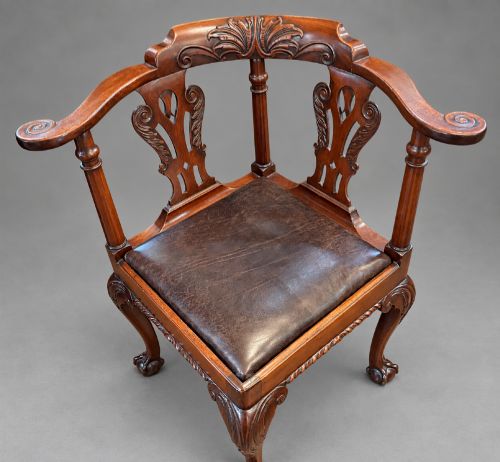
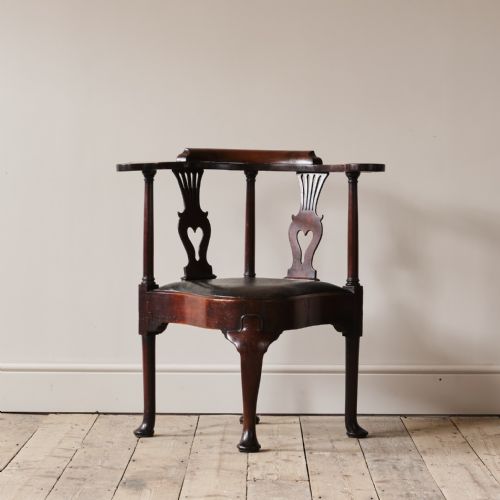
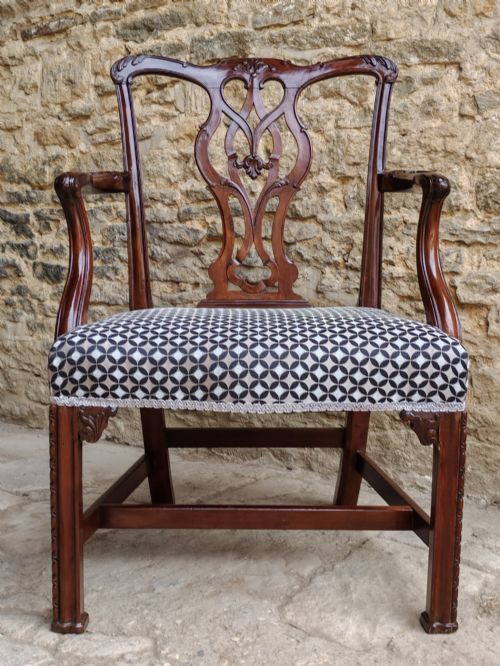
The versions most commonly met on this page are corner chairs and library chairs constructed from solid mahogany. Examples range from mid-eighteenth-century corner designs to nineteenth-century revolving or desk models.
How they were made
Makers built these frames using dense mahogany, often incorporating secondary timbers such as oak, and ornamented surfaces with satinwood inlay or brass details. Upholstery materials included leather, velvet and traditional fabric coverings.
Joinery techniques relied on traditional framing and corner bracing to support the weight placed on the arms and back during daily use. Carved wooden elements were shaped directly from the solid timber before finishing.
Mahogany Writing Desk Armchair Retail Price Guide 2026
Typical asking prices for mahogany writing desk armchair among the pieces listed under this phrase on Sellingantiques today, from the lower quarter to the upper quarter. They describe what is for sale here now, not the wider market.
Listings span periods from the mid-eighteenth century through the Edwardian era, predominantly featuring mahogany and leather.
What varies in quality
The standard of a mahogany writing desk armchair rests on the depth of the timber figuring and the crispness of any carved decoration on the arms and legs. Earlier pieces often display finer proportion and more deliberate joinery than later revival examples.
The integrity of the structural frame and the presence of original brass fittings or leather upholstery contribute to the overall merit of the piece. Subtle variations in the turning of the legs and the curvature of the backrest distinguish finer workshops.
The Mahogany Writing Desk Armchair Glossary
- Corner chair
- A chair designed to fit into the corner of a room, featuring a diagonal seat plan and a continuous curved armrest supported by multiple uprights.
- Bergère
- An enclosed upholstered armchair with a wooden frame, often featuring cane panels on the back and sides.
- Carver
- A traditional term for an armchair, typically used at the head of a dining table or alongside a desk.
- Satinwood inlay
- A decorative technique where contrasting light-coloured satinwood is inserted into recesses cut into the mahogany surface to create patterns.
- Library chair
- A heavy, comfortable armchair intended for reading and study, frequently fitted with leather upholstery and robust wooden arms.
Mahogany Writing Desk Armchair: Frequently Asked Questions
What is a mahogany writing desk armchair?
A mahogany writing desk armchair is a sturdy wooden seat designed to provide comfortable support during administrative work, letter writing or reading at a desk.
These pieces utilise dense timber frames and often feature upholstered seats or armrests suited for prolonged daily use.
How do I date a mahogany chair?
Dating relies on observing the stylistic characteristics, construction methods and timber choices visible in the frame, comparing them against known periods like the Georgian or Regency eras.
Changes in leg turning, backrest design and joinery techniques provide clear indicators of when a workshop produced the piece.
Where were these chairs used?
These chairs were primarily placed in home studies, libraries, administrative offices and parlours where paperwork and correspondence took place.
Their robust construction and supportive arms made them practical for long hours spent sitting at a bureau or partner desk.
How do I care for mahogany furniture?
Maintenance involves keeping the timber away from direct heat sources and sudden humidity changes to prevent the wood from drying out or splitting.
Regular dusting with a soft cloth and occasional treatment with appropriate traditional wax helps preserve the natural lustre of the mahogany surface.