


Mahogany Wooden Coffer
A mahogany wooden coffer brings enduring storage and rich timber grain to an interior, uniting utility with period craftsmanship.
Mahogany Wooden Coffer
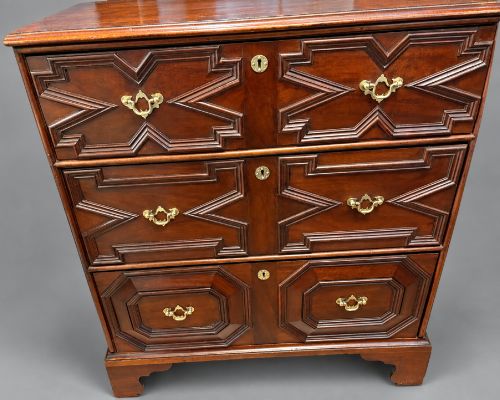
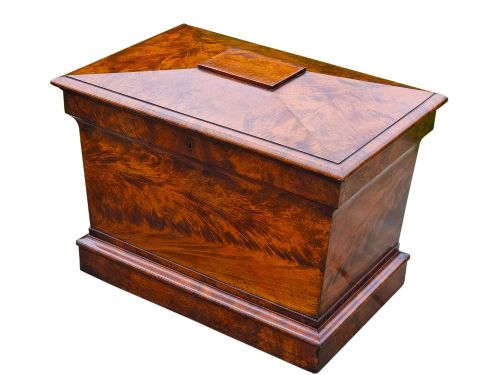
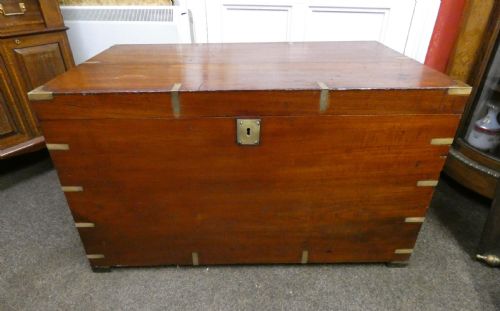
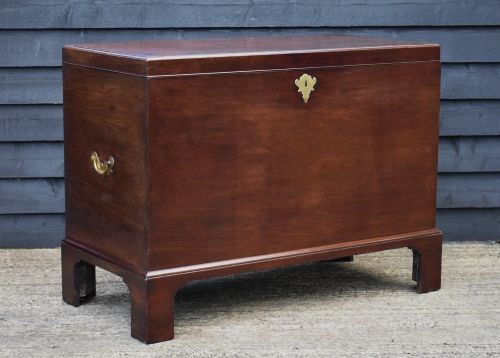
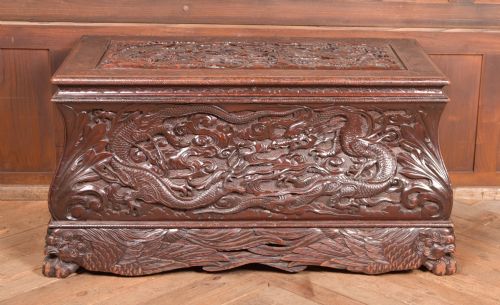
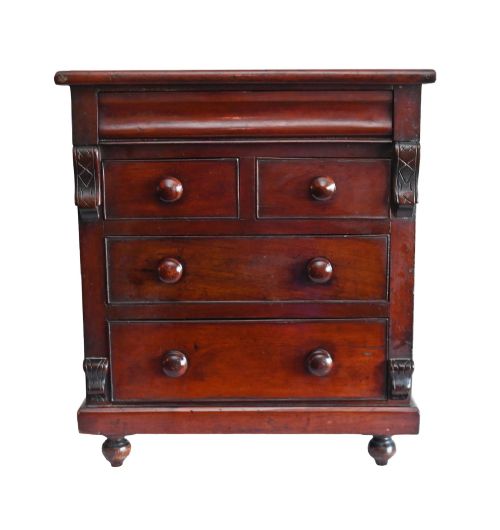
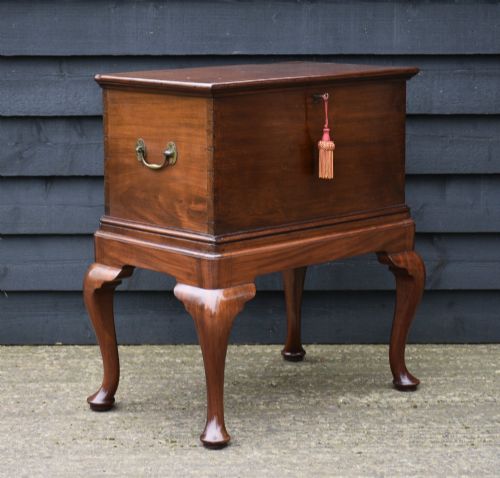
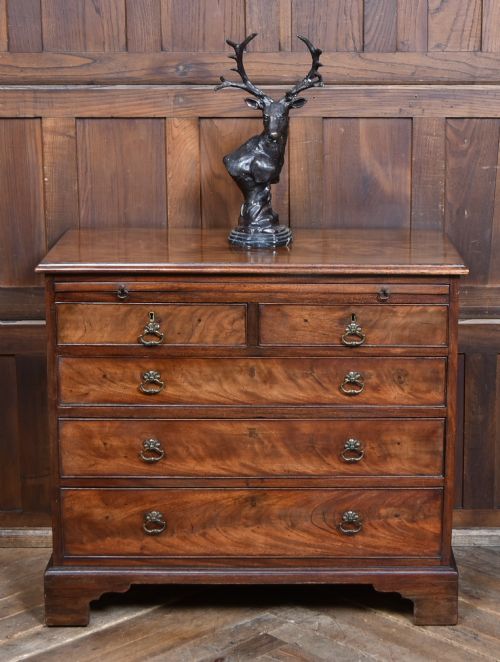
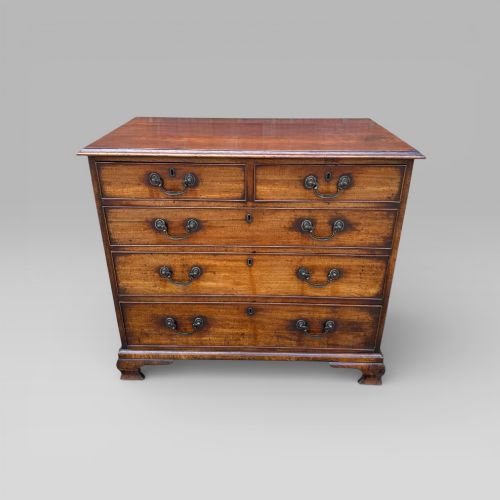
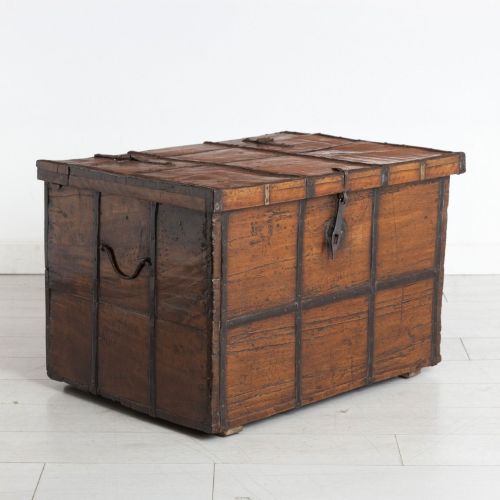
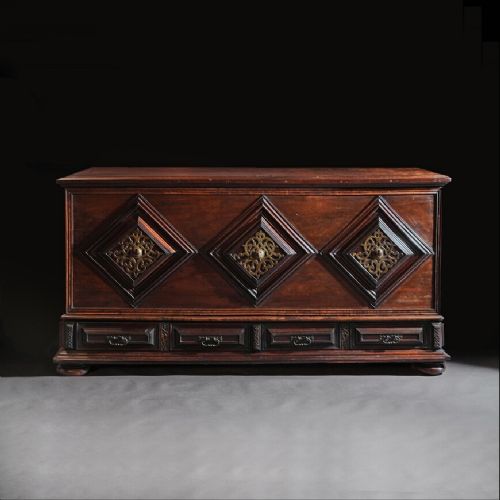
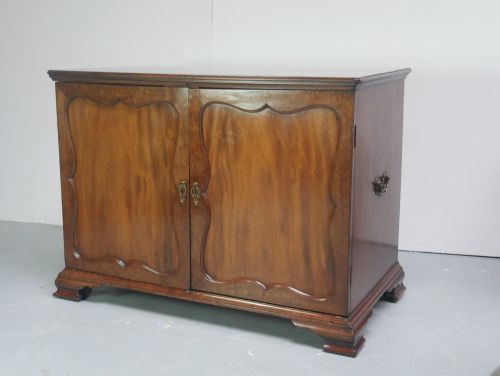
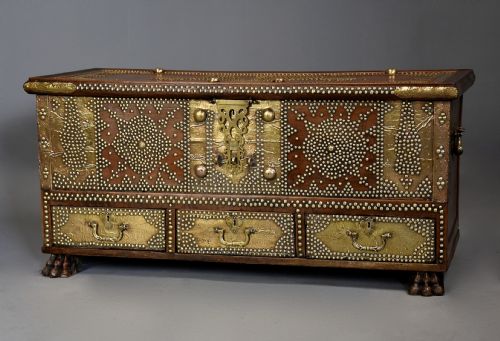
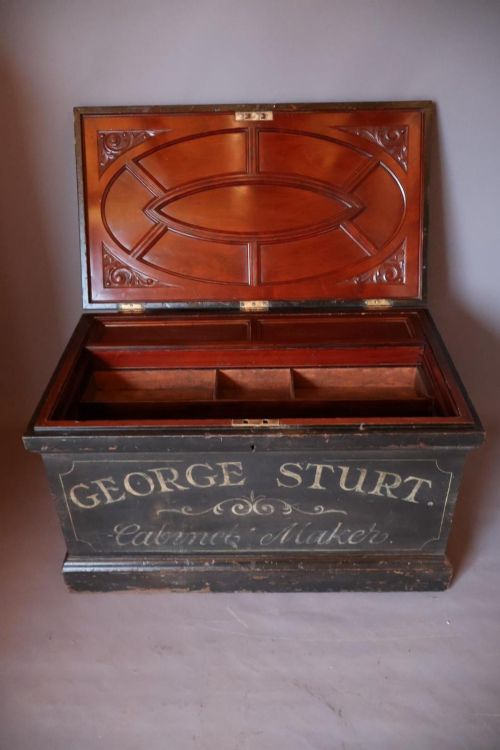
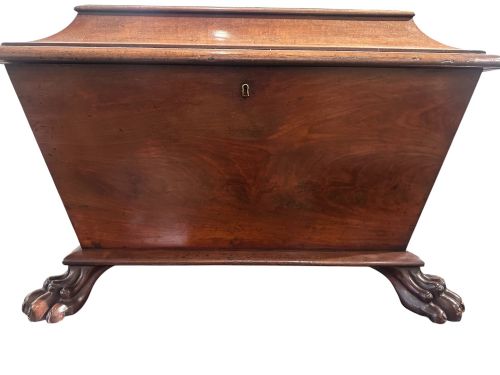
A mahogany wooden coffer encompasses robust storage vessels, mule chests, cellarettes, and campaign trunks created primarily during the Georgian, Victorian, and Regency periods. These heavy timber pieces served practical domestic and travel functions, holding everything from linens and silver to vintage wine reserves.
The selections encountered here rely heavily on eighteenth and nineteenth-century English, colonial, and campaign traditions. Buyers frequently discover variants such as brass-bound travel trunks, zinc-lined wine coolers, and crossbanded blanket boxes alongside traditional drawer configurations.
Each form reflects the utilitarian demands of its era, moving from static country house linen cupboards to collapsible military campaign cabinets designed for transport. The underlying structure remains consistently solid, utilising durable secondary timbers like oak and pine beneath the polished surface.
Materials and construction methods
Cabinet makers constructed these storage pieces using dense mahogany, often selected for dramatic flame figures or straight-grained durability. Secondary woods such as oak and pine appear in internal framing, drawer linings, and structural backing, while boxwood inlay provides subtle linear contrast.
Metal hardware dictates much of the construction, with brass corners, drop handles, and iron straps reinforcing corners against heavy travel. Stud work and flush-fitting campaign brasses secure joints and permit stacking during transit without snagging on ropes or canvas.
Mahogany Wooden Coffer Retail Price Guide 2026
Typical asking prices for mahogany wooden coffer among the pieces listed under this phrase on Sellingantiques today, from the lower quarter to the upper quarter. They describe what is for sale here now, not the wider market.
Several travel trunks retain the dust of distant trade routes, having survived colonial journeys as heavy-duty luggage for Victorian officials.
Distinguishing quality variations
The hierarchy of these storage pieces rests on the choice of timber grain and the integrity of the original hardware. Flame mahogany veneers and finely executed boxwood stringing indicate a higher workshop standard than plain, utilitarian boards.
Originality of internal fittings, such as dividing partitions in cellarettes or zinc linings in travel trunks, elevates a piece significantly. Retained locks, functioning keys, and untouched patination distinguish pieces that survived with integrity intact from those heavily altered or restored over centuries.
J Moorcroft
The Mahogany Wooden Coffer Glossary
- Cellarette
- A specialised storage container designed to hold bottles of wine or spirits near the dining table. They frequently feature internal compartmentalization and lead or zinc linings.
- Mule chest
- A storage chest featuring one or more functional drawers built into the base beneath a hinged lid compartment. They often combine oak framing with decorative mahogany panels.
- Campaign chest
- A modular storage trunk built in sections with recessed brass handles and corner brackets to facilitate military transport. These units separate into distinct boxes for easy loading.
- Crossbanding
- A decorative border technique where thin strips of veneer are laid perpendicular to the main grain. This frames the primary surface with contrasting timber direction.
- Sarcophagus form
- A monumental, heavy-lidded style resembling an ancient stone coffin, popular for nineteenth-century wine coolers. They stand on compressed feet and display bold carved mouldings.
Mahogany Wooden Coffer: Frequently Asked Questions
How were these coffers used originally?
These vessels stored valuable household textiles, silver, or wine vintages securely within domestic dining rooms and bedchambers. Campaign variants travelled with military officers to protect personal belongings across long overseas journeys.
Heavier mule chests combined drawer storage with a top-opening compartment for daily linens and blankets. Cellarettes remained positioned near the dining table to dispense bottled wine during extended evening meals.
What is the difference between a mule chest and a standard chest?
A mule chest incorporates a drawer beneath the main compartment, bridging the design gap between a traditional blanket box and a chest of drawers. This configuration allowed access to frequently used items without disturbing the folded textiles piled in the top section.
Standard chests rely entirely on vertically stacked drawers rather than a hinged lid. The mule chest maintains the older coffer format while introducing drawer convenience.
How do I care for antique mahogany wood?
Maintain a stable indoor humidity and keep the timber away from direct heat sources to prevent veneer lifting or wood splitting. Regular dusting with a dry cloth preserves the finish without chemical buildup.
Apply a traditional beeswax polish sparingly when the wood appears dry to nourish the grain. Avoid synthetic aerosol sprays that can soften historic shellac polishes over time.
How can I tell a campaign chest from a regular box?
Campaign chests feature distinctive flush brass hardware, reinforced corners, and removable carrying handles designed to prevent snagging during transit. They are typically built in two separate sections that lock together with side brackets.
Standard domestic boxes rely on projecting handles and fixed wooden bases. The military design prioritizes modular stacking and robust protection against rough handling.