

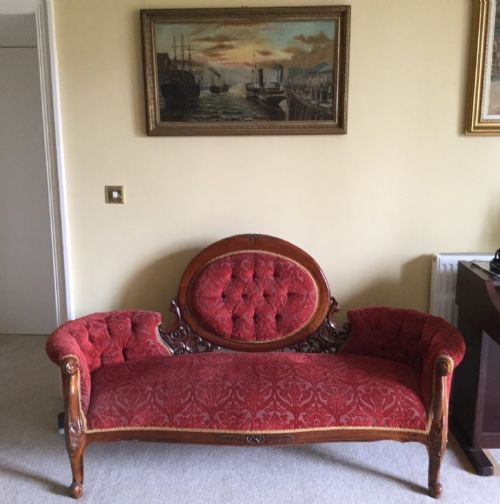


Mahogany Wood Settee
A mahogany wood settee brings warmth and substantial seating to a room, ranging from simple parlor forms to grand library designs.
Mahogany Wood Settee
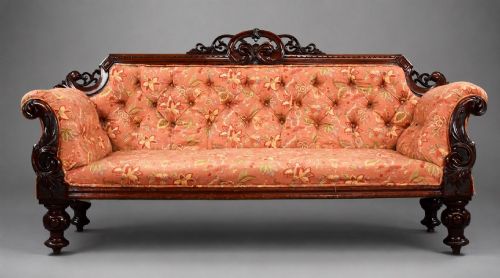
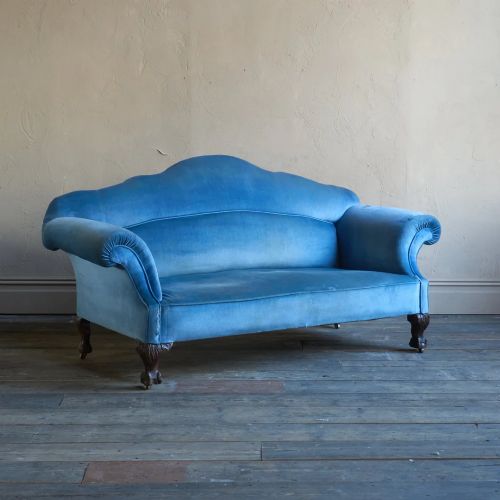
A mahogany wood settee spans multiple centuries of design, with Victorian and Edwardian examples appearing most frequently alongside earlier Georgian and Regency pieces. The selection includes double-ended sofas, camelback shapes, and salon seating designed for formal reception rooms.
Makers such as Miles & Edwards, C. Hindley & Sons, Hampton & Sons, and Morison & Co contribute to the variety of country house sofas found here. Regional variations also appear, including Irish William IV frames with carved mahogany details.
Buyers encounter different styles reflecting revival movements, from Chippendale and George III influences to Edwardian inlaid work and William IV Rococo Revival pieces.
Materials and Construction
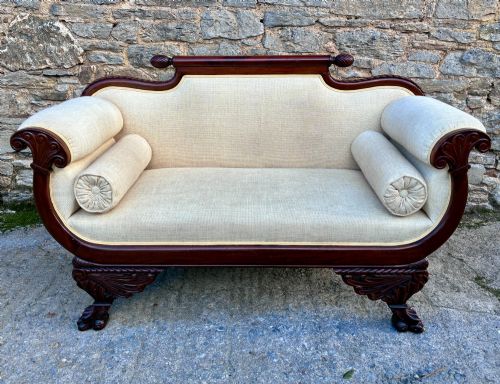
Frames are built from solid mahogany, frequently enhanced with satinwood inlay, bone details, or hand-carved elements like ball and claw feet and herms statues. Structural support relies on traditional joinery paired with sprung bases.
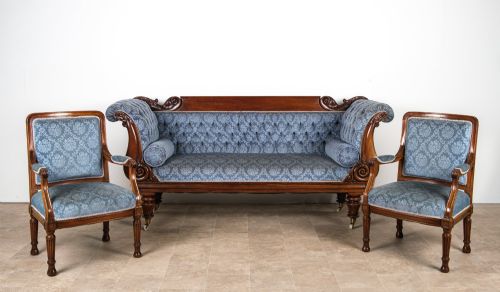
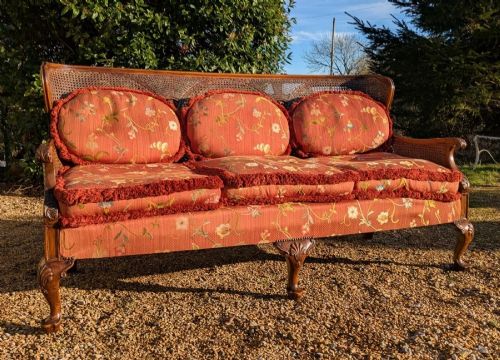
Upholstery materials vary widely across the pieces, incorporating modern or traditional coverings of leather, velvet, calico, hessian, and deep pile brocade alongside feather cushions.
Mahogany Wood Settee Retail Price Guide 2026
Typical asking prices for mahogany wood settee among the pieces listed under this phrase on Sellingantiques today, from the lower quarter to the upper quarter. They describe what is for sale here now, not the wider market.
Listings feature mahogany settees spanning the eighteenth, nineteenth, and early twentieth centuries, incorporating materials like leather, velvet, satinwood, and brass.
Craftsmanship and Detail
The standard of carving dictates much of the distinction between simpler frames and high-end pieces, particularly where hand-carved scrollwork or animal motifs adorn the mahogany structure. Inlaid decoration using satinwood and bone also indicates higher workshop ambition.
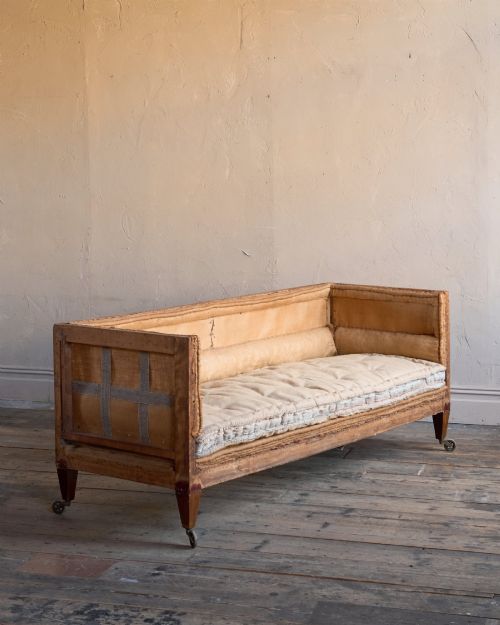
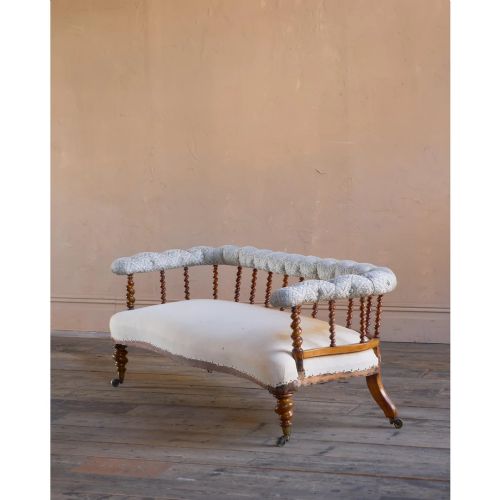
Upholstery presentation ranges from unrecovered frames awaiting complete restoration to fully restored leather or brocade finishes, directly affecting the visual impact of the woodwork.
Miles & Edwards·C. Hindley & Sons·Hampton & Sons·Morison & Co
The Mahogany Wood Settee Glossary
- Mahogany
- A durable tropical hardwood prized for its rich reddish-brown tone and stability in carved furniture frames.
- Double ended sofa
- A seating form featuring scrolled or raised ends of equal height, allowing a person to recline against either side.
- Camelback sofa
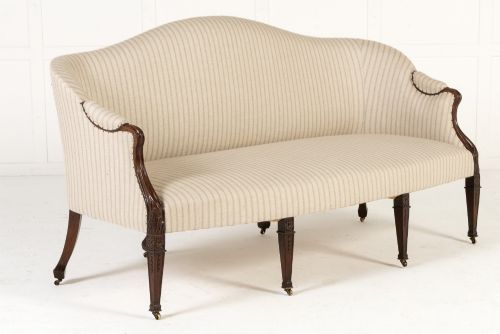
- A traditional upholstered form distinguished by an undulating, arched top rail resembling a camel's back.
- Bergere
- An enclosed upholstered armchair or sofa featuring exposed wooden frames and tight cane or fabric work.
- Satinwood
- A pale, lustrous timber frequently utilised for decorative stringing and contrasting inlay on mahogany furniture.
Mahogany Wood Settee: Frequently Asked Questions
How do I identify a Regency settee?
Regency settees typically exhibit classical revival motifs, drawing inspiration from ancient Roman, Greek, or Egyptian forms. Look for carved herms, bold curves, and dark mahogany frames.
Many examples from this era also incorporate rich brown leather upholstery or dramatic scroll arms.
Where should I place a salon sofa?
Salon sofas work best in spacious reception rooms, parlours, or large bedrooms where their decorative backs remain visible. Because many period pieces feature finished mahogany backs, they do not need to sit flush against a wall.
Pair them with complementary armchairs or keep them as a standalone focal point.
What distinguishes Edwardian inlay?
Edwardian inlay usually involves contrasting light timbers, such as satinwood, or bone set directly into the darker mahogany surface. The patterns tend toward delicate floral scrolls, ribbons, or geometric borders.
This lighter decorative touch separates Edwardian seating from heavier Victorian carved frameworks.