




Mahogany Washstand with Gallery
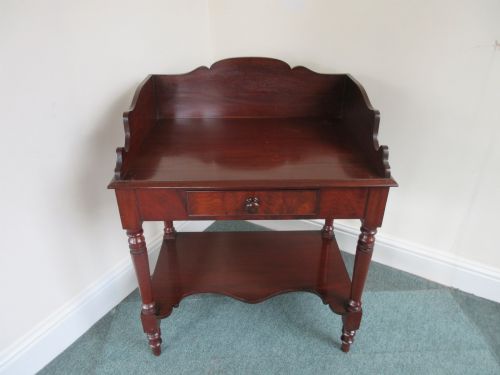
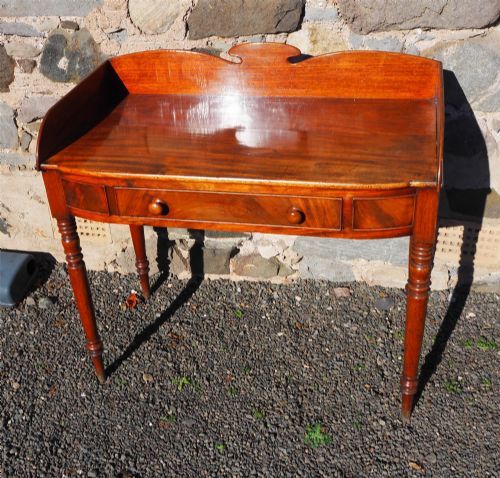
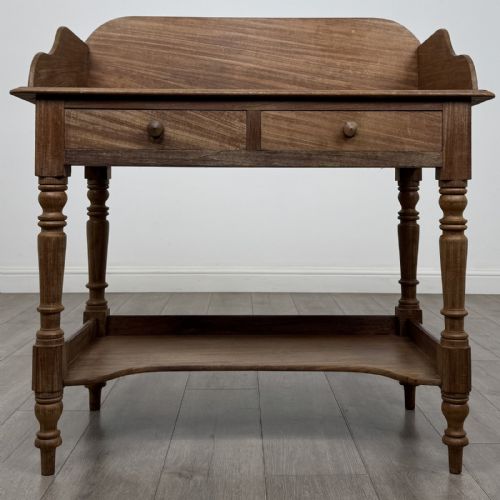
A mahogany washstand with gallery brings practical Georgian and Victorian utility to a bedroom, offering a stable surface framed by a protective raised back.
Mahogany Washstand with Gallery
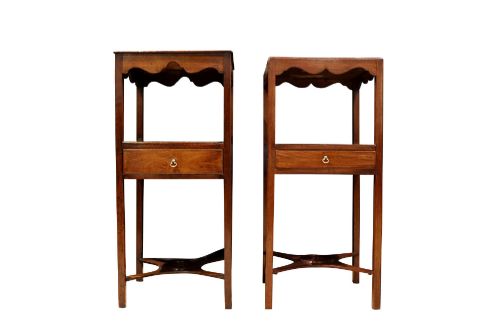
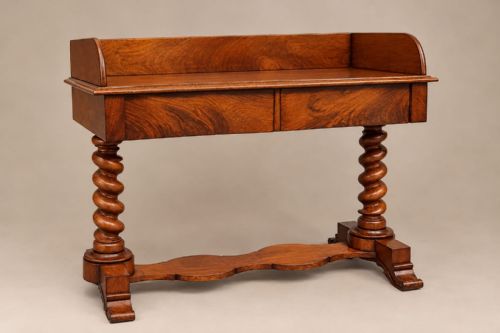
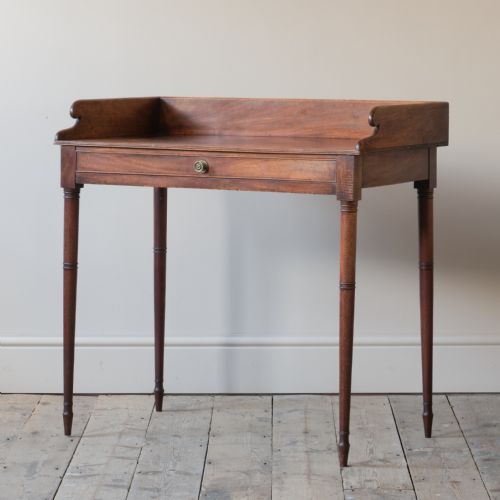
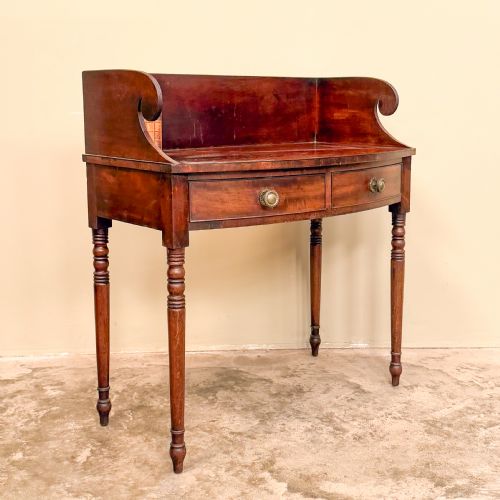
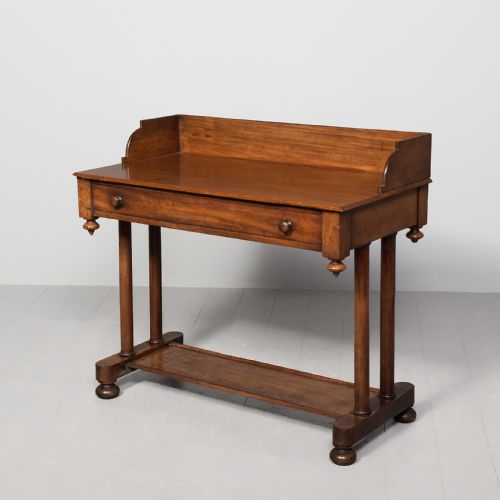
A mahogany washstand with gallery represents a functional form designed for personal ablutions, typically featuring a raised timber surround or upstand to protect bedroom walls from splashes. The listings on this page span the eighteenth, nineteenth, twentieth, and Victorian periods, showcasing forms associated with Georgian, Regency, and William IV styles alongside side tables and dressing tables.
Buyers frequently encounter variations that include corner stands, bow-fronted tables, and pieces fitted with drawers or marble tops. These items bridge the gap between utilitarian chamber furniture and refined reception room decor, serving equally well as side tables in modern interiors.
Originating primarily from British workshops, these tables demonstrate the evolution of domestic hygiene furniture through distinct historic eras. The inclusion of three-quarter gallery surrounds and corner configurations highlights the adaptability of mahogany as a primary timber for functional household items.
Materials and construction
Makers utilised solid mahogany and carefully selected veneers to build these washstands, frequently pairing the rich dark timber with contrasting boxwood stringing or brass hardware. Structural integrity relied on traditional joinery methods, ensuring the framework could support heavy marble inserts or washbasins without twisting.
Galleries were constructed either as an integral raised timber surround or applied as a separate three-quarter upstand back, secured firmly to the tabletop. Drawers featured hand-cut dovetail joints, reflecting the standard of cabinetmaking practiced across the Georgian and Victorian eras.
Mahogany Washstand with Gallery Retail Price Guide 2026
Typical asking prices for mahogany washstand with gallery among the pieces listed under this phrase on Sellingantiques today, from the lower quarter to the upper quarter. They describe what is for sale here now, not the wider market.
Nineteenth-century washstand makers thoughtfully ensured splashes stayed off wallpaper.
Markers of distinction
Quality in these pieces is dictated by the crispness of the mahogany grain, the finesse of the gallery construction, and the integrity of secondary woods. Superior examples display thoughtful proportions where the raised gallery harmonises with the legs and tabletop rather than appearing as a later addition.
The sophistication of the hardware, the precision of drawer construction, and the presence of luxurious top surfaces such as inset marble elevate certain tables above standard utility pieces. Finer specimens maintain original timber patination and honest structural wear accumulated over centuries.
Maples
The Mahogany Washstand with Gallery Glossary
- Gallery
- A raised wooden or brass rail positioned around the rear and sides of a tabletop to prevent items from rolling off or protecting walls from water splashes. This feature defines the primary silhouette of the washstand.
- Upstand
- The vertical wooden panel rising from the back edge of a surface, serving the same functional purpose as a gallery. It is often shaped or moulded to add decorative architectural interest.
- Serpentine-fronted
- A curved cabinet or table front characterised by a convex central section flanked by two concave curves. This contour requires advanced woodworking skill to shape accurately from solid mahogany.
- Stringing
- A narrow strip of contrasting timber, such as boxwood, inlaid into channels cut into the mahogany surface. It creates a fine decorative border around drawers and tabletops.
- Kneehole
- A recessed central space beneath a desk or dressing table designed to accommodate the user's legs while seated. This arrangement often conceals a central drawer above the opening.
Mahogany Washstand with Gallery: Frequently Asked Questions
What is a washstand gallery?
A washstand gallery is a raised wooden barrier running along the back and sides of the tabletop. It was originally designed to prevent water and washing equipment from splashing against bedroom walls.
Today, this feature provides a distinct architectural profile that distinguishes washstands and dressing tables from standard side tables.
How do I use one today?
These pieces function exceptionally well as hall tables, bathroom sink surrounds, or dressing tables in modern homes. Their compact footprints and protective raised backs make them practical for displaying objects while safeguarding walls.
Placing one in a living room or bedroom introduces rich mahogany tones and period character without requiring extensive floor space.
How do I date a washstand?
Dating relies on observing structural characteristics, timber selection, and stylistic details associated with Georgian, Regency, or Victorian eras. Earlier eighteenth-century pieces often display simpler, robust proportions, while nineteenth-century iterations incorporate varied gallery heights and occasional marble inserts.
Examining the construction methods inside the drawers and behind the upstand further clarifies the period of manufacture.
Did they all have marble tops?
Not all washstands featured marble tops, as many were built entirely from solid mahogany and veneers to serve multiple dressing and washing purposes. Marble tops generally appeared on later nineteenth-century variations where water resistance was a primary requirement for daily hygiene.
All-wood surfaces remain characteristic of earlier Georgian and country-made examples found across these listings.