





Mahogany Wall Display Case
A mahogany wall display case brings period character and practical storage to a room, framing collections behind glass while saving valuable floor space.
Mahogany Wall Display Case
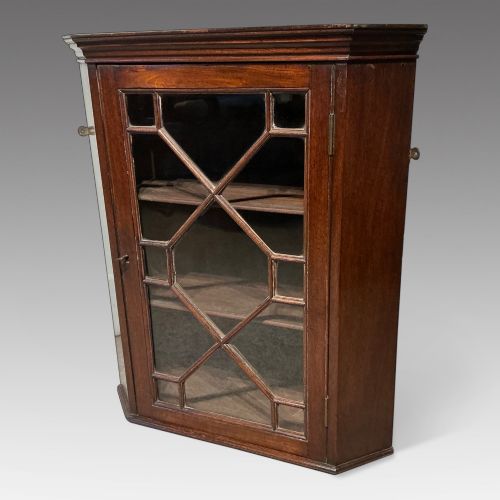
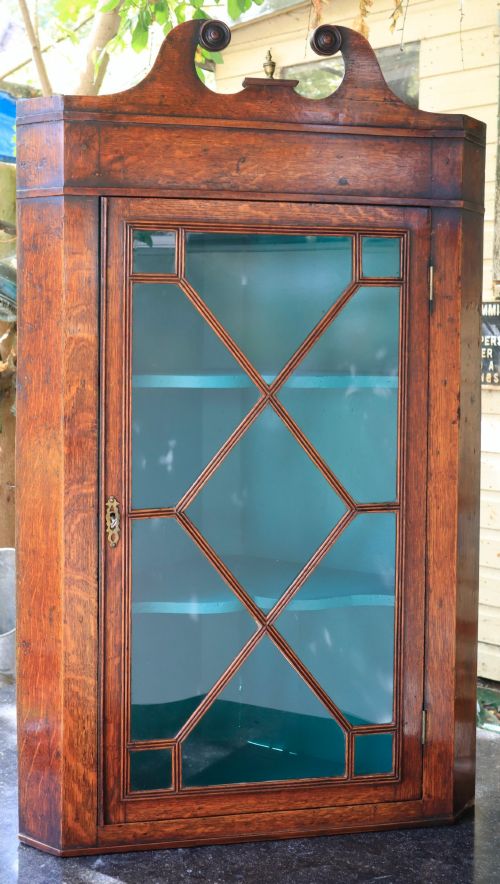
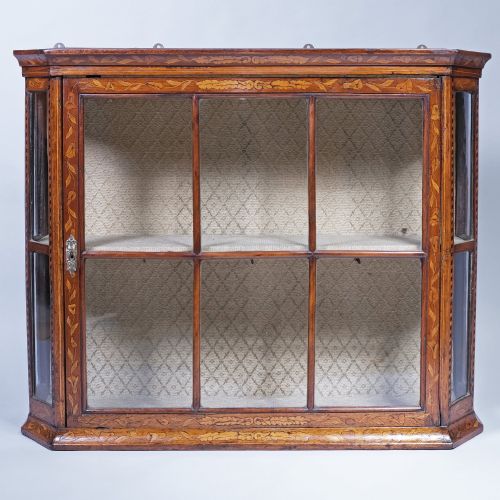
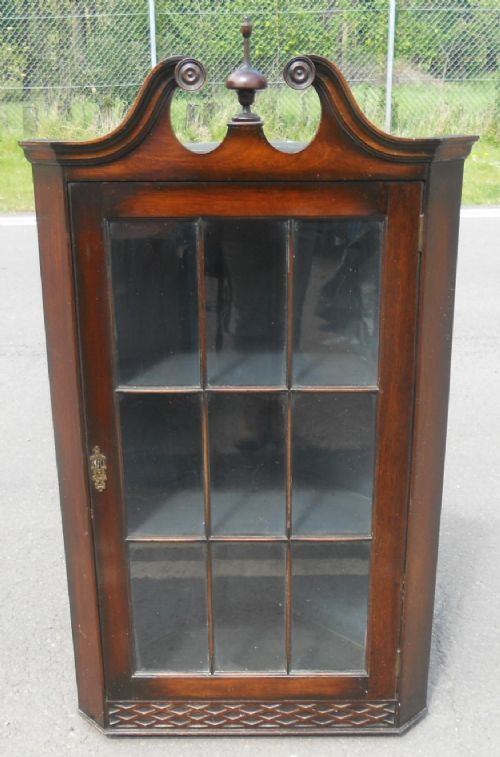
When you search for a mahogany wall display case, you encounter wall hanging cabinets, corner cupboards, and corner cabinets dating from the eighteenth century through to the Edwardian period. These pieces were designed to be mounted on walls or fitted snugly into corners, housing ceramics, glassware, and small valuables.
The selection on this page is dominated by corner cabinets and wall cabinets in Georgian, Victorian, and Edwardian styles. You will find glazed doors, locking mechanisms with keys, interior drawers, mirrored backs, and satinwood inlay.
Origins span formal Georgian drawing rooms to Edwardian shops and domestic settings. The primary timber uniting them all is rich mahogany, often paired with glass and brass fittings.
How they were made
Cabinet makers constructed these pieces primarily from solid mahogany and mahogany veneers, frequently incorporating satinwood for stringing and decorative inlay. Frames were built to support heavy glass panes in doors and sides, allowing light to enter the interior.
Glazing typically involves timber glazing bars dividing glass panels, while backing boards often utilise secondary timbers like oak. Brass is commonly used for hinges, escutcheons, and locking mechanisms, alongside mirrored glass inserts in specific shop or domestic display variants.
Mahogany Wall Display Case Retail Price Guide 2026
Typical asking prices for mahogany wall display case among the pieces listed under this phrase on Sellingantiques today, from the lower quarter to the upper quarter. They describe what is for sale here now, not the wider market.
The listings on this page span the Georgian, Victorian, and Edwardian periods, featuring mahogany, glass, brass, satinwood, and mirrored interiors.
What varies in quality
Quality in these cases rests on the choice of timber and the precision of the cabinet work. Finer examples display carefully selected mahogany grain, delicate satinwood stringing, and well-executed glazing bars that demonstrate superior craftsmanship.
The integration of functional elements such as internal drawers, working locks with original keys, and mirrored interiors elevates the standing of a piece. Robust construction of the hanging fixtures and corner joints ensures the cabinet safely bears the weight of its contents over centuries.
The Mahogany Wall Display Case Glossary
- Glazed
- Fitted with glass panels to display the interior contents while protecting them from dust. This treatment is standard on display cabinets and corner cupboards.
- Bow front
- A cabinet front that curves outward in a convex shape. This style appears on several Georgian and Edwardian examples.
- Escutcheon
- A flat plate of brass placed around a keyhole to protect the surrounding timber. They frequently complement the hinges and locks on period cabinet doors.
- Stringing
- Thin lines of contrasting timber, such as satinwood, inlaid into the mahogany surface for decoration. It marks out the edges of panels and drawers.
- Serpentine
- A front contour that curves outward at the centre and inward at the sides. This rhythmic line adds visual movement to wall cabinets.
Mahogany Wall Display Case: Frequently Asked Questions
How do I hang a heavy mahogany wall cabinet safely?
Hanging a period wall cabinet requires locating secure wall studs or using appropriate heavy-duty masonry fixings matched to your wall type. The internal structure of the cabinet must be checked to ensure the backboards and hanging brackets can bear the combined weight of the timber and your display items.
Professional installation is recommended for larger Georgian and Victorian pieces to prevent strain on original joints. Distributing weight evenly inside the cabinet also protects the antique fixings over time.
Can I use a corner cabinet in a modern room?
These cabinets suit modern interiors by utilising unused corner space while adding warmth through dark mahogany tones and historic glass. They function effectively in living rooms, dining spaces, or hallways for displaying collections.
Positioning the cabinet away from direct sunlight protects the timber finish and interior fabric linings. Ambient room lighting often catches the glass panels and mirrored interiors, highlighting displayed items.
How do I date a mahogany wall display case?
Dating relies on observing construction methods, timber choice, hardware styles, and overall design characteristics. Georgian pieces often exhibit hand-cut dovetails and heavy cornices, while Edwardian examples may show finer satinwood inlay and lighter framing.
Comparing the glass type, lock mechanism, and secondary timbers helps narrow the period of manufacture. Stylistic cues such as bow fronts or serpentine shapes also align with specific design eras like the George III period.