
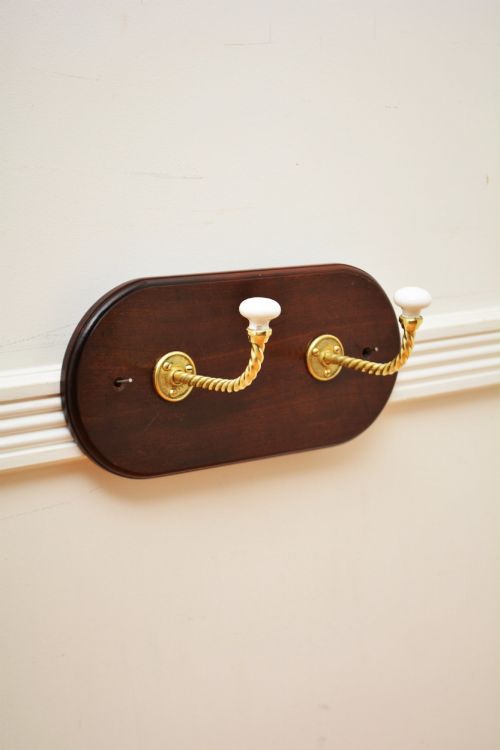


Mahogany Wall Coat Hooks
Mahogany wall coat hooks are solid timber wall fittings designed for hallways and cloakrooms, combining rich woods with functional metal hooks.
Mahogany Wall Coat Hooks
When you search for mahogany wall coat hooks, you encounter practical hallway hardware spanning the Victorian era through to the early twentieth century. These pieces range from simple mounted hooks on timber boards to elaborate architectural hall racks and French portmanteaus.
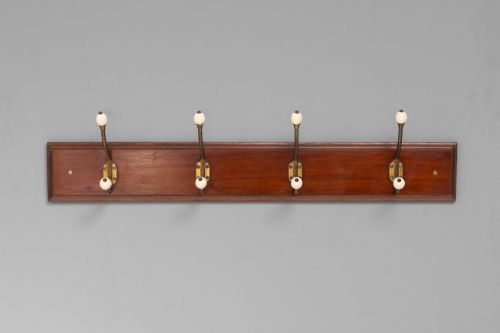
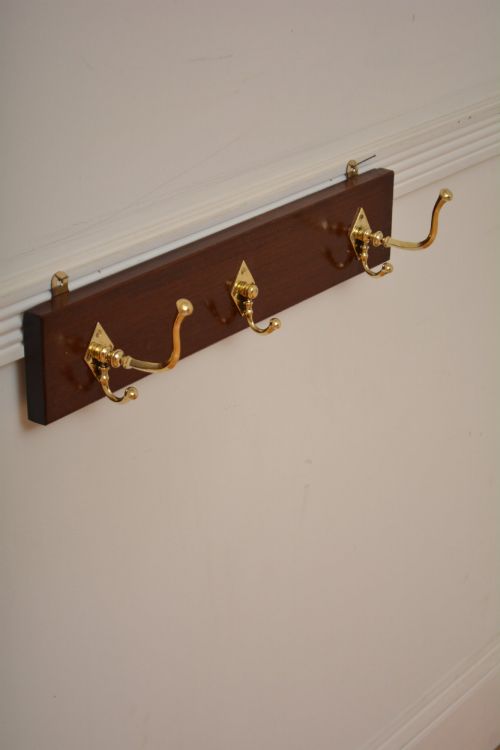
The most common examples on this page are wall-mounted wooden mounting rails fitted with several metal or ceramic hooks. Pieces from the Victorian period predominate, frequently featuring rich polished mahogany backplates paired with brass or iron fixtures.
How they were made
Maker workshops utilised dense tropical mahogany for the structural backplates, often carving or turning the timber to add decorative mouldings and shaped edges. Beech and bentwood also appear in specific regional variations.
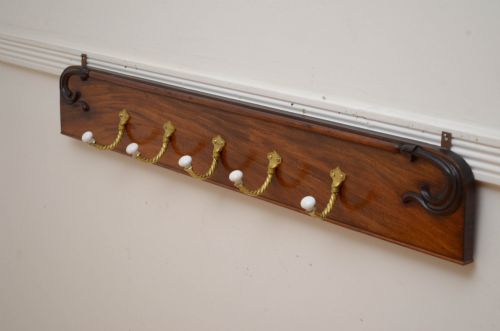
Metalworking techniques defined the fittings, with brass and iron cast into mounting plates and hooks. Ceramic and glass components were frequently incorporated into individual hook designs alongside twisted rope carvings.
Listings feature mahogany, beech, brass, iron, and ceramic materials spanning the Victorian period to nineteen-ten.
What varies in quality
The distinction between standard examples and superior pieces rests on the weight of the timber and the casting quality of the metalwork. Chunky mahogany boards with deeply bevelled plates and heavily cast brass hooks represent the finer end of the range.
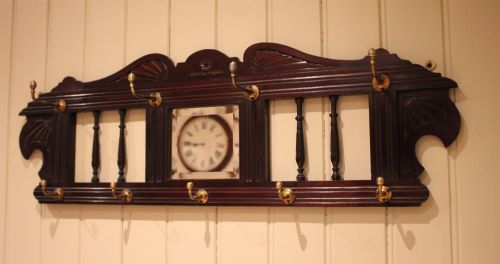
Detailing such as Aesthetic Movement carving or intricate mounting hardware elevates certain wall racks above basic utility items. The integration of bevelled mirrors or horse shoe motifs also denotes a more ambitious design.
The Mahogany Wall Coat Hooks Glossary
- Mahogany
- A durable, reddish-brown tropical hardwood prized for its stability and rich grain. It forms the primary backplate material for these wall fittings.
- Portmanteau
- A combined coat, hat, and umbrella rack often designed for entrance halls and cloakrooms. These larger fixtures incorporate multiple hanging points and occasionally mirrors.
- Aesthetic Movement
- A nineteenth-century design style emphasising visual beauty over narrative content. Pieces from this movement display refined craftsmanship and distinctive artistic details.
- Bentwood
- Wood heated and bent into curved structural forms using steam. This technique produced lighter hat and coat hooks.
Mahogany Wall Coat Hooks: Frequently Asked Questions
Where should I mount these?
These wall fittings suit entrance halls, boot rooms, and cloakrooms where coats and hats require sturdy hanging space. Ensure the mounting screws locate into wall studs or appropriate wall plugs to support heavy winter garments.
Position the rail at a height that allows easy access for family members and guests while maintaining adequate clearance from floor-standing furniture below.
How do I clean mahogany?
Dust the timber regularly with a soft, dry cloth to prevent the accumulation of grit in the carved details. Avoid modern silicone polishes that build up a hazy residue over time.
Apply a traditional beeswax periodically to nourish the timber grain and maintain a natural, low-sheen lustre on the polished surface.
Are the hooks original?
Many Victorian and Edwardian wall racks retain their heavy brass or iron hooks, secured with period-appropriate slotted screws. Matching patination between the mounting plate and hooks usually indicates original assembly.
Replacement hooks occasionally occur in this category, though well-matched replacements still function reliably for daily use.
How do I date them?
Dating relies on stylistic clues such as Aesthetic Movement incised carving or heavy Victorian architectural mouldings. The construction of the timber backplate and the casting style of the brass fixtures also provide clear chronological indicators.
Twisted rope details and ceramic inserts point towards mid-nineteenth-century William IV and Victorian manufacturing traditions.