



Mahogany Tripod Buffet Table
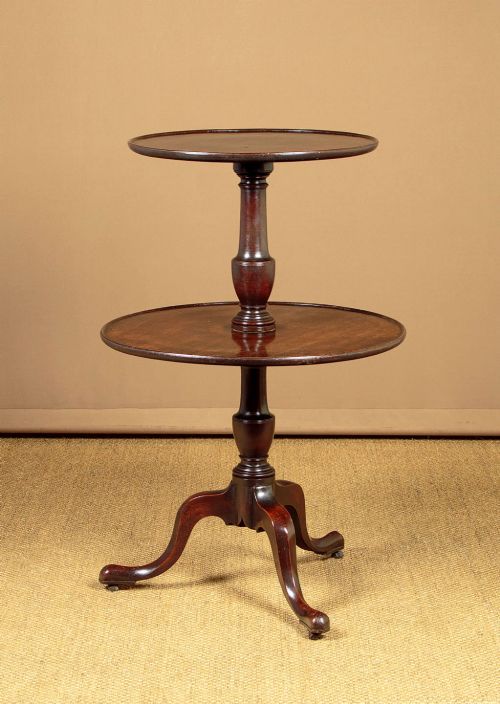
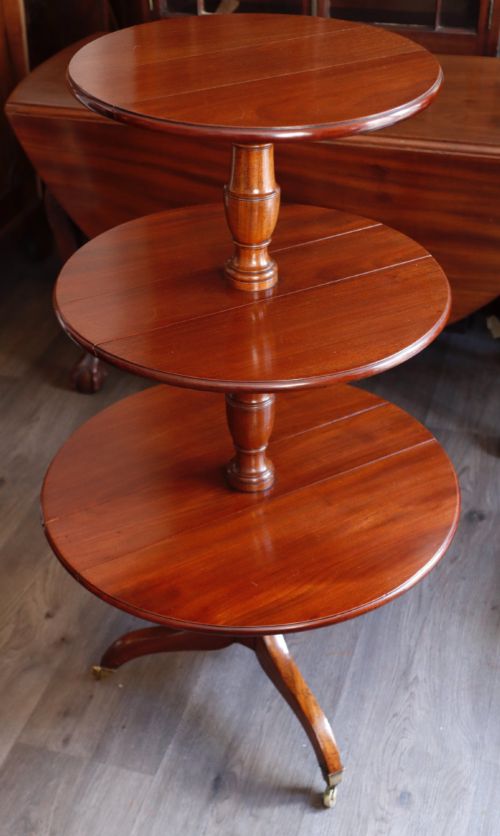
These mahogany tripod buffet table pieces, historically known as dumb waiters, offer tiered revolving or folding tiers designed for serving dining rooms.
Mahogany Tripod Buffet Table
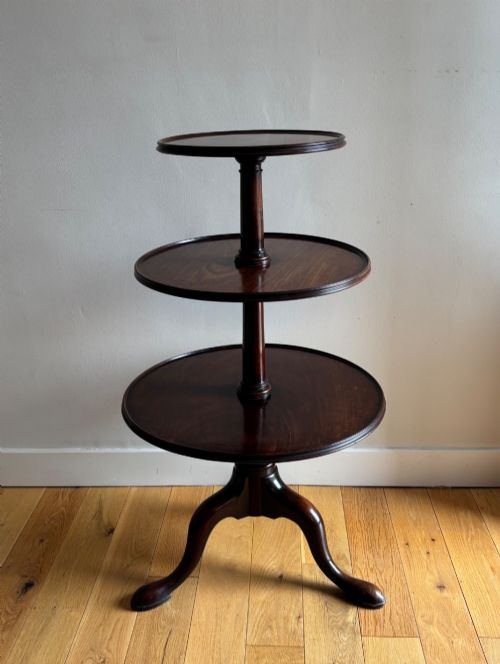
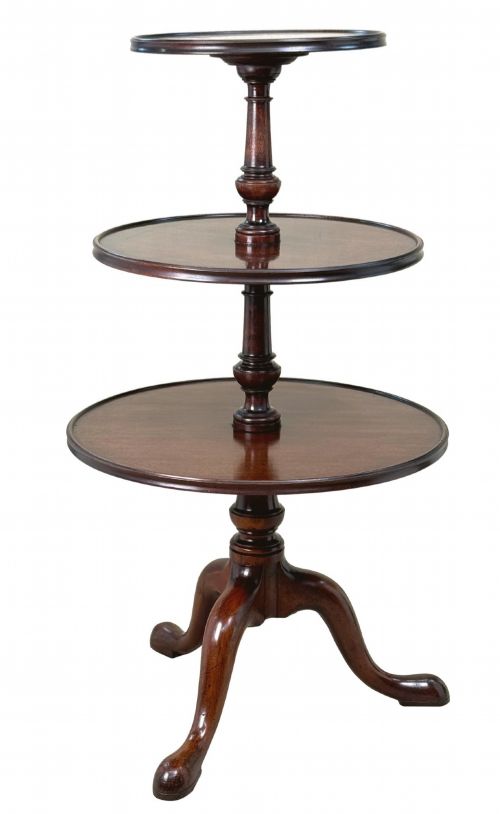
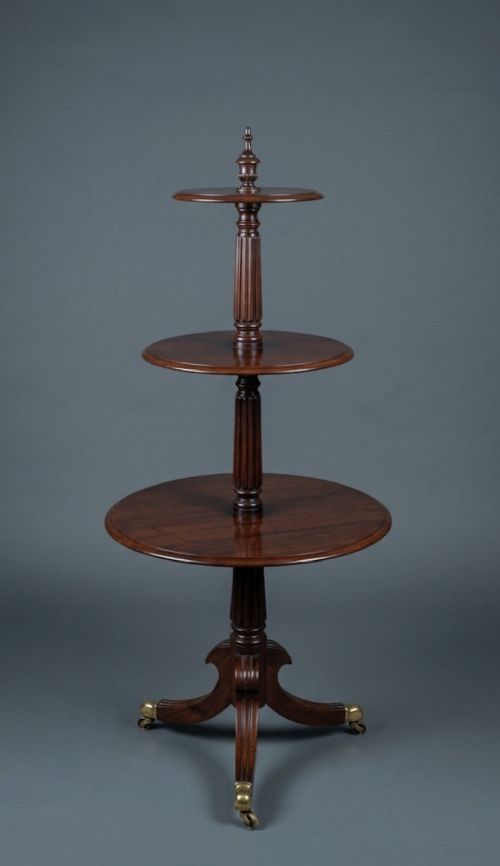
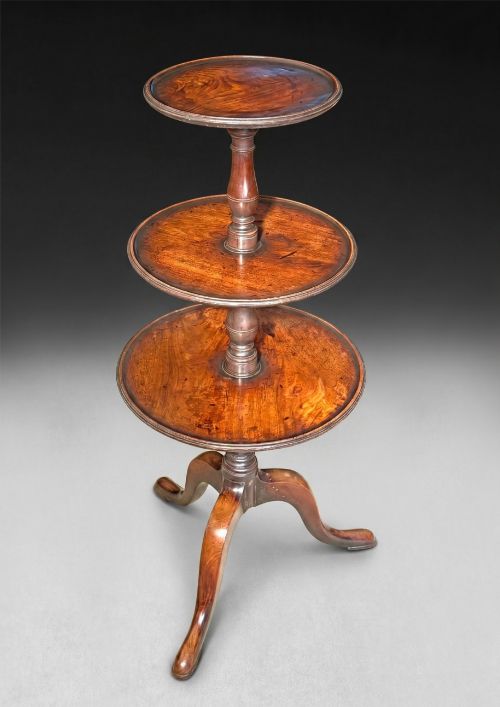
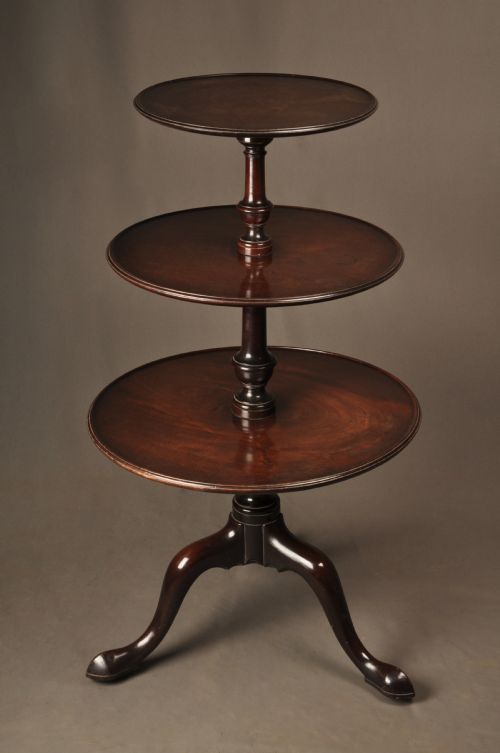
A mahogany tripod buffet table, most frequently encountered as a tiered dumb waiter, takes the form of graduated circular trays supported on a central pillar and three legs. These pieces emerge predominantly from the Georgian, George III, and Regency periods, stretching into early Victorian manufacture.
The standard configuration relies on two or three revolving circular shelves, though drop-leaf and folding variations appear among the selection. Makers built these freestanding servers to hold dishes and bottles beside the dining table without requiring constant attendance from staff.
Materials and Construction
Cabinetmakers constructed these serving tables primarily in solid mahogany, frequently utilising dense Cuban timber or highly figured fiddleback stocks for the graduated tiers. The central column meets a tripod base, often featuring brass castors to allow smooth rotation and movement across the floor.
Joinery techniques include urn or pillar turnings, reeded legs, and occasional inlay work on the tiers. Folding and drop-leaf mechanisms on specific variants required precise hinge placement to ensure stability when the shelves were raised.
Listings feature mahogany timber predominantly, with variations including solid stocks, Cuban varieties, and contrasting brass hardware across Georgian and Regency periods.
Evaluating the Pieces
Quality rests upon the selection of the mahogany timber and the crispness of the turning on the central pillar and tripod legs. Fine examples display rich grain patterns, such as fiddleback figuring, paired with robust, well-fitted tier rotation mechanisms that operate without wobble.
Proportion and stability separate standard utility pieces from finer workshop productions, particularly those displaying attribution to makers like Gillows. Well-balanced legs and finely cast brass fittings indicate superior construction standard.
Gillows
The Mahogany Tripod Buffet Table Glossary
- Dumb waiter
- A freestanding tiered serving table designed to hold food and drinks during meals. These pieces typically feature a central pedestal and multiple rotating shelves.
- Tripod base
- A three-legged support structure attached to the bottom of the central column. This design ensures stability on uneven dining room floors.
- Cuban mahogany
- A dense, heavy variety of timber sourced from the Caribbean and widely utilised in fine 18th century cabinetry. It is prized for its rich colour and deep grain.
- Fiddleback
- A decorative figure in wood grain that resembles the rippled maple used for the backs of violins. This pattern catches the light when polished.
- Tiered table
- A piece of furniture constructed with multiple horizontal surfaces placed one above another. In these serving stands, the upper tiers are usually smaller than the lower ones.
Mahogany Tripod Buffet Table: Frequently Asked Questions
What is a mahogany tripod buffet table used for?
These pieces served historically as dining room assistants, holding extra plates, glasses, and wine bottles within reach of the diners. They reduced the need for servants during meals.
Today, collectors use them as prominent corner or side display stands in living spaces and dining rooms to hold books, plants, or decorative objects.
How do you tell a Georgian dumb waiter from a Victorian one?
Georgian and George III models typically exhibit sharper pillar turnings, lighter proportions, and dense Cuban mahogany timbers dating from the late 18th or early 19th century.
Victorian iterations, appearing around the mid-19th century, often present heavier frames, broader tripod legs, and occasionally simpler turning work on the central column.
Do the shelves on these tables rotate?
Most traditional tiered serving stands feature revolving shelves supported on a central spindle. This allowed diners to spin the trays and access items without standing up.
Certain variations include folding leaves or stationary tiers, so checking the specific mechanism of each individual piece is advised.