
Mahogany Toilet Mirror Drawers
Mahogany toilet mirror drawers provide practical tabletop storage beneath tilting glass, uniting Georgian utility with warm timber grain.
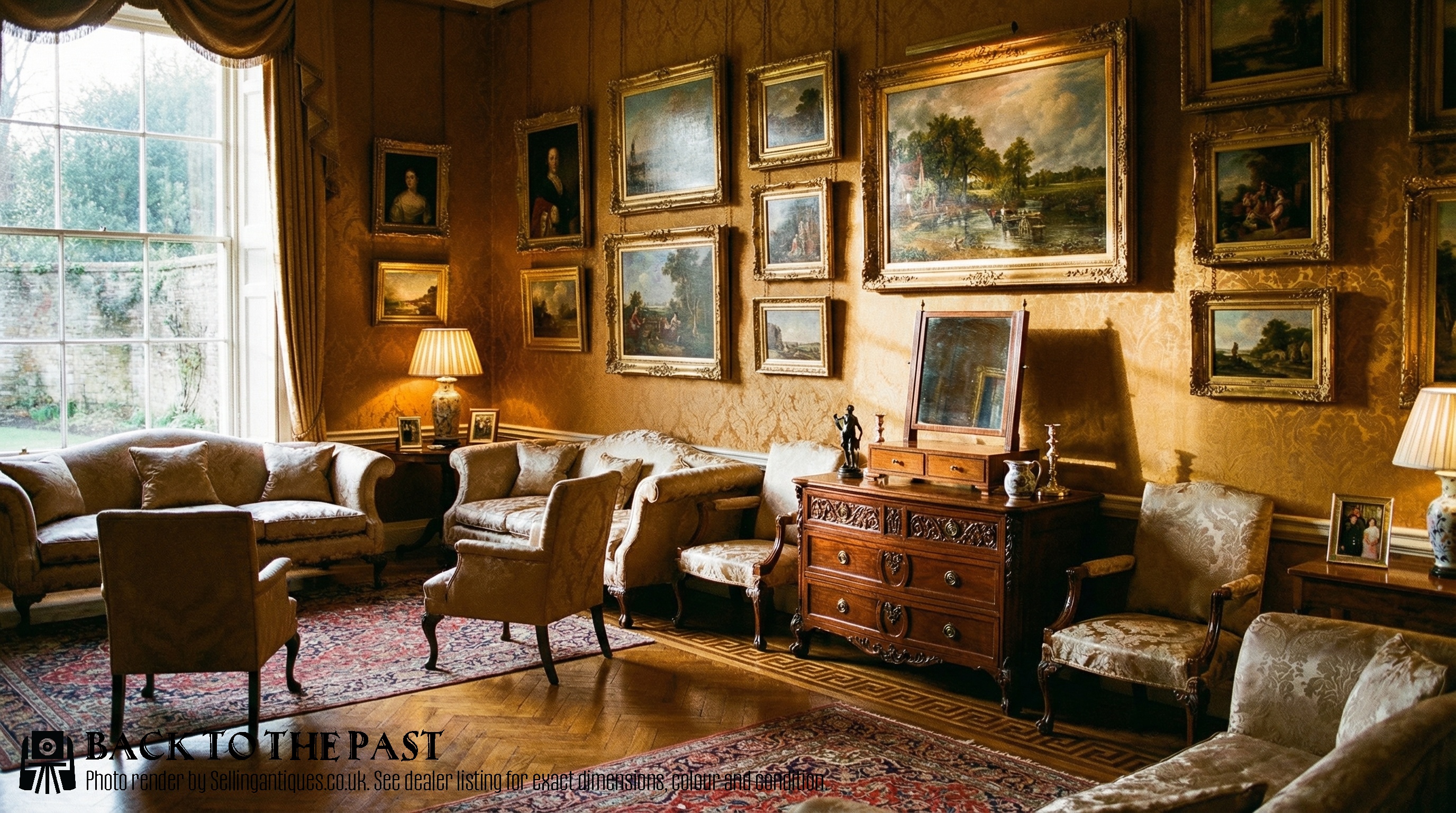
Mahogany Toilet Mirror Drawers
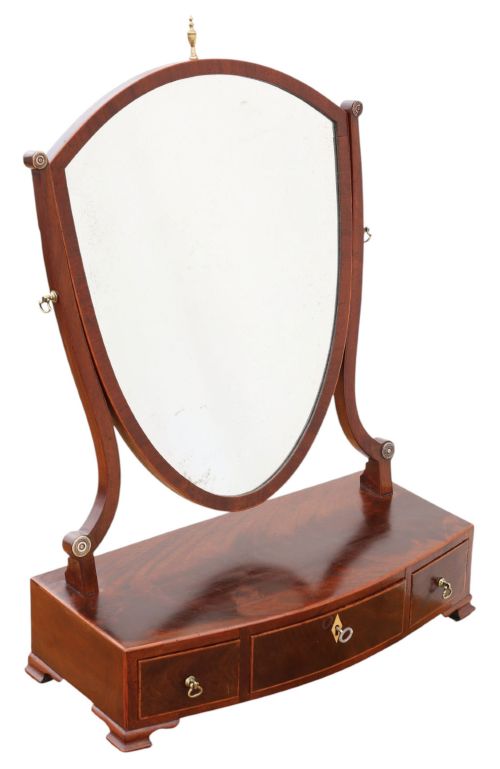
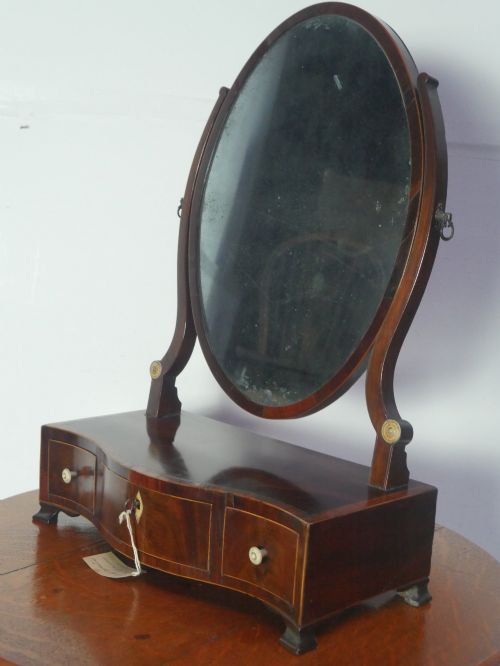
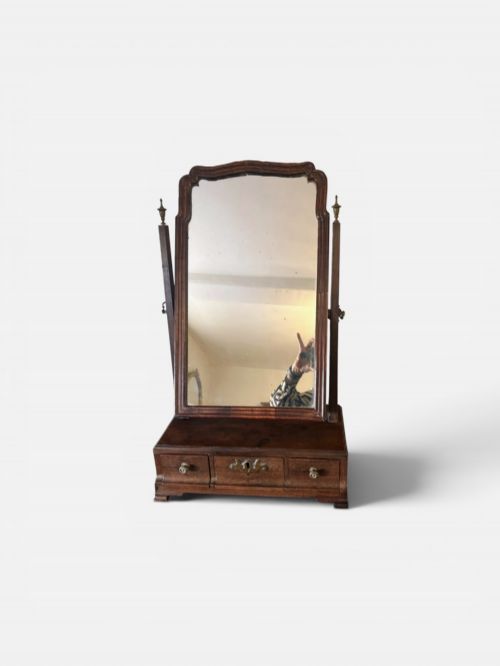
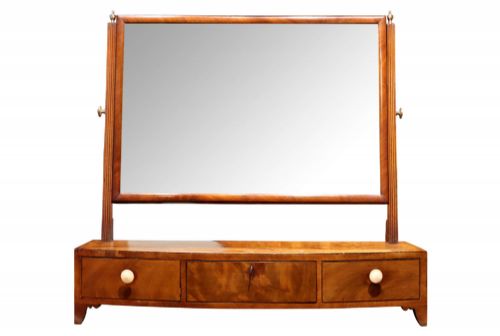
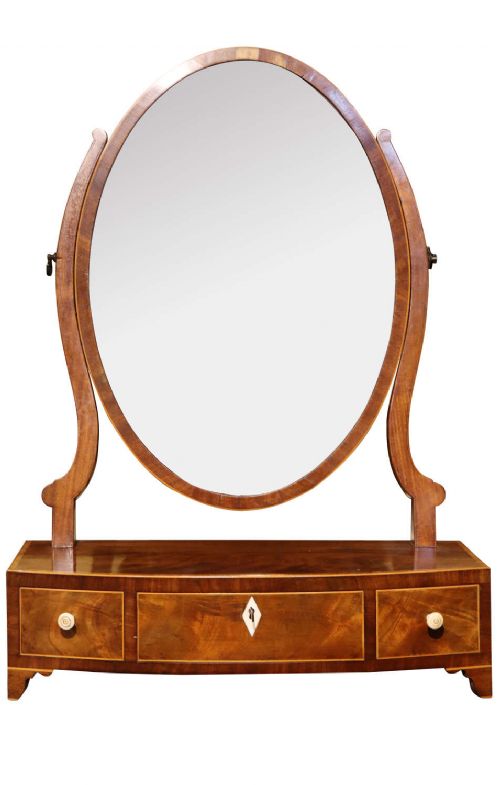
Mahogany toilet mirror drawers combine a swing dressing mirror with a small storage base, sitting atop a chest or dressing table to hold personal items. These pieces span the eighteenth and nineteenth centuries, appearing in Georgian, Regency, and Victorian iterations across the selections.
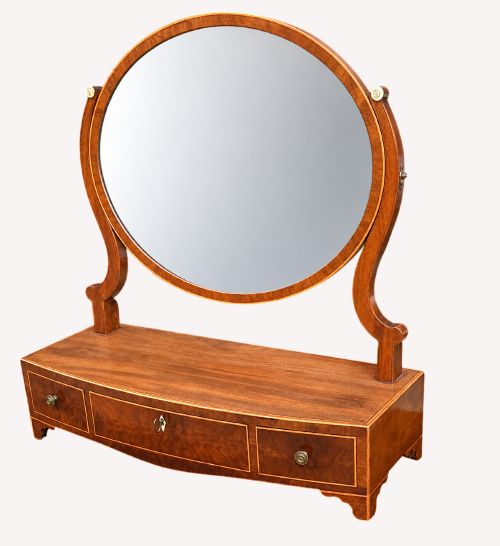
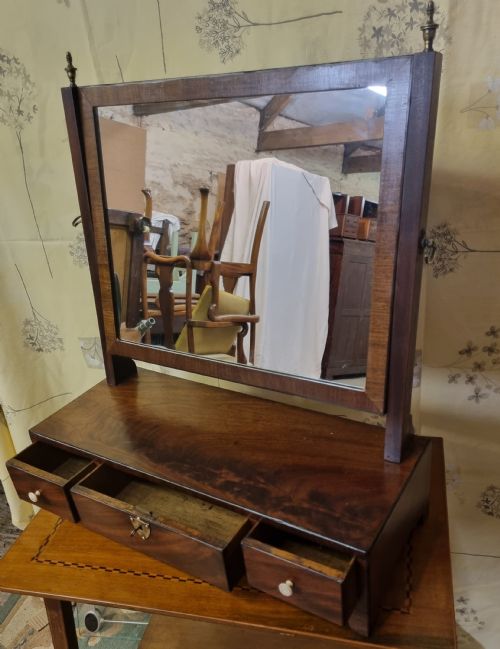
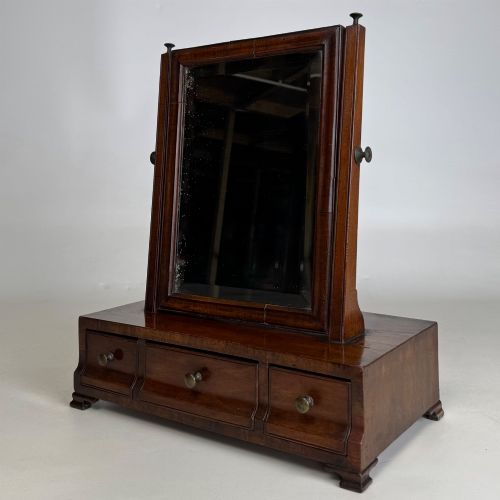
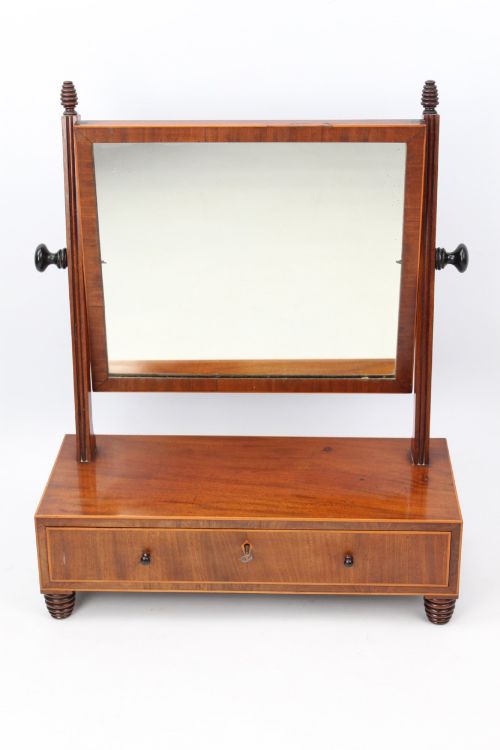
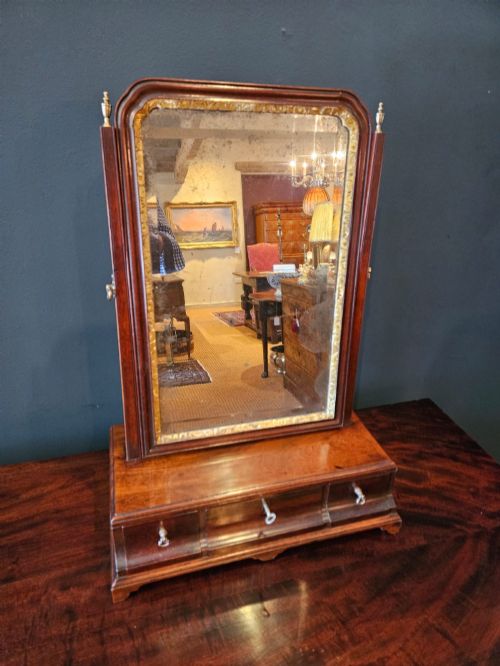
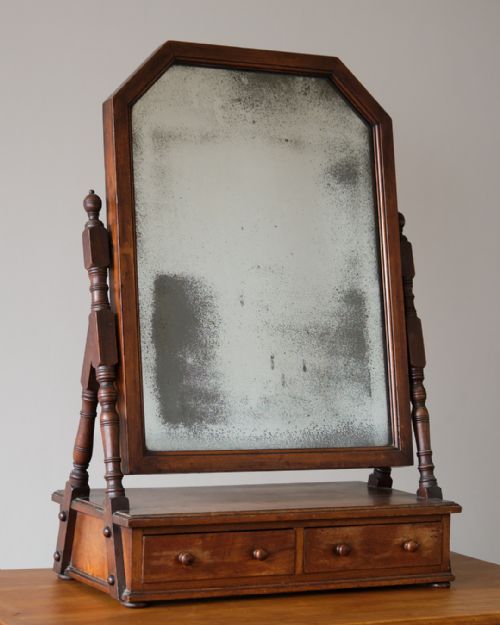
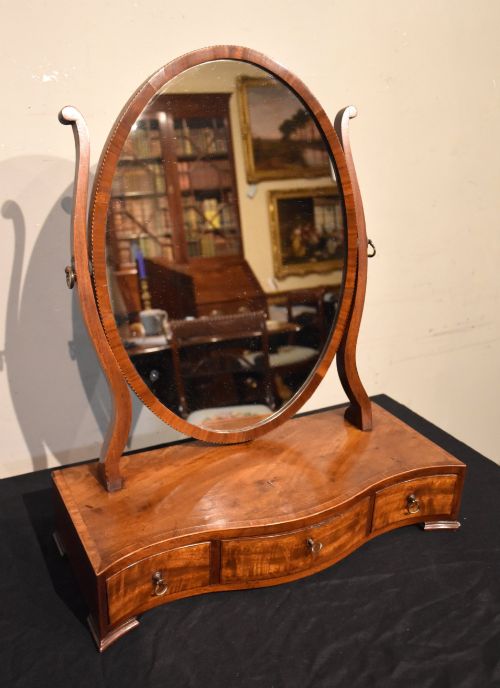
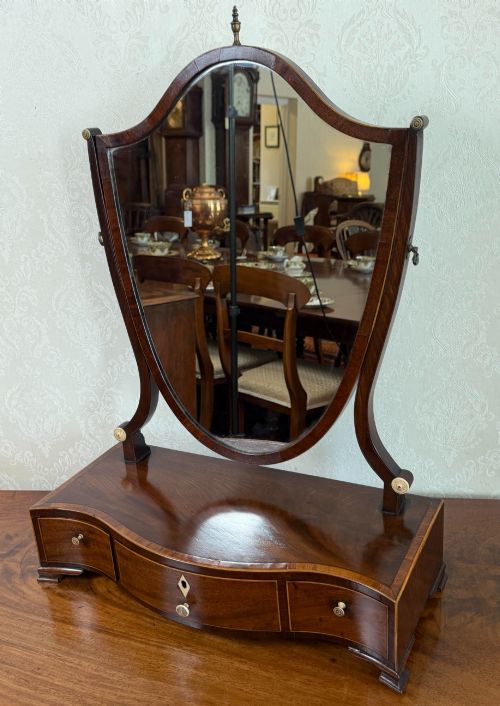
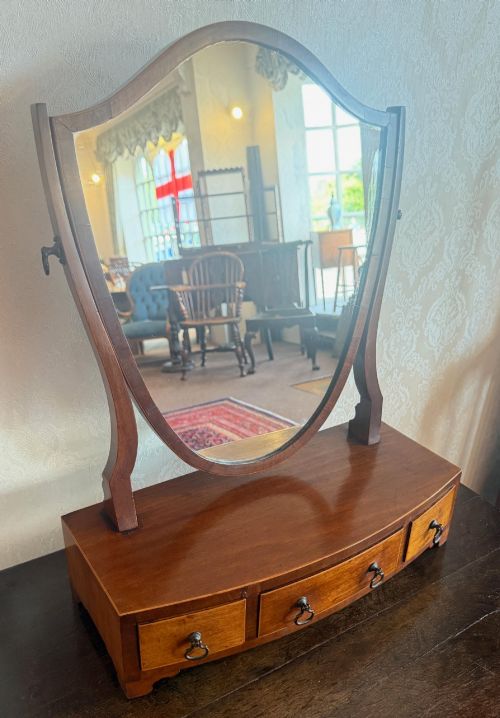
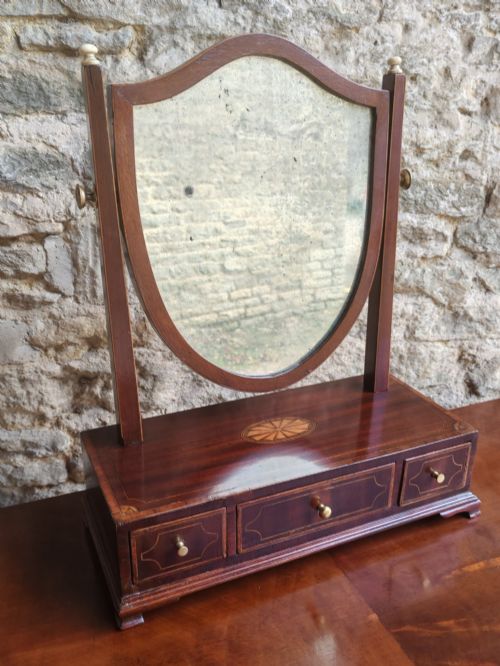
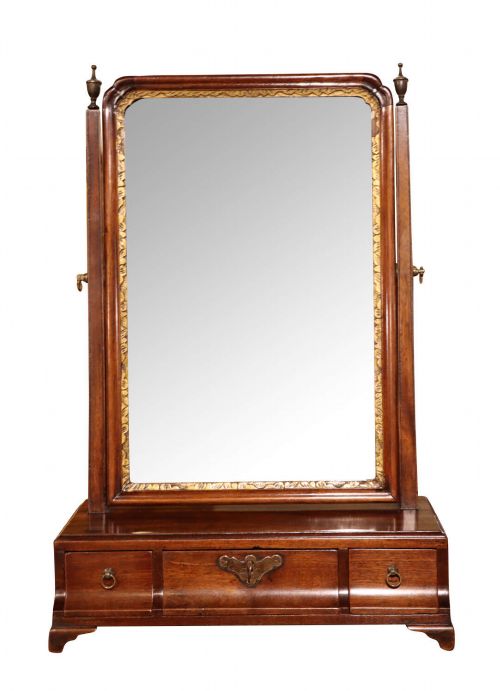
The most common form on this page is the swing mirror supported by upright arms, mounted above a rectangular or serpentine box containing one, two, or three small drawers. They reflect the changing domestic habits of the period, offering a movable glass for grooming and shaving.
Materials and construction
Cabinet makers constructed these frames predominantly from solid and veneered mahogany, frequently accented with boxwood, satinwood, or crossbanding. Structural elements often incorporate secondary timbers while exterior surfaces display the rich red-brown tones typical of the timber.
Fittings generally include brass drop handles or knobs, sometimes accompanied by bone escutcheons around keyholes. The glass itself sits within a movable frame, pivoting on brass screw pins or side screws set into upright supports.
Object forms on this page range from simple box dressing mirrors to serpentine-fronted designs with three internal drawers.
Quality and craftsmanship
The distinction between standard domestic items and finer examples rests in the subtlety of the timber selection and the precision of the joinery. Superior pieces utilise finely figured mahogany veneers, delicate crossbanding, and well-proportioned ogee or serpentine drawer fronts.
Attention to structural detail marks the upper tier of these pieces, visible in hand-cut dovetails on the internal drawer boxes and the elegant profiling of the mirror frame horns. The retention of original mirror glass and period brass hardware also elevates the standing of an individual mirror.
Heal & Sons
The Mahogany Toilet Mirror Drawers Glossary
- Serpentine
- A front outline curving inward centrally and outward at the ends, creating a undulating shape frequently seen on finer Georgian drawer bases. This contour required skilled woodworking to execute cleanly.
- Shield
- A mirror glass shaped like a heraldic shield, popular during the eighteenth century within the Georgian style. The curved top crest tapered toward the lower corners.
- Crossbanding
- A strip of veneer applied across the grain of the primary wood around the perimeter of a drawer front or top surface. It created a neat visual border.
- Swing mirror
- A looking glass hung on pivots between two upright posts, allowing the user to tilt the angle of reflection. This mechanism sat directly upon the drawer box.
- Dovetail
- A joint formed by interlocking wedge-shaped fingers, used to construct sturdy drawer boxes without mechanical fasteners. It remains a hallmark of traditional cabinet making.
Mahogany Toilet Mirror Drawers: Frequently Asked Questions
What is a toilet mirror?
A toilet mirror is a small tabletop looking glass designed for personal grooming, traditionally placed on a dressing table, chest of drawers, or washstand.
Most examples feature an adjustable mirror plate mounted on a small wooden base fitted with one or more small drawers for storage.
How do I date a mahogany toilet mirror?
Dating relies on observing structural characteristics, timber choices, and hardware styles across different eras such as the Georgian and Victorian periods.
Earlier eighteenth-century pieces often feature serpentine drawer fronts and fine crossbanding, while later nineteenth-century examples display heavier proportions and different framing details.
Where were these mirrors placed?
These mirrors were positioned on top of chests of drawers, sideboards, or dedicated dressing tables in bedrooms and dressing rooms.
Because they were portable rather than fixed to a wall, owners could move them around the room to catch optimal morning light.
What are the drawers used for?
The small drawers built into the base served to hold jewellery, cosmetics, hairpins, and other small personal accessories.
Having these items tucked beneath the glass kept the dressing surface tidy while maintaining quick access during daily routines.