




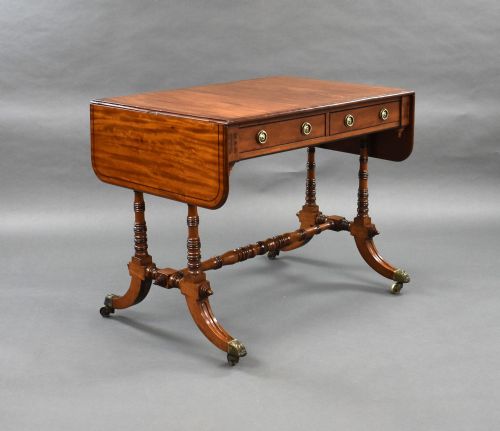
Mahogany Tipping Table
A mahogany tipping table is a space-saving tilt-top piece that swings flat when not in service, combining practicality with fine cabinet-making.
Mahogany Tipping Table
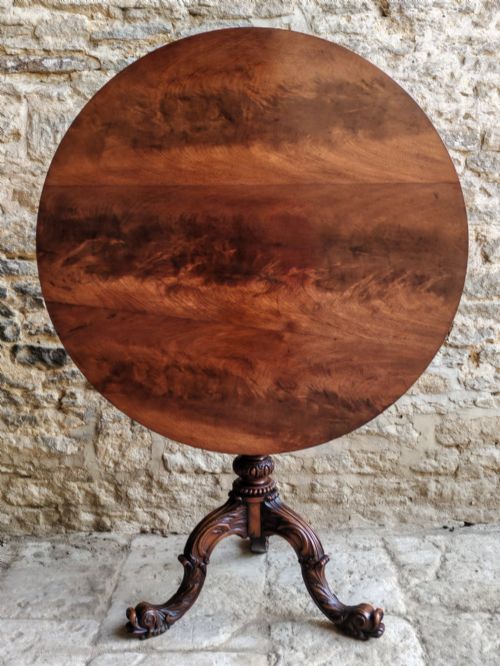
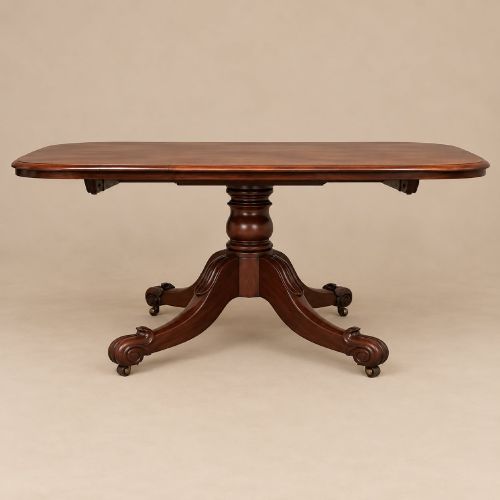
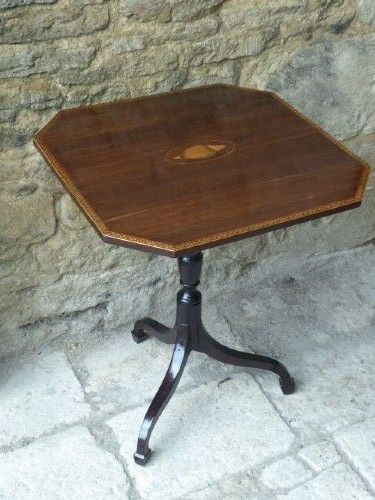
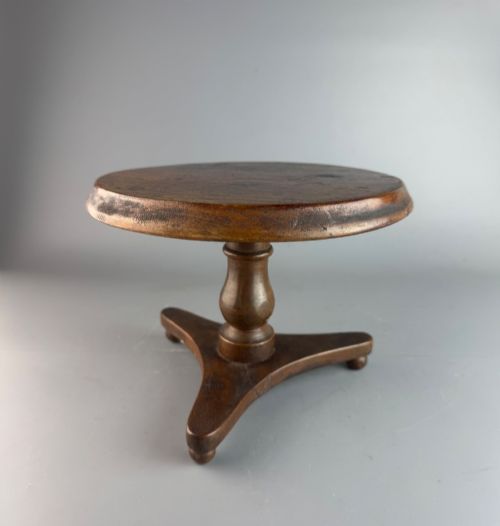
A mahogany tipping table is a versatile surface designed to tilt upright against a wall or tuck away neatly when floor space is needed. The selection here spans the Georgian, Regency, and Victorian periods, along with later Georgian Revival pieces.
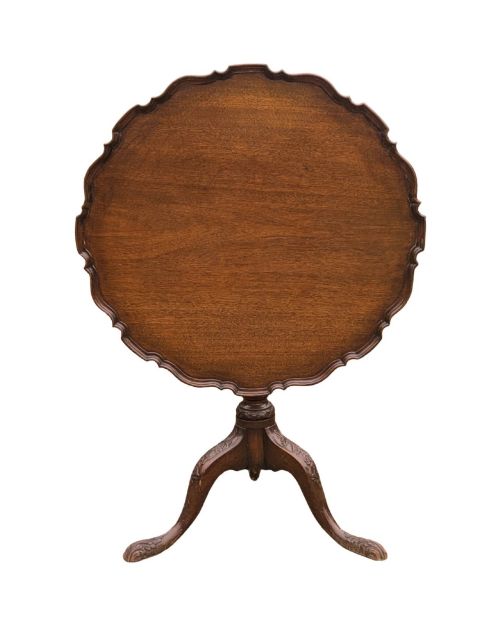
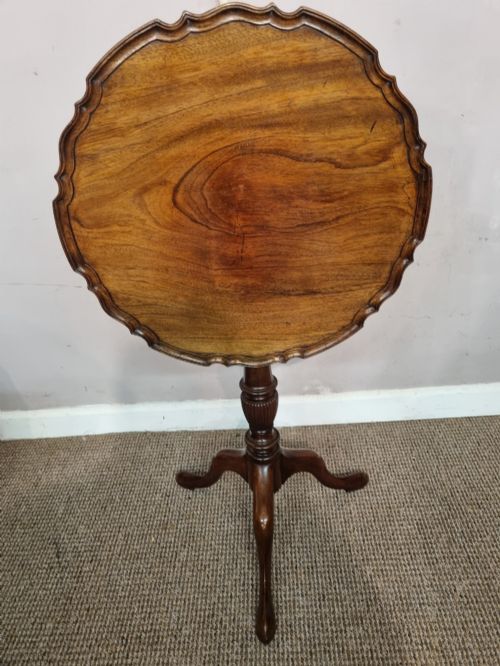
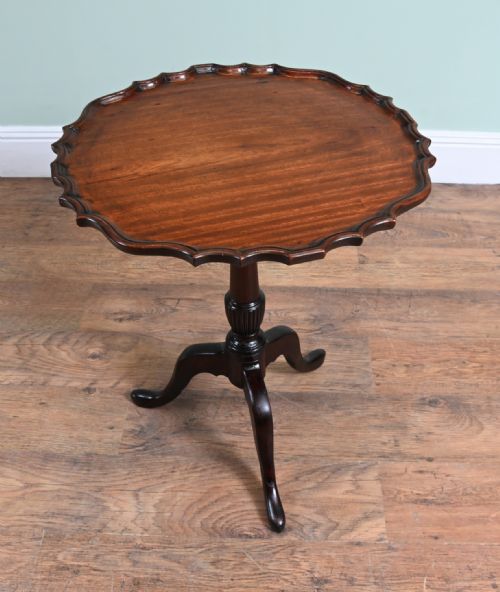
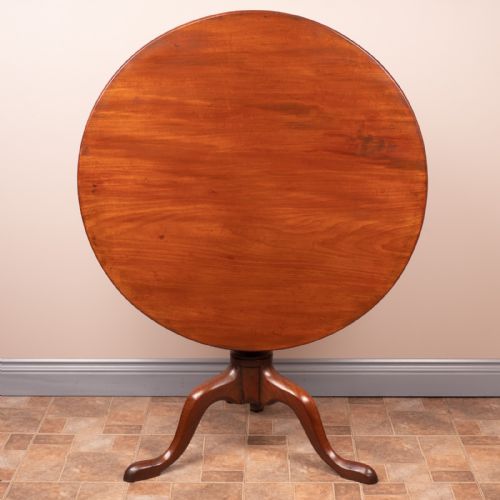
Most examples take the form of circular occasional tables, wine tables, or tripod candlestands resting on a central pedestal. Forms range from plain circular tops to pie crust edges, sometimes featuring birdcage mechanisms that allow the top to rotate as well as tilt.
How they were made
Makers utilised solid mahogany and hardwood timbers, turning central pillars on lathes and shaping slender tripod legs to support the mechanism. Selected pieces incorporate wood inlay and brass fittings to accent the polished timber surfaces.
The characteristic tip-top action relies on a clever pivot mechanism, often with a birdcage box structure beneath the top that allows both rotation and tilting without wobble.
Mahogany Tipping Table Retail Price Guide 2026
Typical asking prices for mahogany tipping table among the pieces listed under this phrase on Sellingantiques today, from the lower quarter to the upper quarter. They describe what is for sale here now, not the wider market.
A good birdcage mechanism lets the table spin like a wheel of fortune before you tip it flat.
What varies in quality
Quality rests in the crispness of the timber turning, the stability of the central pivot, and the refinement of the edge moulding. A piece with a well-defined pie crust edge and smooth tipping action demonstrates superior workshop skill compared to a plain, heavy-handed production.
The choice of mahogany grain and the integrity of the tripod base dictate the visual presence of the table. Subtle details in the leg carving and the neatness of the birdcage mechanism separate standard workshop output from finer examples.
The Mahogany Tipping Table Glossary
- Tip-top table
- A table with a hinged top that can be tilted into a vertical position when not in use. This clever design allowed tables to be stored against walls in smaller rooms.
- Birdcage
- A wooden framework beneath the table top that permits the surface to rotate as well as tilt. It sits between the top and the central pillar.
- Pie crust edge
- A decorative, raised, and scalloped carved rim shaped from the solid wood of the table top. It is characteristic of finer Georgian dining and wine tables.
- Tripod base
- A support structure featuring three legs radiating from a central turned column. This design ensures the table remains steady on uneven floors.
Mahogany Tipping Table: Frequently Asked Questions
What is a mahogany tipping table?
A mahogany tipping table is a portable occasional table with a top that pivots on a hinge to stand vertically. This allowed the table to be cleared away and stored against a wall.
They appeared frequently in Georgian and Regency drawing rooms as wine tables or candlestands before continuing into the Victorian era.
How does the birdcage mechanism work?
The birdcage is a small wooden cage structure fitted between the top of the central column and the underside of the table top. It allows the top to spin horizontally in addition to tipping vertically.
This added convenience meant diners or readers could adjust the orientation of the table without moving the heavy base.
Where were these tables used?
These tables served as flexible surfaces in reception rooms, libraries, and parlours. Their tilting ability made them ideal for multi-purpose rooms where floor space was at a premium.
Owners pulled them up to chairs for reading or writing, or used them to hold lamps and drinks.
How do I spot a Georgian table?
Georgian tables often feature rich mahogany timbers, slender turned columns, and tripod bases ending in pad or spade feet. Details like a carved pie crust edge point to this earlier period.
Later Victorian and revival pieces often display heavier proportions and different turning styles on the central pillar.