



Mahogany Tea Tray on Stand
These mahogany tea tray on stand pieces bring sturdy timber and portable serving surfaces together for everyday use.
Mahogany Tea Tray on Stand
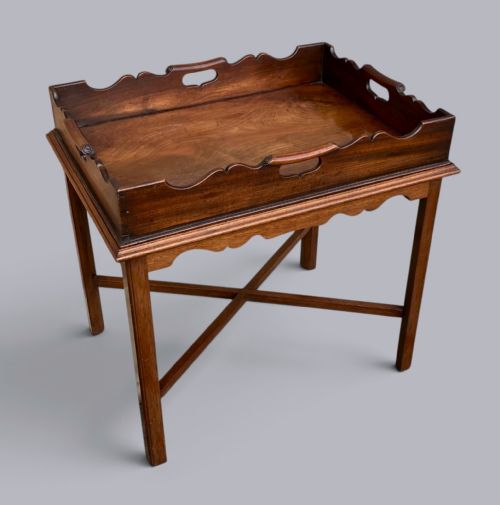
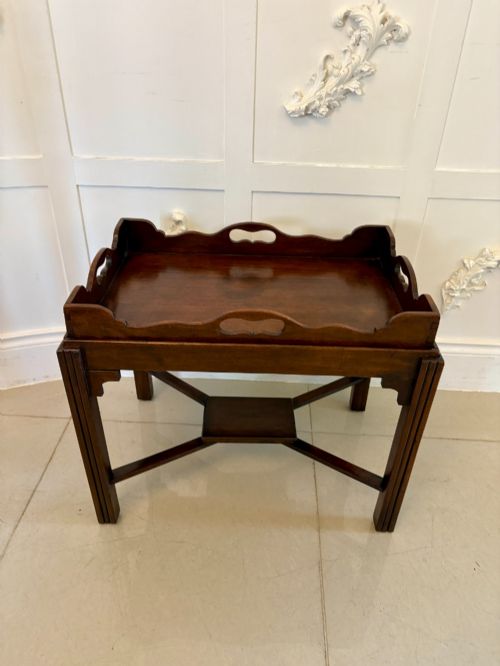
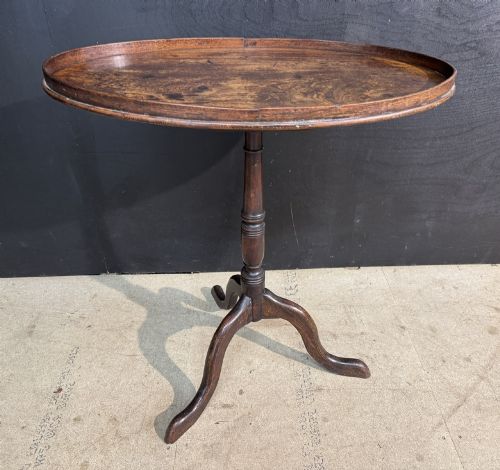
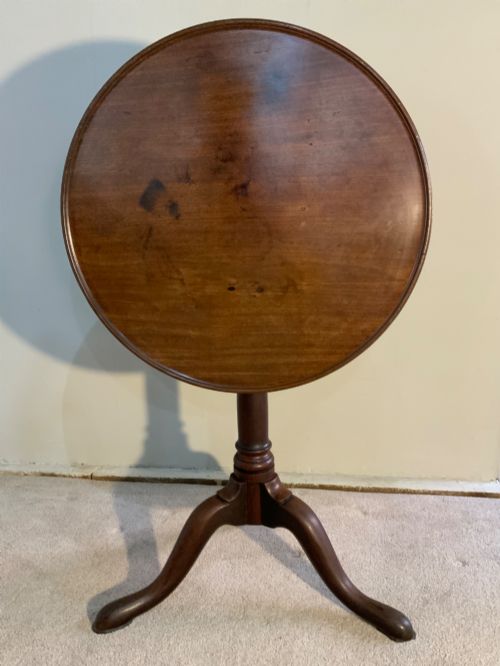
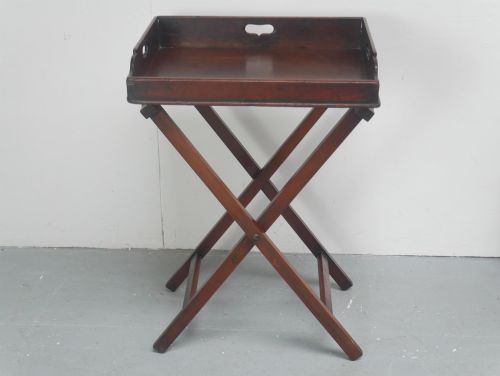
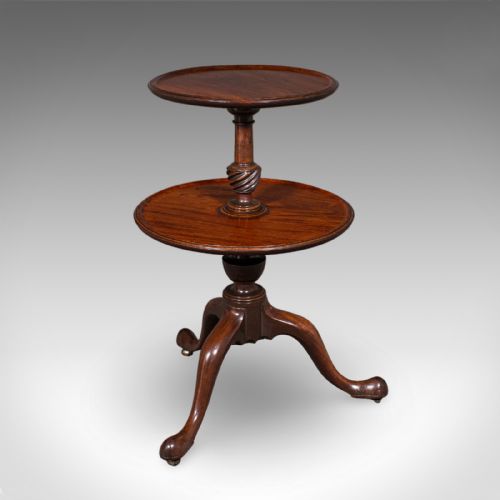
A mahogany tea tray on stand combines a removable or fixed timber tray top with a matching support base, serving practical domestic functions across several centuries of British furniture making. Buyers searching for a mahogany tea tray on stand encounter forms ranging from folding cake stands and dumb waiters to tilt-top tripod tables and butler's trays.
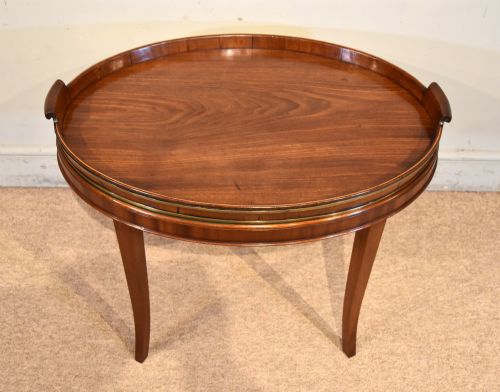
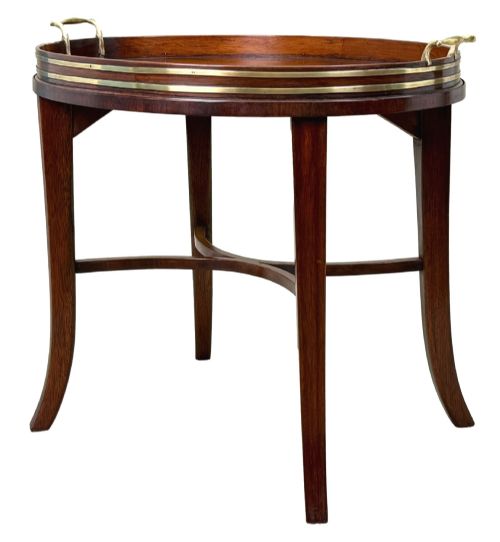
The pieces listed span the eighteenth century, the Georgian, Regency, and Victorian periods, alongside Edwardian revivals and early twentieth-century examples. Oval trays with brass bound decoration appear alongside circular tray tables and two-tier serving stands.
Originating as functional dining and entertaining accessories, these tables function today as occasional tables, coffee tables, and side tables in modern rooms. The most common versions on this page combine mahogany timber with occasional satinwood inlay or brass fittings.
Materials and construction methods
Makers utilised solid mahogany and mahogany veneers for the primary structures of these trays and stands, sometimes incorporating satinwood inlay for decorative contrast. Timber selection focused on durable hardwoods capable of supporting heavy serving vessels without warping.
Metal elements appear in the form of brass bound decoration on trays and secure hinges or folding mechanisms on stands. Joinery techniques varied according to the period, supporting both fixed surfaces and folding cake or butler's tray configurations.
Mahogany Tea Tray on Stand Retail Price Guide 2026
Typical asking prices for mahogany tea tray on stand among the pieces listed under this phrase on Sellingantiques today, from the lower quarter to the upper quarter. They describe what is for sale here now, not the wider market.
Listings feature mahogany, satinwood, and brass materials across Georgian, Regency, Victorian, and Edwardian periods.
Assessing quality in mahogany stands
Quality in a mahogany tea tray on stand rests upon the crispness of the timber grain, the precision of any satinwood inlay, and the integration between tray and base. Superior pieces exhibit thoughtful proportions and stable construction without excessive structural reinforcement.
The handling of brass mounts and the finish applied to the mahogany surface differentiate standard workshop output from finer examples. Balance and stability remain paramount, particularly in tilt-top and folding formats where moving joints experience regular use.
The Mahogany Tea Tray on Stand Glossary
- Butler's tray
- A rectangular or oval wooden tray with hinged sides, designed to lift off its folding stand for serving. These pieces often feature cut-out handles for ease of transport.
- Tilt top table
- A table with a mechanism allowing the surface to pivot to a vertical position when not in use. This design saved space in smaller eighteenth and nineteenth-century rooms.
- Dumb waiter
- A tiered serving stand with multiple revolving or stationary trays mounted on a central column. They held food and drink during meals without requiring servant intervention.
- Tripod table
- A small occasional table supported by a pillar above three spreading legs. They provide stable placement on uneven floors.
- Satinwood inlay
- A contrasting light-coloured wood inserted into the mahogany surface in decorative patterns. Cabinet makers utilised this technique to brighten darker timber grounds.
Mahogany Tea Tray on Stand: Frequently Asked Questions
What is a mahogany tea tray on stand used for?
These pieces served historically for carrying and presenting tea, food, and beverages in domestic settings. Today they function primarily as decorative occasional tables, coffee tables, or side tables in living spaces.
Their portable trays and sturdy bases make them adaptable furniture items for holding lamps, books, or drinks.
How do I date a mahogany tea tray on stand?
Dating relies on identifying period characteristics in the timber, joinery, and decorative motifs such as satinwood inlay or brass fittings. Georgian and Regency pieces typically show different hand-tool marks and proportions compared to Edwardian revivals.
Examining the underside and joint construction helps determine whether an item belongs to the eighteenth century or later revival periods.
Are the trays removable on these stands?
Many butler's trays lift completely off their folding wooden stands, while other models feature fixed tops or tilt mechanisms. Trays designed for removal often include shaped handholds cut directly into the timber sides.
It is helpful to check whether the listed item is a folding version or a solid tilt-top table.
How do I care for antique mahogany furniture?
Maintaining mahogany surfaces involves keeping them away from direct sunlight and extreme temperature fluctuations to prevent the timber from drying out. Regular dusting with a soft, dry cloth preserves the polished finish.
Avoid placing damp items directly onto antique wood to protect the vintage polish and timber grain.