





Mahogany Swing Frame Mirror
A mahogany swing frame mirror brings practical elegance to a dressing table, pivoting smoothly to catch the light just where you need it.
Mahogany Swing Frame Mirror
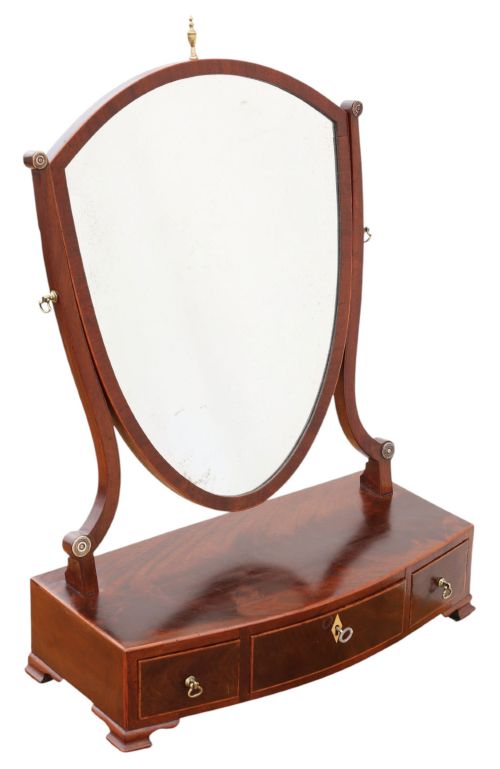
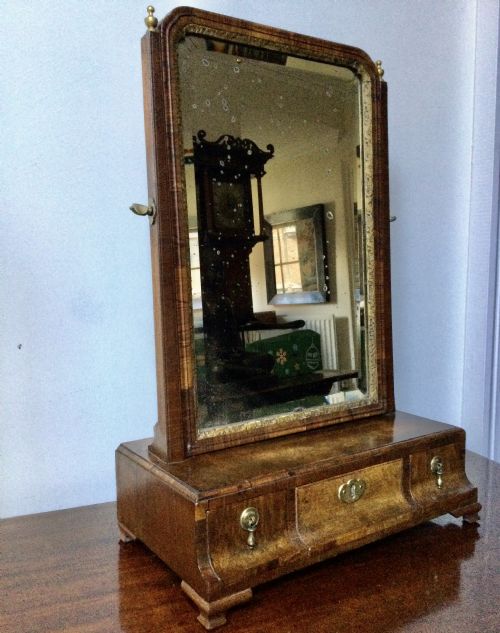
A mahogany swing frame mirror sits upon a small chest or tabletop base, pivoting between upright supports so the glass tilts to any angle. These pieces serve as functional dressing table mirrors and toilet mirrors, designed to assist with grooming and personal reflection.
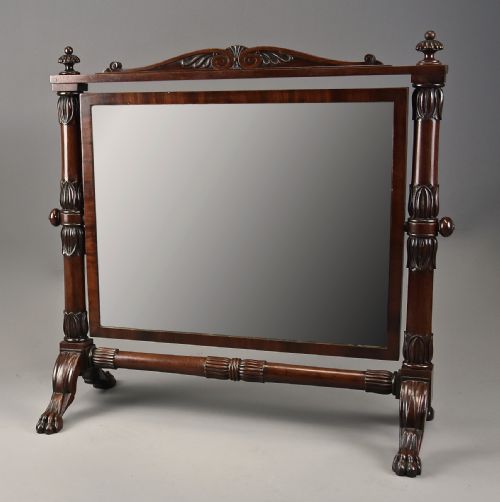
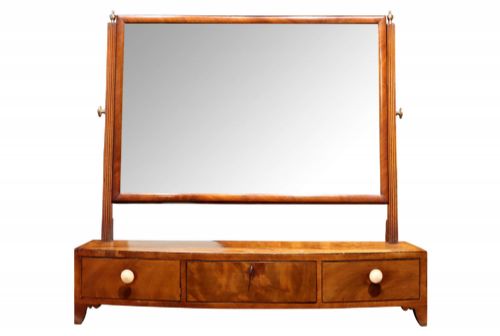
Most examples found here date from the Georgian, Regency, and Victorian eras, ranging from simple tabletop forms to substantial cheval mirrors. Makers shaped them in various outlines, including shield, serpentine, and bowfront designs, often incorporating small drawers beneath the frame.
Buyers will encounter compact tabletop dressing mirrors alongside taller cheval mirrors that stand upon the floor. The overarching style follows the classical lines of the eighteenth and nineteenth centuries, utilising rich timber and traditional joinery.
Materials and construction
Cabinetmakers constructed these frames primarily from solid mahogany and figured Cuban mahogany, occasionally selecting flame mahogany veneer to create striking grain patterns on the drawer fronts and surrounds. They paired the rich timber with brass adjusting screws, finials, and sometimes delicate wood inlay to accent the uprights and base.
The mirror glass is held within a slender wooden frame that pivots on brass pins set into the supporting arms. Joinery relied on traditional dovetailed drawer construction and pegged tenons, ensuring the vertical posts remained stable under the weight of the tilting glass.
Mahogany Swing Frame Mirror Retail Price Guide 2026
Typical asking prices for mahogany swing frame mirror among the pieces listed under this phrase on Sellingantiques today, from the lower quarter to the upper quarter. They describe what is for sale here now, not the wider market.
The listings span the Georgian, Regency, and Victorian periods, utilising materials such as brass, mahogany, flame mahogany, and mirror glass.
Distinctions in quality
Quality rests upon the selection of the timber and the refinement of the cabinetwork, where finely figured Cuban mahogany and carefully matched veneers signal superior craftsmanship. Simpler pieces rely on plain mahogany boards, while finer examples exhibit serpentine curves, bowfront bases, and intricate shaping that demand advanced carpentry skills.
The sophistication of the base proportion relative to the pivoting frame distinguishes workshop output. Well-executed pieces integrate small drawers with flush fits and clean dovetails, whereas lesser items display heavier framing and simpler geometric lines without curved detailing.
P and MA Nicholson
The Mahogany Swing Frame Mirror Glossary
- Swing frame mirror
- A looking glass mounted on pivots between two upright posts, allowing the glass to tilt forward or backward. This form became a staple of dressing furniture in the eighteenth and nineteenth centuries.
- Cheval mirror
- A full-length swing mirror supported on a freestanding floor frame with four legs. The name derives from the French word for horse, referencing the four-legged trestle support.
- Toilet mirror
- A smaller tabletop dressing mirror designed to sit on top of a chest of drawers or a dedicated dressing table. They often feature a small box base fitted with one or more miniature drawers.
- Serpentine front
- A furniture front shaped with a convex centre flanked by concave curves. This undulating profile requires skilled hand-planing and timber selection.
- Flame mahogany
- A veneer cut from timber where the branch meets the trunk, producing a rippling, flame-like grain pattern. Cabinetmakers reserved this decorative wood for prominent surfaces on high-status pieces.
Mahogany Swing Frame Mirror: Frequently Asked Questions
What is a swing frame mirror?
A swing frame mirror is a pivoting looking glass mounted on upright supports, designed to tilt at various angles for personal grooming.
These pieces typically rest upon a tabletop base or a set of miniature drawers, serving both a functional and decorative role in period bedchambers.
How were these mirrors used?
They were placed on dressing tables or chests of drawers to assist with shaving, hairstyling, and adjusting attire.
The pivoting mechanism allowed the user to angle the reflection downward or upward depending on the light and their height.
How do I date a Georgian mirror?
Dating relies on observing the timber species, the shaping of the frame, and the construction methods used in the base drawers.
Georgian examples often feature hand-cut dovetails, straight or serpentine mahogany boards, and classical proportions associated with the eighteenth and early nineteenth centuries.
What is the difference between a toilet mirror and a cheval mirror?
A toilet mirror is a compact tabletop piece designed to sit on top of a chest of drawers or dressing table.
A cheval mirror is a much taller, freestanding floor mirror that allows the user to see their entire reflection from head to toe.
How do I live with an antique mahogany mirror?
Position the mirror away from direct sunlight and radiators to protect the timber and veneer from drying out or splitting.
Keep the brass pivots lightly adjusted so the frame moves smoothly without putting undue stress on the wooden uprights.