
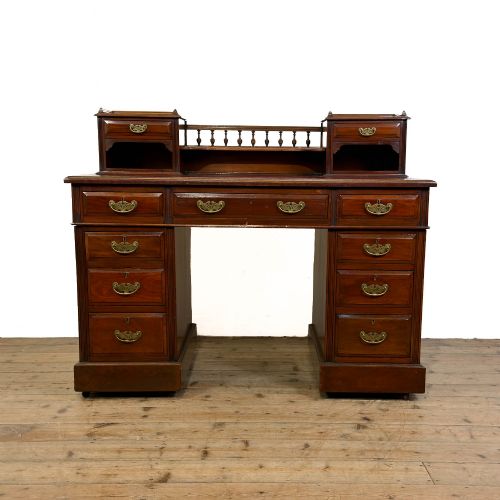


Mahogany Superstructure Desk
A mahogany superstructure desk brings architectural presence and clever compartments to a study, offering the serious writer a proper Victorian workspace.

Mahogany Superstructure Desk
A mahogany superstructure desk is a substantial writing furniture piece featuring a raised tier of drawers, pigeonholes, or shelves mounted above the main writing surface. The listings show these pieces emerging primarily from the Victorian era, alongside examples from the Edwardian period and French Empire styles.
The dominant forms on this page include pedestal desks and writing tables, often tailored as ladies writing desks or specialised partner pieces like the Charles Dickens desk. These configurations range from grand exhibition quality pieces to more compact Davenport or bureau du dame formats.
Makers and designers working in this tradition employed rich timbers to construct writing surfaces that combine flat work areas with enclosed vertical storage. Each variation reflects the period's demand for organised correspondence and private storage within the home.
Materials and construction
Makers built these desks using solid mahogany and mahogany veneers, frequently pairing the warm timber with inset leather writing surfaces and polished brass hardware. Satinwood stringing and contrasting inlay appear on lighter pieces, adding decorative refinement to the superstructure tiers.
Joinery techniques matched the structural demands of heavy pedestal forms and multi-tiered superstructures, ensuring stability across large writing tables. Secondary elements incorporate glass doors on select compartments and fitted fabric interiors within specialised storage sections.
Listings feature mahogany, brass, leather, and satinwood across Victorian, Edwardian, and French Empire styles.
Assessing quality in a mahogany superstructure desk
Quality reveals itself in the selection of timber figures, the crispness of carved mouldings, and the integration of the raised superstructure to the main desk base. Exhibition pieces demonstrate superior hand-joinery and ambitious design choices by named makers, whereas standard production shows simpler execution.
The sophistication of the internal fittings, such as secret drawers, pigeonhole arrangements, and matched brass hardware, separates utilitarian examples from fine collector pieces. Original leather inserts and well-preserved satinwood details further elevate the standing of a desk.
Hobbs & Co.·George Faulkner Armitage
The Mahogany Superstructure Desk Glossary
- Superstructure
- The raised set of drawers, pigeonholes, or small cupboards positioned above the main writing surface. This upper tier provides vertical storage for stationery and correspondence.
- Carlton house desk
- A specific form of writing desk featuring a curved superstructure enclosing a series of drawers and compartments around the perimeter of the writing surface. This shape gained popularity in the late eighteenth century and continued into the twentieth century.
- Bureau du dame
- A French style of ladies writing desk, often delicate in proportion and featuring curved lines or gilt mounts. These pieces were designed for domestic boudoirs and private correspondence.
- Aesthetic Movement
- A late nineteenth century design style emphasising artistic expression, simplicity of line, and Japanese influences. Pieces from this period often utilised ebonised details alongside mahogany.
Mahogany Superstructure Desk: Frequently Asked Questions
What is a mahogany superstructure desk?
A mahogany superstructure desk is a writing table featuring a raised tier of compartments, shelves, or small drawers built onto the back of the work surface. This design creates dedicated vertical storage for stationery while keeping the main desk area clear.
Most examples seen here date from the Victorian era, though variations span the nineteenth and early twentieth centuries. They range from compact ladies writing desks to large pedestal formats.
How do I date a mahogany desk?
Dating relies on stylistic clues, construction methods, and the specific timber selections visible across the piece. Victorian and Edwardian examples often display distinct design revivals, such as Sheraton influences or Aesthetic Movement details.
Hardware styles, dovetailing techniques, and secondary woods also provide reliable indicators of age. Comparing the piece to documented nineteenth-century forms helps narrow down the decade of manufacture.
Were these desks used for writing?
These desks served as the primary administrative furniture for Victorian households and offices, handling daily correspondence, ledgers, and personal letter writing. The superstructure kept pens, ink, and paper organised within arm's reach.
Specialised variants, such as the Dickens desk, accommodated heavy paperwork with deep pedestal drawers and extensive pigeonhole space. They were built for intensive daily use by professionals and writers.
How do I care for mahogany furniture?
Maintaining mahogany requires consistent indoor humidity levels to prevent timber movement and veneer cracking. Direct sunlight should be avoided to protect the rich reddish-brown tone of the wood.
Gentle cleaning with a soft, dry cloth preserves the polished finish. Traditional wax polishes can be applied sparingly to nourish the timber surface over time.