

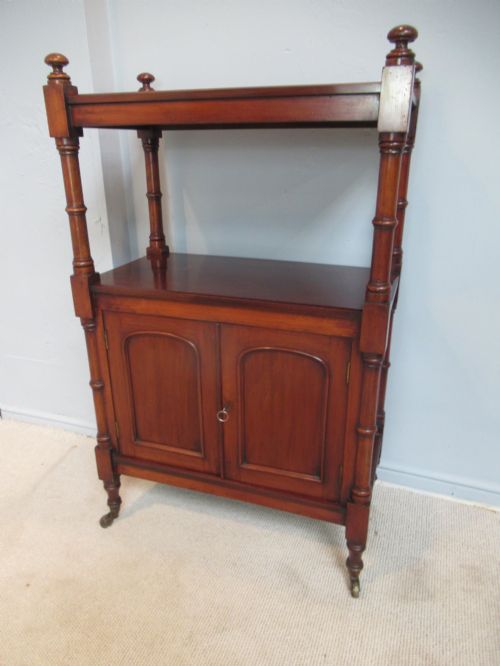


Mahogany Style Chiffonier
These mahogany style chiffonier pieces offer low-slung storage with characteristic enclosed shelving, bringing refined timber grain to period rooms.
Mahogany Style Chiffonier
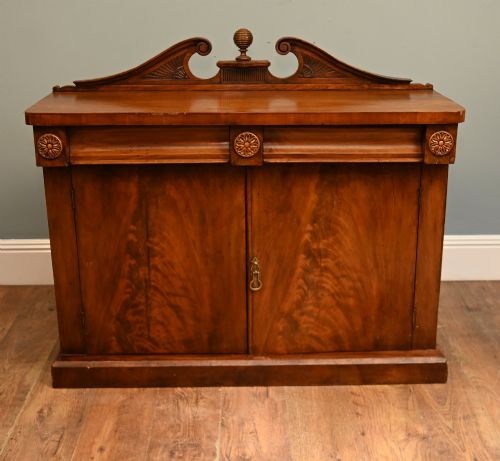
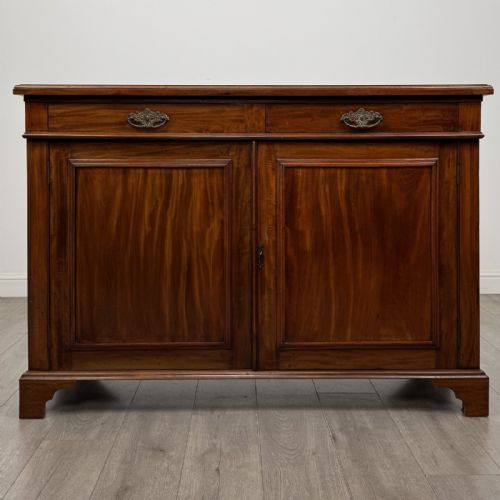
When searching for a mahogany style chiffonier, you are looking at low side cabinets and cupboards designed primarily for dining rooms and parlours. The pieces on this page span the 18th century, Regency, and Victorian periods, alongside later Edwardian and 1920s interpretations.
How they were made
Cabinet makers constructed these pieces using solid mahogany and flame mahogany veneer applied over secondary woods. Timber selection dictated the visual movement across the front panels and doors.
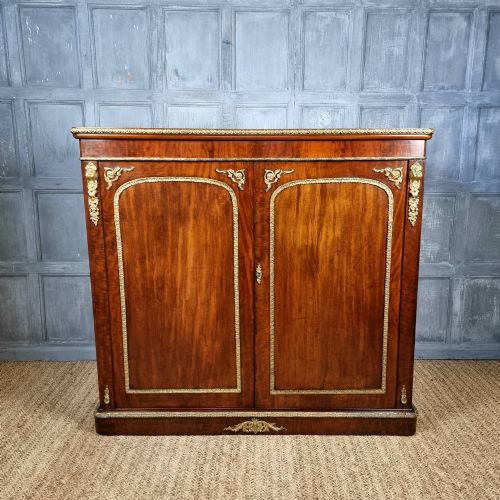
Workshops integrated brass mounts, marble tops, glass panels, and ormolu details depending on the prevailing style, from French Empire to William IV.
Mahogany Style Chiffonier Retail Price Guide 2026
Typical asking prices for mahogany style chiffonier among the pieces listed under this phrase on Sellingantiques today, from the lower quarter to the upper quarter. They describe what is for sale here now, not the wider market.
Some nineteenth-century makers cleverly concealed small cutlery drawers just beneath the top surface to keep silver within instant reach.
What varies in quality
The standard of timber preparation and veneer matching largely separates ordinary builds from finer examples. Grain alignment across multiple drawers or doors reveals the skill invested by the maker.
Carved wooden details, the precision of brass fittings, and the integrity of applied marble tops also distinguish baseline utility pieces from cabinet work of superior distinction.
Gillows·S Jamar
The Mahogany Style Chiffonier Glossary
- Chiffonier
- A low sideboard or cabinet featuring enclosed lower doors, often topped with a raised shelf supported by scrolling pillars. It evolved from earlier side table designs to provide practical dining room storage.
- Flame mahogany veneer
- A thin slice of timber cut from wood where the branch meets the trunk, creating a distinct, flickering flame pattern. Cabinet makers laid this over stable secondary woods.
- Ormolu
- Gilded bronze ornamentation applied to furniture mounts and decorative accents, common in French Empire and Napoleon III pieces. It provides metallic contrast against dark mahogany surfaces.
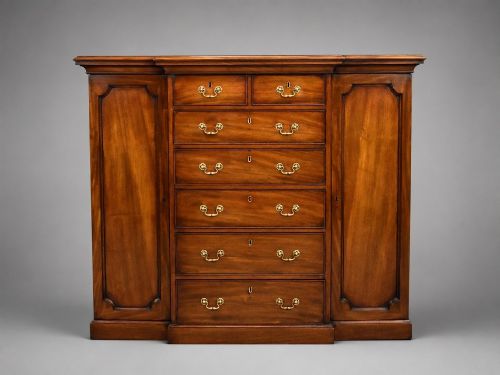
- Breakfront
- A cabinet design where the central section projects forward from the flanking outer sections. This architectural form creates depth and shadow on larger sideboards.
- Bracket feet
- Simple, right-angled feet that support the corners of a cabinet base. They lift the main body slightly off the floor while maintaining a grounded silhouette.
Mahogany Style Chiffonier: Frequently Asked Questions
What is a mahogany style chiffonier?
It is a low-profile storage cabinet featuring enclosed lower doors and typically an upper shelf tier. These pieces were designed to hold dining accessories and display ornaments.
They bridge the gap between heavy sideboards and decorative display cabinets, suiting both formal and everyday rooms.
How were these cabinets used?
Historically, households used them in dining rooms and sitting rooms to store porcelain, silver, and table linen. The flat top surface also served as a serving station during meals.
Today, they function well as sideboards, media consoles, or hallway storage units.
How do I date a chiffonier?
Dating relies on observing structural characteristics, hardware styles, and timber treatments across different design periods. Regency and William IV pieces often display heavier scrolling columns and bold mahogany veneers.
Later Victorian and Edwardian iterations tend to show different proportions or lighter decorative carving.
Will a marble top get damaged easily?
Marble tops provide a durable, hard-wearing surface that resists daily wear and liquid spills better than polished wood. However, they remain susceptible to heavy impacts and acidic substances.
Routine dusting and careful placement of heavy items will keep the stone surface intact.