

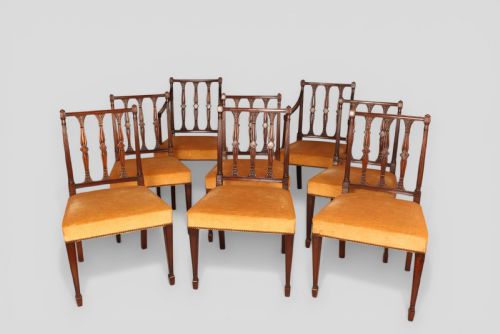
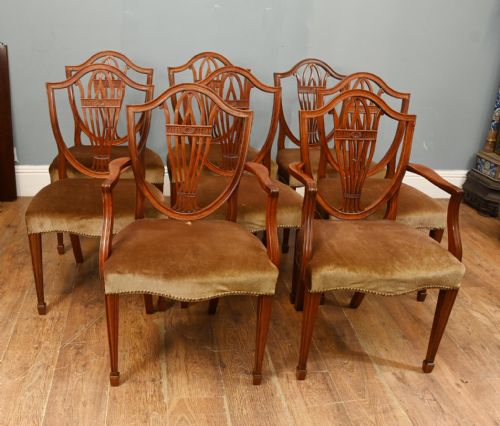


Mahogany Single Chairs
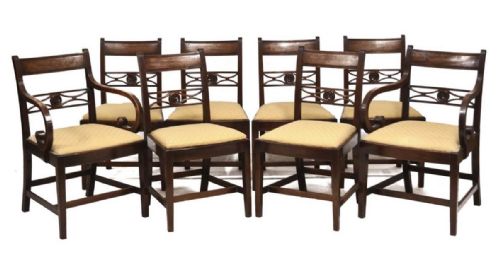
Mahogany single chairs arrive in sets or pairs spanning the eighteenth and nineteenth centuries, offering versatile seating shaped by Georgian, Regency and Victorian hands.
Mahogany Single Chairs
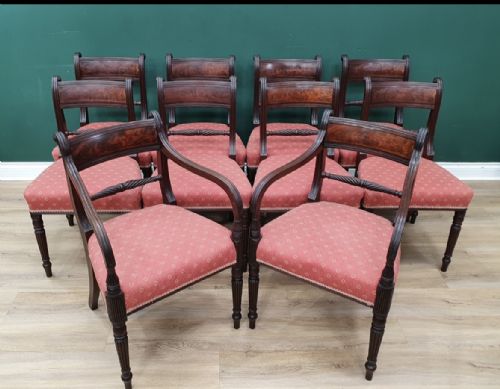
When you search for mahogany single chairs, you look at individual seats designed to stand alone or complement a larger dining set without arms. The evidence spans the eighteenth and nineteenth centuries, taking forms such as dining chairs, side chairs, hall chairs and occasional bedroom seats.
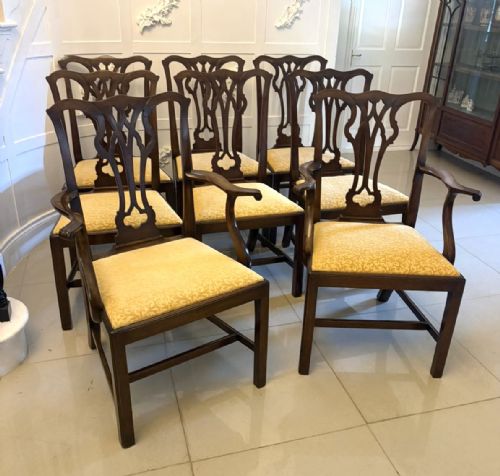
Georgian and Regency examples sit alongside Victorian interpretations and later revivals in the Chippendale and Hepplewhite styles. Single chairs appear frequently as parts of larger dining sets containing multiple singles alongside carvers, or as pairs and individual items.
How they were made
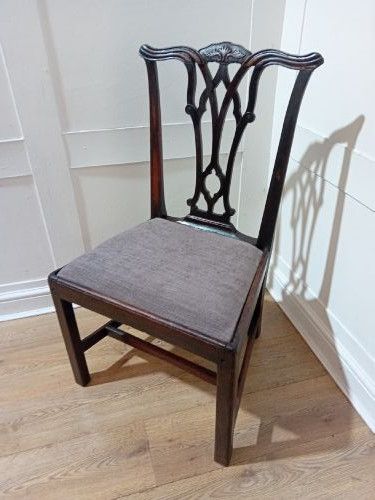
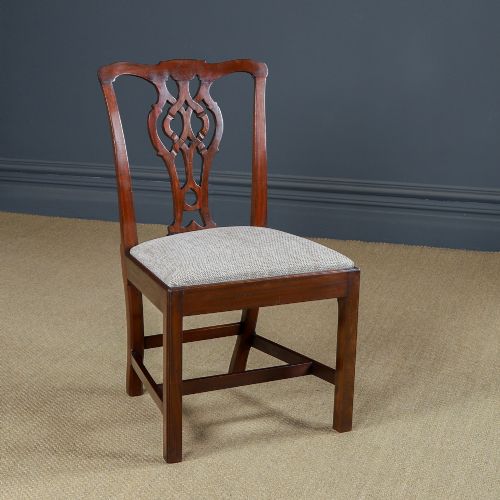
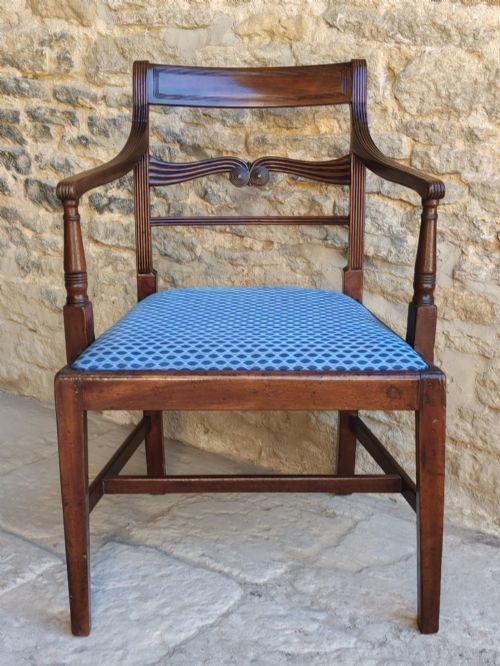
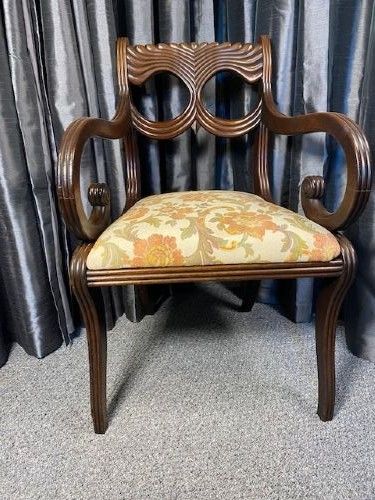
Carpenters shaped dense mahogany timbers, including Cuban mahogany, into frames joined with traditional methods to withstand daily use. Carved splats, ladder backs and reeded legs show the hand of the maker across different periods.
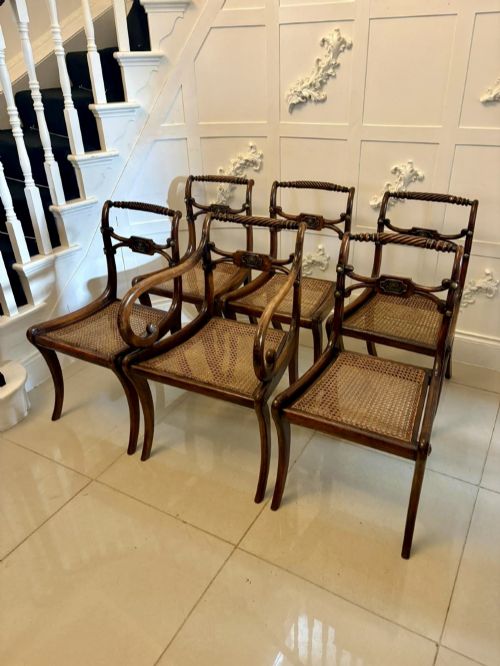
Seats incorporated timber, cane, brass and upholstered pads covered in leather, fabric, velvet or damask. These materials determined the primary function of the chair, from formal dining rooms to halls and offices.
Listings feature mahogany single chairs across the eighteenth, nineteenth and early twentieth centuries, including substantial dining sets and individual hall seats.
What varies in quality
Quality rests in the depth of the mahogany carving, the crispness of details on splats and backs, and the structural integrity of the frame. The distinction between everyday furniture and finer examples lies in the proportion and weight of the timber used.
Makers who supplied demanding clients employed sophisticated joinery and carefully selected mahogany grains. Later revival pieces display varying degrees of adherence to eighteenth-century proportions and decorative restraint.
Thomas Chippendale·Ross and Co Dublin·Gillows
The Mahogany Single Chairs Glossary
- Single chair
- A chair built without arms designed for dining or side placement. These pieces form the numerical majority in standard dining sets.
- Carver
- An armchair intended to sit at the head of a table or match a set of single chairs. These often share the decorative motifs of their companion singles.
- Splat
- The vertical wooden strip down the centre of a chair back. It receives intricate carving or piercing in Georgian and revival designs.
- Cane
- Woven rattan material used to form resilient and lightweight seat panels. Regency examples utilise this technique frequently.
- Side chair
- A light chair without arms intended to stand against a wall when not in use around a table.
Mahogany Single Chairs: Frequently Asked Questions
How do I mix single chairs with a modern table?
Mahogany single chairs bring warmth and strong vertical lines to contemporary dining spaces. Their dark timber tones anchor light or glass tables effectively.
Mixing single chairs from different periods works well if the wood finishes share a similar depth and polish. Pairing two distinct chairs at the ends of a table creates a deliberate balanced look.
Were single chairs used only for dining?
These pieces served multiple rooms in historic homes beyond the dining parlour. Hall chairs, bedroom side chairs and office desk seats all utilised the single chair format.
Chairs designated as hall chairs often feature solid wood seats and prominent carved crests without upholstery. Bedroom and occasional variants relied on lighter frames for ease of movement.
How do I tell an 18th-century chair from a Victorian revival?
Eighteenth-century examples display tighter grain patterns and construction marks consistent with hand tools of the period. The timber weight and colour patina develop naturally over extended decades of use.
Victorian revivals incorporate heavier frames and machine-assisted joinery alongside historical design motifs. Examining the underside and interior joints reveals the construction methods typical of the nineteenth century.
What is the difference between a side chair and a dining chair?
Side chairs traditionally stood against the walls of a room when not in active use around a table. Their designs often feature decorative backs intended for visual display.
Dining chairs prioritise sit depth and structural stability for prolonged seating during meals. In practice, many nineteenth-century listings use the terms interchangeably for armless seats.