
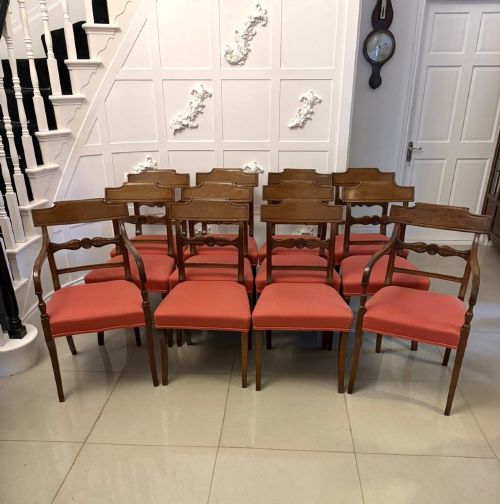
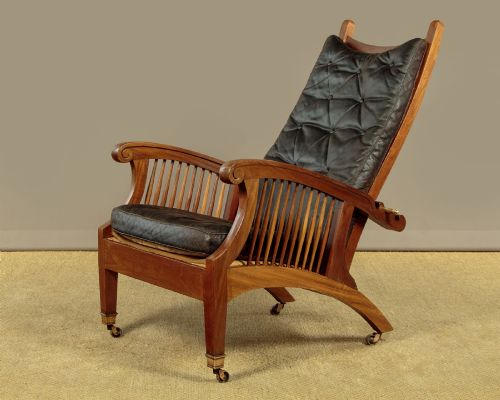
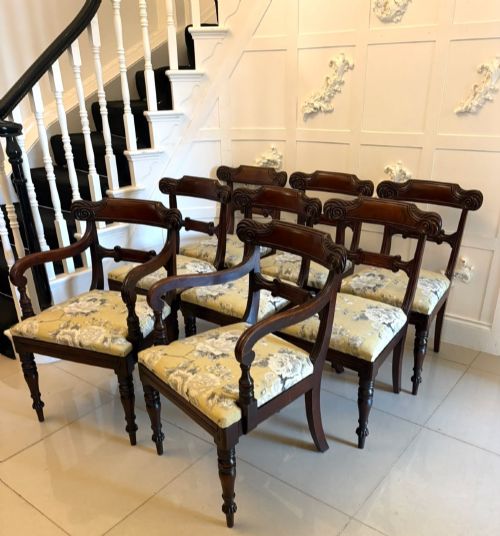
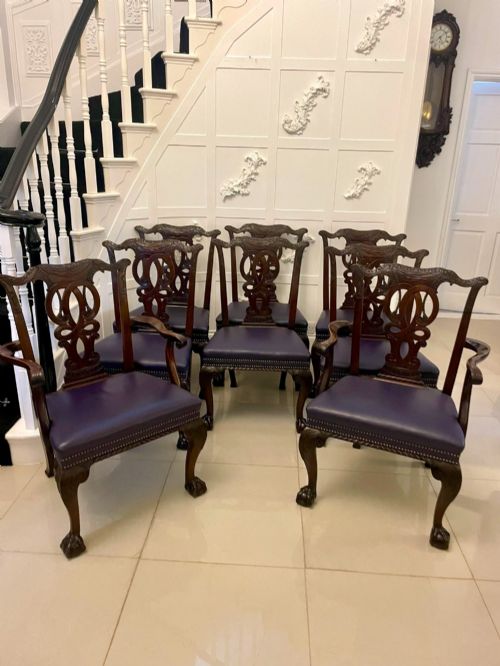
Mahogany Side Armchair
When you search for a mahogany side armchair, you find timber seating designed to anchor a room with substance and lineage.
Mahogany Side Armchair
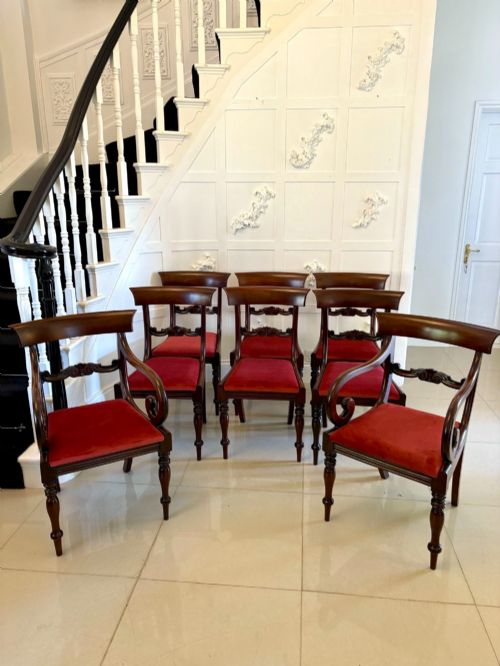
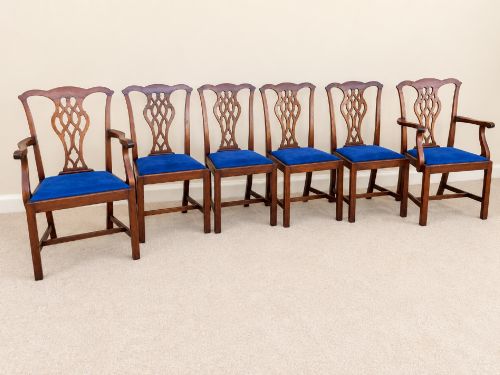
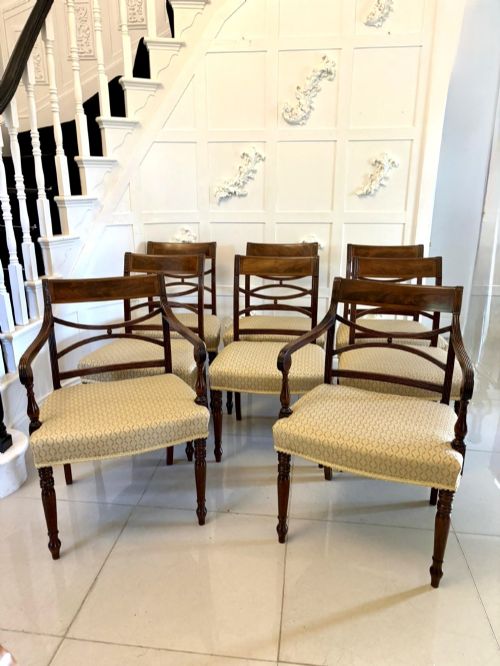
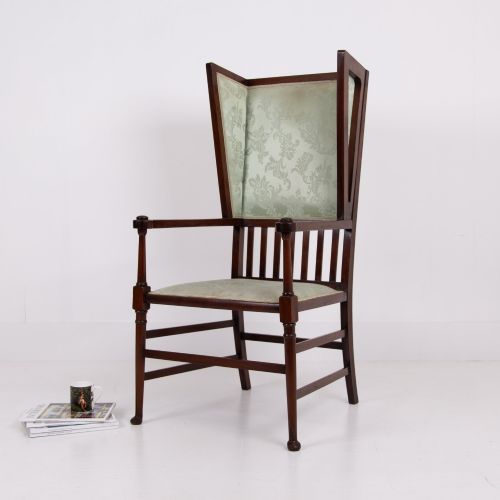
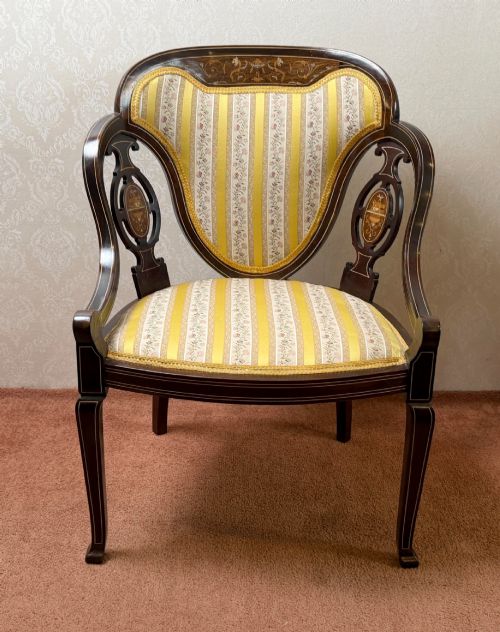
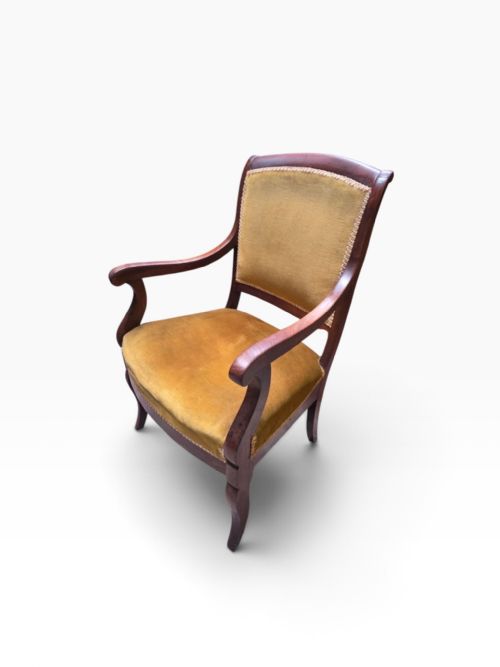
A mahogany side armchair sits at the intersection of utility and formal display, frequently appearing in sets alongside matching side chairs or as a singular fireside companion. These pieces range from compact Edwardian library seats to expansive Georgian and Regency dining carvers designed with open arms.
The selection here draws heavily on 19th-century production, along with Georgian origins and Edwardian revivals, showing how makers adapted historical patterns for domestic use. Buyers encounter armchairs configured for dining rooms, desks, and reception spaces, each retaining the structural integrity required for daily seating.
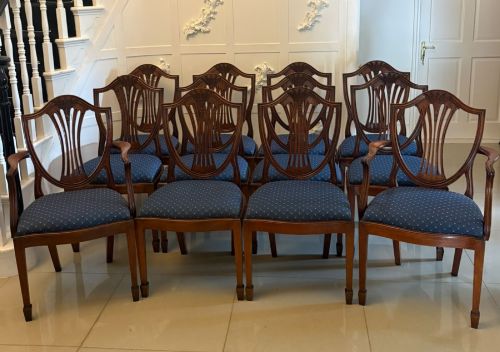
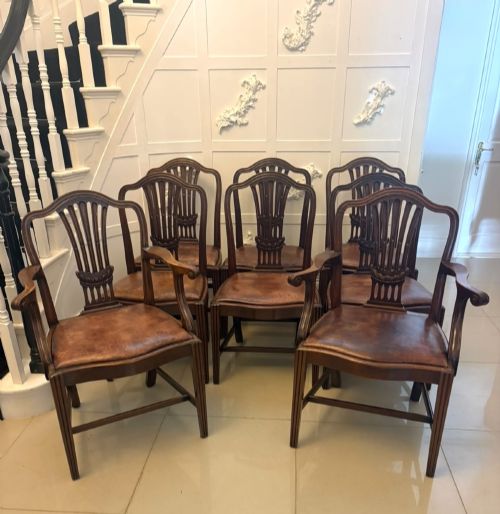
Formations vary from shield-back and lyre-back designs to button-backed fireside chairs upholstered in leather or velvet. These seats reflect the changing domestic habits of the 18th, 19th, and early 20th centuries, balancing decorative wood carving with functional padding.
How they were made
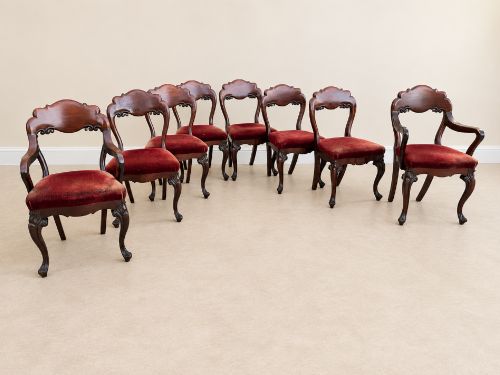
Cabinetmakers constructed these frames using solid mahogany, often complemented by secondary timbers for internal blocks and seat rails. The wood was selected for its dense grain and stability, allowing for intricate hand-carving along splats, rails, and cabriole or reeded legs.
Upholstery techniques evolved across the periods represented, moving from tightly stuffed horsehair foundations secured with webbing to buttoned spring units covered in leather, velvet, or woven fabric. Brass castors frequently appeared on the feet of Victorian fireside models to ease movement across heavy carpets.
Listings span the Georgian, Victorian, and Edwardian periods, utilising mahogany alongside cane, leather, and woven upholstery fabric.
What varies in quality
Depth of carving and sharpness of detail separate standard production from exceptional examples, particularly in revival pieces where lesser workshops relied on shallow stamping rather than crisp hand-chiselling. The weight of the timber and the tightness of the joinery at the arms and legs dictate the overall longevity of the chair.
Originality of surface finish and the preservation of secondary components like brass castors or leather upholstery elevate certain items above standard utilitarian versions. Consistency within a matched set of dining carvers determines value, as composite sets assembled later lack the uniform grain and wear patterns of an original suite.
Warings·Maple And Co
The Mahogany Side Armchair Glossary
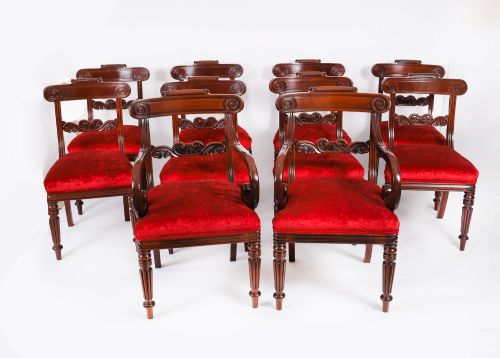
- Carver
- An armchair designed to match a set of single dining chairs, usually featuring open arms to accommodate wide clothing. These pieces sat at the heads of dining tables.
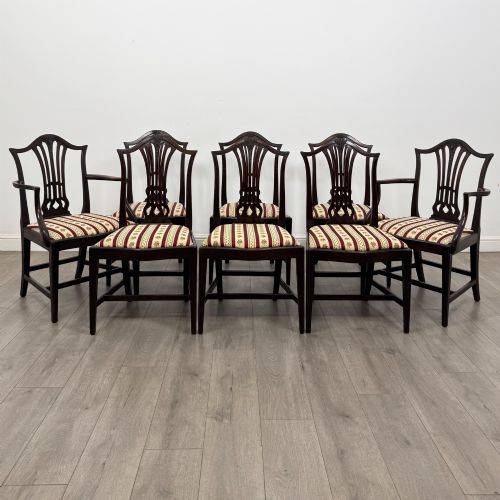
- Shield Back
- A chair back shaped in the outline of a heraldic shield, popularized by George Hepplewhite during the late 18th century and revived in later eras. The internal splat often incorporates carved wheat ears or drapery.
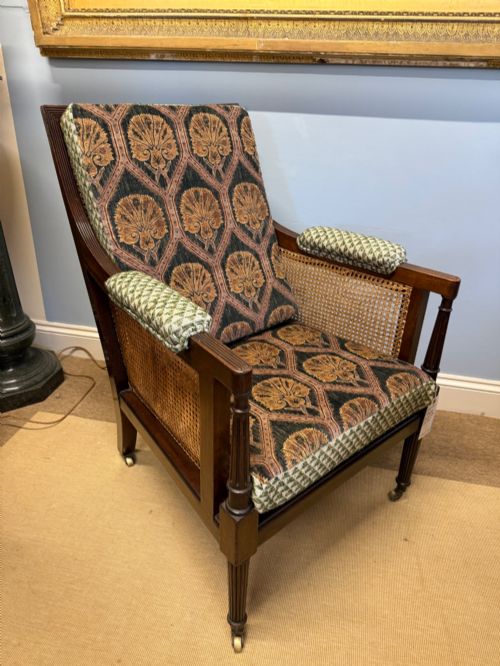
- Bergère
- An enclosed upholstered armchair with wooden framing around the sides and back, frequently filled with cane or fabric. This French form offered deeper comfort in drawing rooms and libraries.
- Spoon Back
- A vertical chair back hollowed to echo the contours of the human spine, common on Victorian fireside armchairs. This ergonomic curve supported the sitter without requiring excessive padding.
- Reeded
- A decorative moulding formed of parallel convex strips carved directly into the wood of a leg or arm support. The technique mimics classical architecture and defines much of the Regency style.
Mahogany Side Armchair: Frequently Asked Questions
How do I spot a marriage in a dining set?
Examine the timber density, colour oxidation, and subtle variations in hand-carved details across the armchairs and single chairs. Minor discrepancies in dimensions or secondary woods usually indicate that pieces from different origins were gathered together later.
Inspect the joinery underneath the seat rails for inconsistent pegging or modern replacement screws. Original sets share identical tool marks and wear patterns accumulated over generations of use.
Were carvers meant only for dining rooms?
While most armchairs accompanied dining tables, many served as reception, library, or desk seats. Sturdier frames with leather upholstery or brass castors functioned well away from the dining room.
Shorter elbow chairs often stood in bedrooms or morning rooms where occupiers required supportive seating for reading or writing.
How do I care for antique mahogany timber?
Keep wooden frames away from direct heat sources and strong sunlight to prevent the mahogany from drying out and splitting. Regular dusting with a dry cloth maintains the finish without stripping the natural patina.
Apply occasional microcrystalline wax to nourish the surface, avoiding silicone-based polishes that degrade historical finishes over time.
What defines the Regency style in these chairs?
Regency seating draws on classical Greek and Roman motifs, featuring sabre legs, reeded framing, and brass inlay. The silhouette prioritises clean architectural lines over the elaborate rococo carving of earlier decades.
Dark Cuban mahogany was often utilised to create high-contrast surfaces, sometimes accented with ebony or brass stringing along the crest rails.