

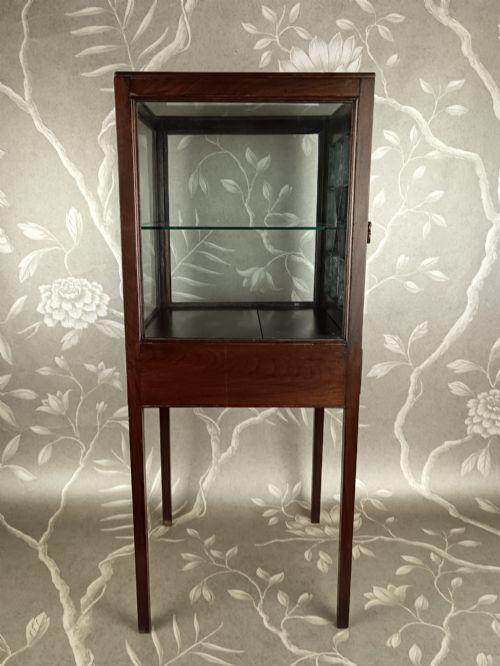
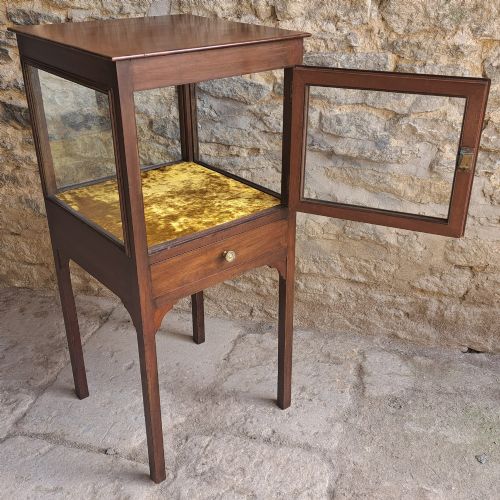


Mahogany Showcase Table
These mahogany showcase table examples offer practical glazed display surfaces for precious collections, combining timber frames with clear viewing panels.
Mahogany Showcase Table
A mahogany showcase table serves as both a functional surface and a glazed cabinet for holding small objects, medals, or jewellery. These pieces appear across Georgian, Edwardian, and early twentieth century periods, maintaining timber frames designed to protect contents while keeping them visible from above.
The most common formats on this page include bijouterie tables and table top display cases that sit upon legs or directly onto existing furniture. Edwardian and Sheraton Revival examples frequently incorporate inlaid decorations or painted floral details into the woodwork.
Forms span from large shop display counters to refined domestic vitrines and collector cabinets. Buyers encounter both nineteenth century revival pieces and eighteenth century originals built with glass lids and timber structures.
Materials and construction methods
Makers utilised solid and veneered mahogany for the structural frames, often selecting satinwood and boxwood for delicate stringing and contrasting inlay work. Glass panels form the viewing lids and sides, secured within rebated wooden mouldings.
Internal spaces feature textile linings including velvet, fabric, and felt to cushion delicate items placed inside the display area. Brass hinges, locks, and handles provide mechanical support and security for the opening lids and doors.
Mahogany Showcase Table Retail Price Guide 2026
Typical asking prices for mahogany showcase table among the pieces listed under this phrase on Sellingantiques today, from the lower quarter to the upper quarter. They describe what is for sale here now, not the wider market.
Internal surfaces rely on velvet, fabric, and felt linings to cushion the items placed beneath the glass tops.
Assessing quality and craftsmanship
Superior examples demonstrate crisp execution in timber inlay, precise mitre joints in the framing, and well-proportioned legs that balance the weight of the glazed compartment. Finer pieces employ figured mahogany grains and refined painted decoration rather than plain timber surfaces.
The integration of original brass hardware and clean, undamaged glass panels elevates a piece above standard utility items. Construction depth ranges from sturdy commercial shop counters to delicate domestic bijouterie tables intended for drawing rooms.
The Mahogany Showcase Table Glossary
- Bijouterie table
- A glass-topped table designed specifically for displaying small valuable items, jewellery, or collections. These pieces typically feature a hinged or lifting glazed lid.
- Vitrine
- A glass display cabinet or case used for protecting and exhibiting porcelain, curiosities, or collections. The term covers both freestanding furniture and tabletop variants.
- Inlay
- A decorative technique where contrasting woods such as boxwood and satinwood are fitted into recessed portions of the mahogany base. This creates geometric patterns or floral motifs.
- Sheraton Revival
- A late nineteenth and early twentieth century design movement that reinterprets the lighter, neoclassical furniture styles associated with the eighteenth century designer. Pieces often feature tapered legs and delicate stringing.
- Stringing
- Thin lines of contrasting timber inlaid into the surface of the mahogany to create borders and geometric outlines. It highlights the structural edges of the table.
Mahogany Showcase Table: Frequently Asked Questions
What is a mahogany showcase table?
A mahogany showcase table is a glazed furniture piece designed to display small items beneath a glass top while keeping them secure. They range from domestic bijouterie tables to large shop display cabinets.
These items combine timber frames with transparent panels to offer an unobstructed view of collections, medals, or jewellery from a standing position.
How were these tables used?
Historically, these tables served in domestic drawing rooms for showing off personal collections or in retail settings as shop display counters. They allowed merchants and collectors to present delicate goods safely.
The glass barrier protected items from dust and handling while ensuring clear visibility for anyone inspecting the contents from above.
How do I style a showcase table at home?
Placing a showcase table in a living room or hallway creates a focal point where you can arrange curated collections of small antiques. The internal lining provides a contrasting background for objects.
Keep the arrangement inside uncluttered to let the timber frame and glass top remain the primary visual elements of the furniture piece.
How do I date an Edwardian piece?
Edwardian examples often feature Sheraton Revival influences, lighter mahogany tones, and sometimes painted floral decoration or boxwood stringing. Construction techniques from this period typically combine machine precision with hand finishing.
Comparing the hardware, glass clarity, and interior lining materials helps distinguish these twentieth century revivals from earlier Georgian originals.