
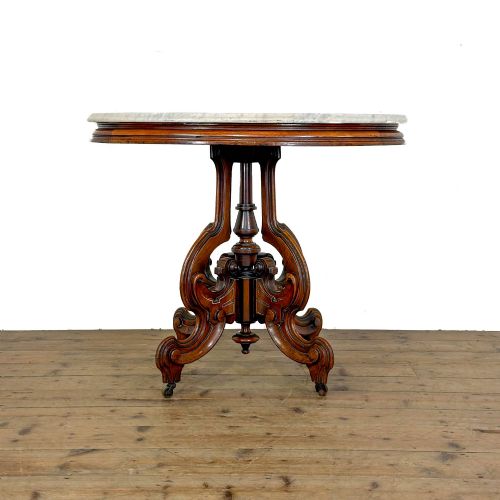
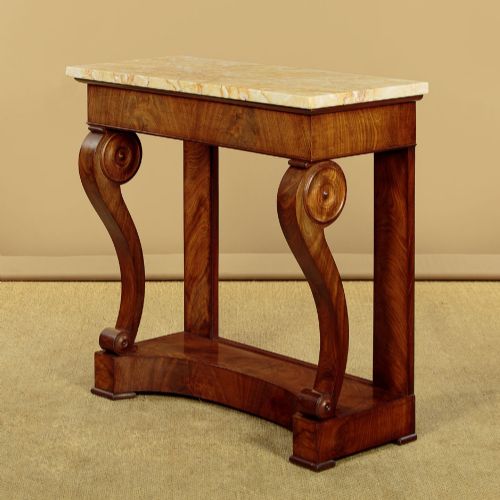
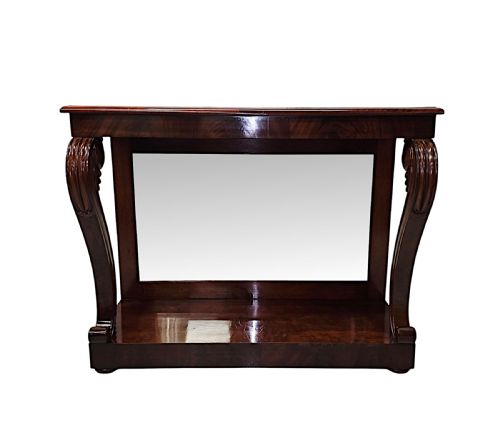
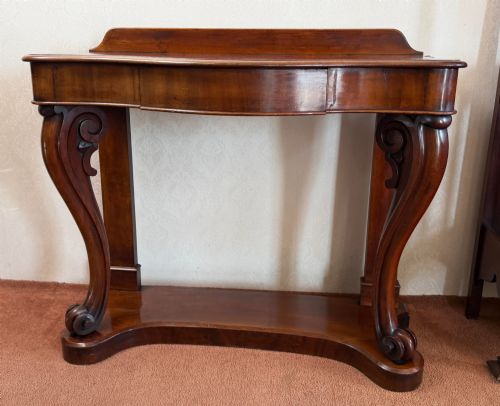
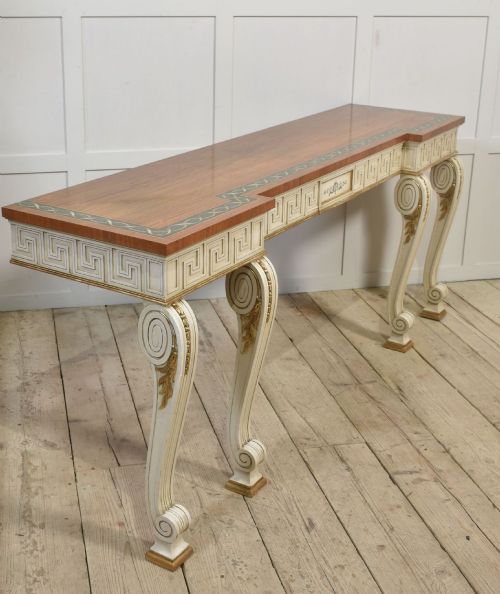
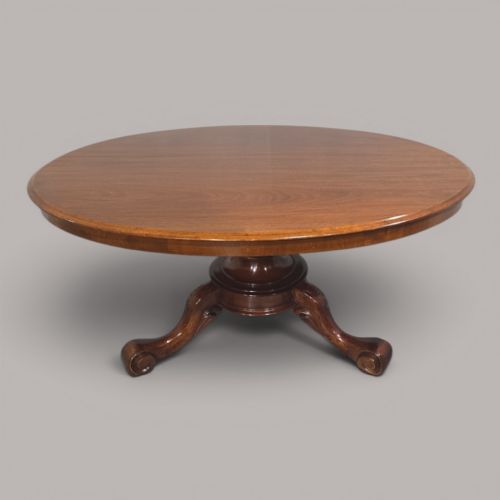


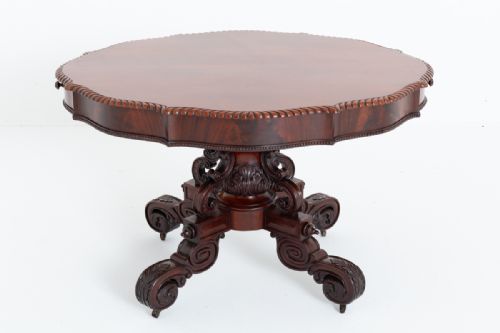
Mahogany Scroll Leg Table
A mahogany scroll leg table brings architectural presence and rich timber tone into a room, making it a focal point.
Mahogany Scroll Leg Table
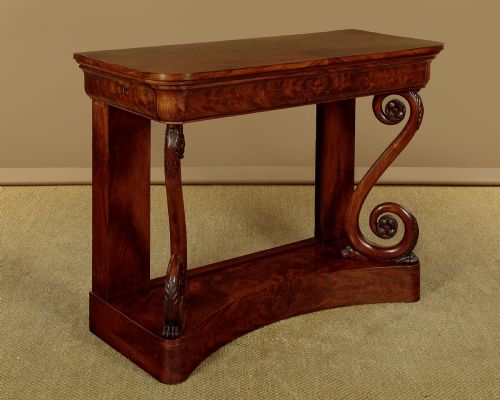
A mahogany scroll leg table combines rich timber construction with distinctive curved supports, spanning periods from the Georgian era through to the Victorian age. Console tables, side tables, and centre tables dominate this selection, frequently featuring architectural scroll work.
Buyers seeking a mahogany scroll leg table will encounter pieces shaped by Victorian, Regency, and William IV design influences. The examples listed reflect formal dining rooms, drawing rooms, and hallways where these statement surfaces served practical and decorative roles.
Originating largely from nineteenth-century workshops, these tables employ dense mahogany timber often paired with marble tops, brass mounts, or flame veneer. The scroll leg format provides structural stability while introducing sweeping curves to the silhouette.
How they were made
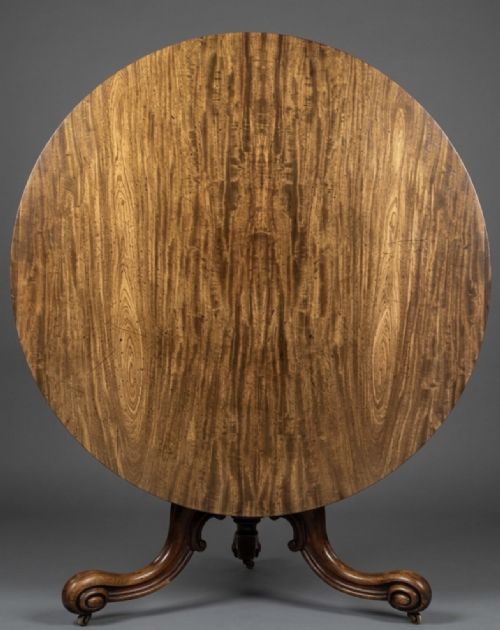
Cabinet makers utilised solid mahogany and flame mahogany veneer applied over secondary timbers to achieve deep figuring and lustrous surfaces. Flame mahogany veneer requires skilled handling to match grain patterns across wide tabletops and friezes.
Structural elements such as scroll legs and pedestal supports involve careful carving and turning. Brass castors and marble inserts frequently supplement the timber framework, particularly on nineteenth-century console and centre tables.
Listings feature mahogany, marble, brass, and glass across 19th-century, Regency, and Victorian periods.
What varies in quality
Quality rests upon the depth of the mahogany grain and the crispness of the scroll carving on the legs. Superior examples display thoughtful timber selection, such as matched flame mahogany veneer, alongside robust joinery that sustains the weight of marble or heavy timber tops.
The integration of secondary materials like brass mounts and inset marble slabs distinguishes finer workshop output. Proportion and balance in the scroll supports determine the visual harmony of each table.
Gillows·Gillingtons of Dublin
The Mahogany Scroll Leg Table Glossary
- Flame mahogany
- A highly figured veneer harvested from the fork of the mahogany tree, prized for its swirling, flame-like patterns. Cabinet makers placed these veneers symmetrically across tabletops.
- Console table
- A wall-mounted or freestanding table designed to stand against a vertical surface, frequently topped with marble. These pieces served decorative functions in grand hallways and reception rooms.
- Centre table
- A freestanding table designed to be viewed from all sides, commonly placed in the middle of a room. Nineteenth-century examples often feature central pedestals or four scroll legs.
- Gueridon
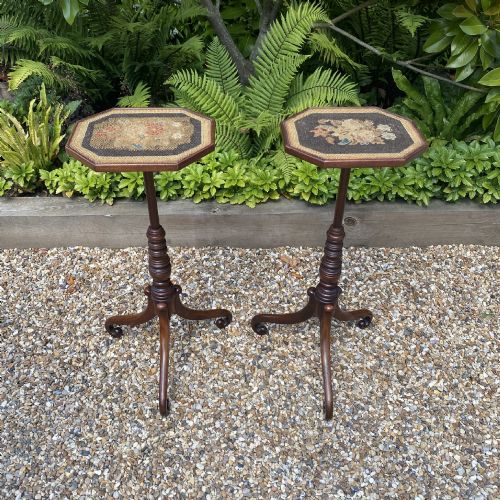
- A small French table supported by a column or multiple legs, often utilised as a candle stand or occasional surface. Victorian interpretations adopted mahogany construction and scroll supports.
- Serpentine shape
- A curved furniture front characterised by a convex centre flanked by concave ends. This undulating contour requires precise woodworking skills to execute smoothly.
Mahogany Scroll Leg Table: Frequently Asked Questions
Where should I place a console table?
A console table suits hallways, entranceways, and living rooms where floor space is at a premium. Their shallow depth allows them to sit flush against walls without obstructing pathways.
Pairing a console table with a mirror or artwork creates a balanced focal point in a reception room.
How do I care for mahogany furniture?
Mahogany surfaces respond best to regular dusting with a soft, dry cloth to prevent particulate buildup. Avoid placing timber tables in direct sunlight or near heat sources to protect the polish and prevent wood splitting.
Applying occasional specialist wax helps maintain the natural lustre of the flame veneer.
What distinguishes a centre table from a side table?
A centre table stands finished on all sides so it can occupy the middle of a room without backing onto a wall. Side tables are traditionally built to sit against a vertical surface.
Centre tables often feature circular or octagonal tops supported by central pedestals or balanced leg assemblies.
How do I identify the Regency period?
Regency furniture draws heavily on Neoclassical motifs inspired by ancient Greece and Rome. Look for clean architectural lines, rosewood or mahogany timbers, and brass inlay or mounts.
Proportions during this era tended to be refined and balanced, reflecting early nineteenth-century tastes.