

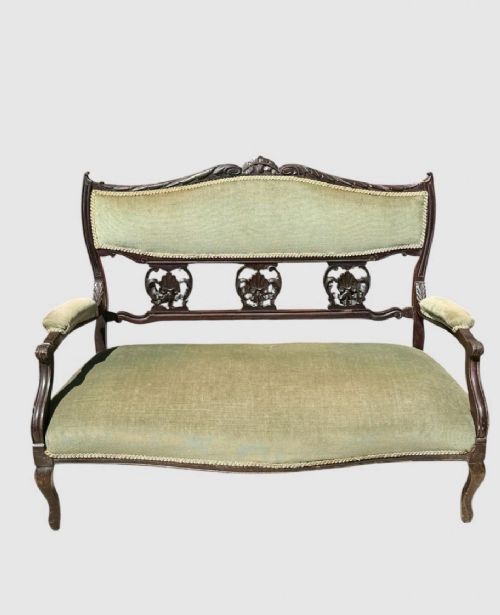


Mahogany Salon Bench
A mahogany salon bench offers refined seating for drawing rooms, crafted in styles from Victorian to Edwardian with rich timber and upholstery.
Mahogany Salon Bench
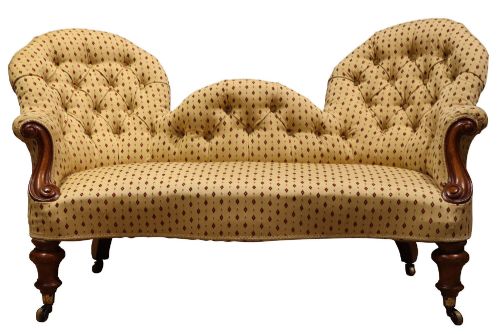
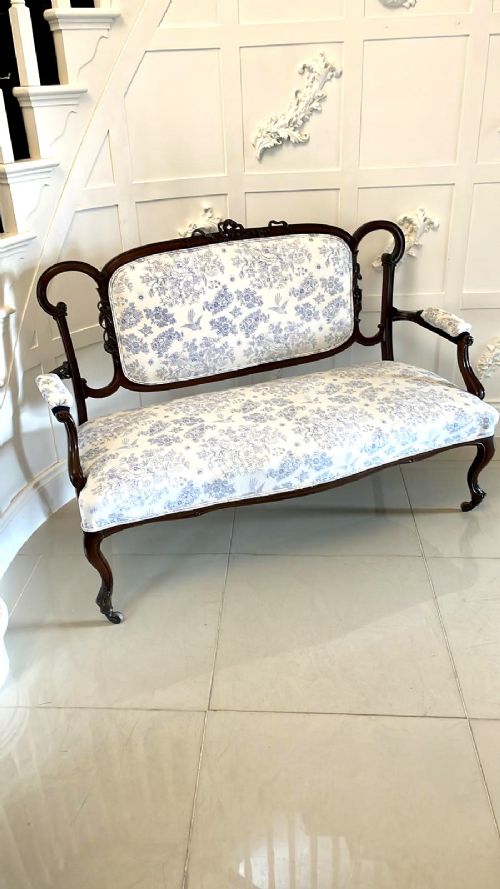
A mahogany salon bench is a formal two-seater or settee designed for reception rooms and parlours during the nineteenth and early twentieth centuries. These pieces appear across Victorian, late Victorian, and Edwardian periods, often taking the form of settees, double-ended sofas, or end-of-bed benches.
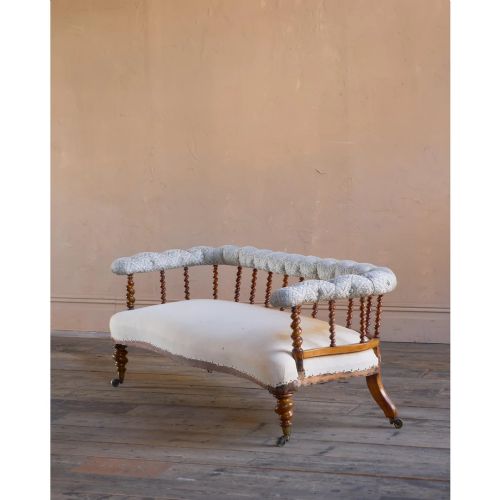
The physical evidence shows these seats spanning decades from eighteen fifty to nineteen ten, incorporating styles like Chippendale, Sheraton Revival, and French Empire Revival. Makers and workshops produced everything from simple spindle-backed salon sofas to elaborate carved and inlaid multi-piece parlour suites.
Materials and construction
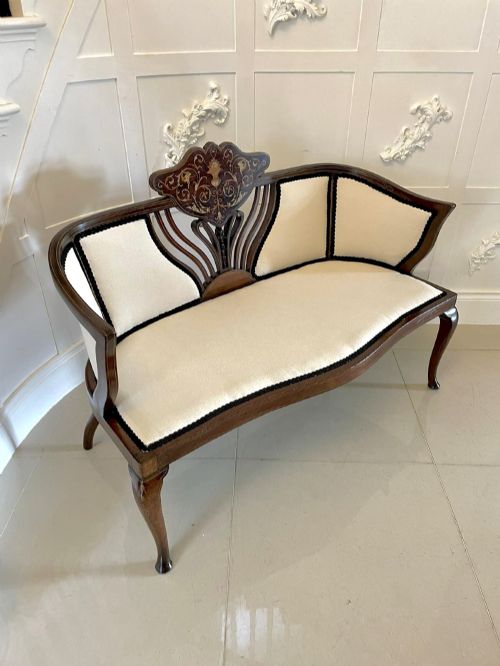
Makers utilised solid mahogany and mahogany veneers as the primary timber framework for these salon benches. Artisans enhanced the surfaces using intricate boxwood, satinwood, and marquetry inlay, alongside contrasting bone details.
Structural embellishments frequently included carved woodwork, brass fittings, and ormolu mounts, particularly on revival pieces. Upholstery fabric completed the seating, ranging from simple green pads to bespoke textiles requiring complete re-upholstery.
Mahogany Salon Bench Retail Price Guide 2026
Typical asking prices for mahogany salon bench among the pieces listed under this phrase on Sellingantiques today, from the lower quarter to the upper quarter. They describe what is for sale here now, not the wider market.
Listings demonstrate a strong concentration of Edwardian inlaid mahogany salon settees alongside mid-Victorian carved timber frames.
Assessing quality and craftsmanship
Quality in a mahogany salon bench rests upon the precision of the timber joinery and the depth of the carving. Superior examples display crisp hand-carved details and tightly fitted inlay rather than superficial surface decoration.
The refinement of the secondary woods, the integration of brass or ormolu mounts, and the structural integrity of the frame separate standard workshop production from finer cabinet-maker output.
C. Hindley & Sons
The Mahogany Salon Bench Glossary
- Double-ended settee
- A sofa style featuring symmetrically curved or scrolled ends of equal height. This design allows a sitter to recline comfortably against either side.
- Marquetry inlay
- Decorative patterns formed by fitting contrasting veneers into the primary mahogany ground. Artisans create intricate geometric or floral motifs using boxwood and satinwood.
- Ormolu mounts
- Gilded bronze decorative elements applied to furniture frames. These details appear prominently on French Empire Revival pieces.
- Spindle back
- A chair or sofa back constructed from numerous slender turned wooden rods. This lighter architectural feature often appears on nineteenth-century parlour seating.
- Sheraton Revival
- A late nineteenth and early twentieth-century design movement inspired by late eighteenth-century neoclassical furniture. These pieces feature balanced proportions and delicate inlay.
Mahogany Salon Bench: Frequently Asked Questions
What is a mahogany salon bench?
A mahogany salon bench is a nineteenth or early twentieth-century upholstered seat designed for formal rooms. They function as settees or compact sofas.
These pieces combine mahogany timber frames with decorative inlays and fabrics. They served as refined seating in Victorian and Edwardian parlours.
How do I date a mahogany settee?
Dating relies on stylistic clues and construction methods spanning the Victorian and Edwardian eras. Heavy carved forms usually indicate mid to late nineteenth-century origins.
Lighter frames featuring delicate satinwood inlay often point toward nineteen hundred or the Edwardian period. Maker attribution can also help narrow the timeline.
Where should I place an antique salon bench?
These benches suit entrance halls, drawing rooms, or spacious bedrooms as end-of-bed seating. Their finished backs allow placement away from walls.
Consider the scale of the room relative to the two-seater frame. Ensure high-traffic areas will not damage delicate inlay or antique upholstery.
Are salon benches comfortable for daily use?
Antique salon benches were built for formal entertaining rather than heavy lounging. Padding and support vary significantly depending on the original period.
Many Edwardian and Victorian frames benefit from modern re-upholstery. This process restores padding while preserving the underlying wooden structure.