

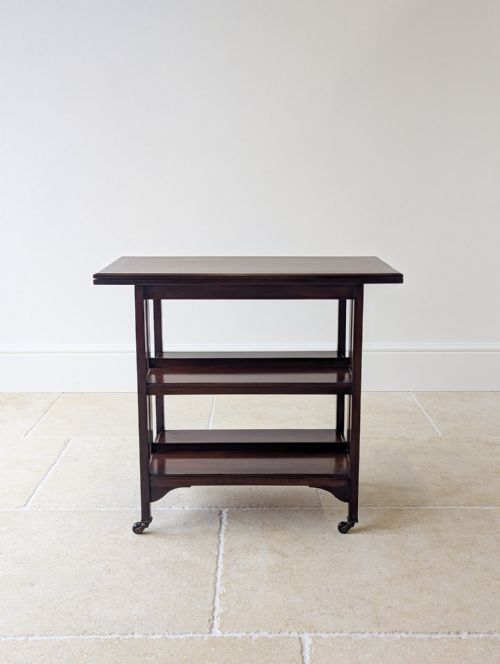


Mahogany Revolving Bookshelf
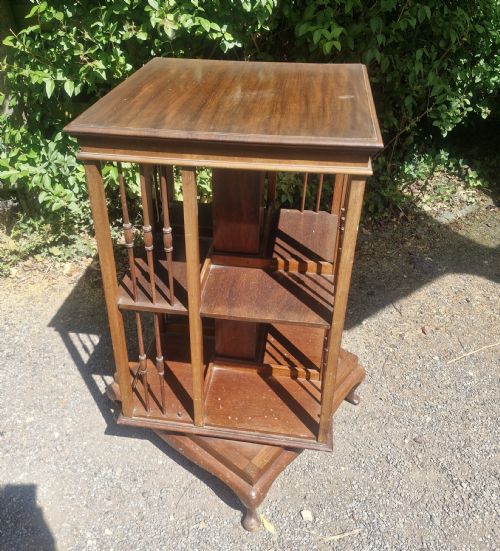
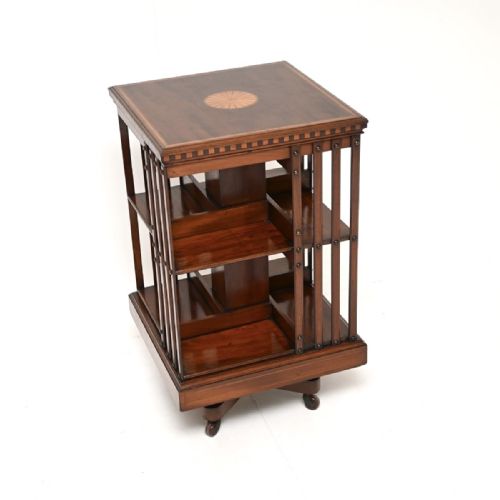
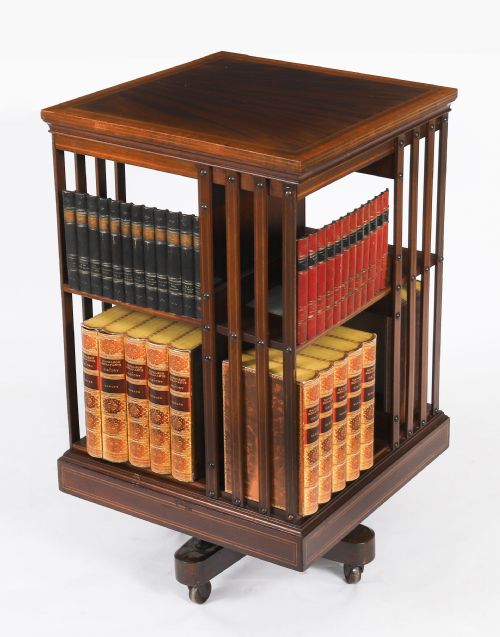
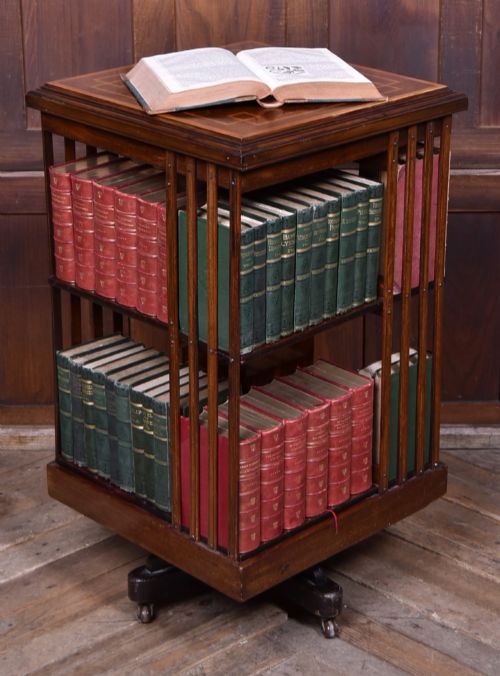
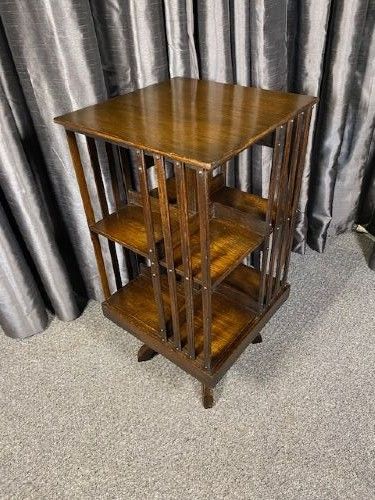
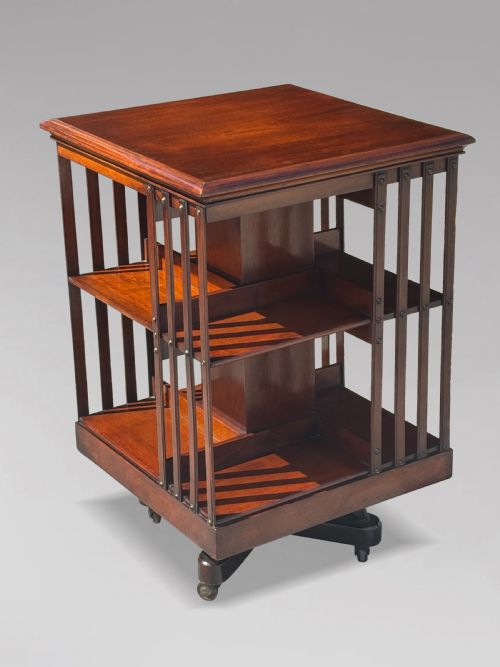
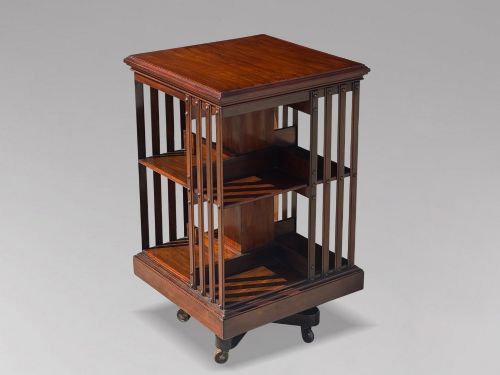
A mahogany revolving bookshelf turns on a sturdy base to keep favourite volumes within easy reach, offering practical charm for a study.
Mahogany Revolving Bookshelf
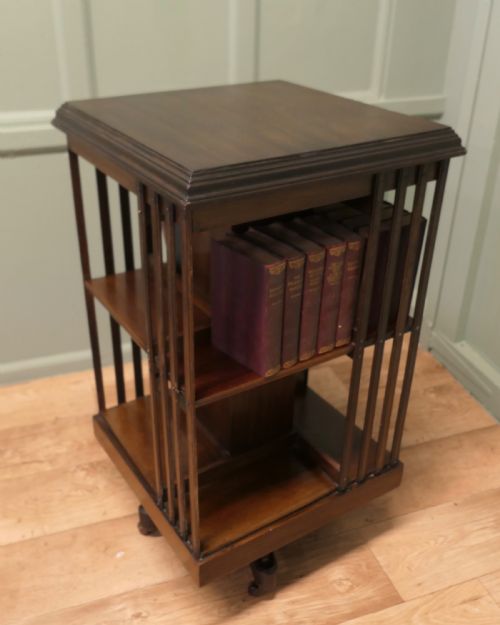
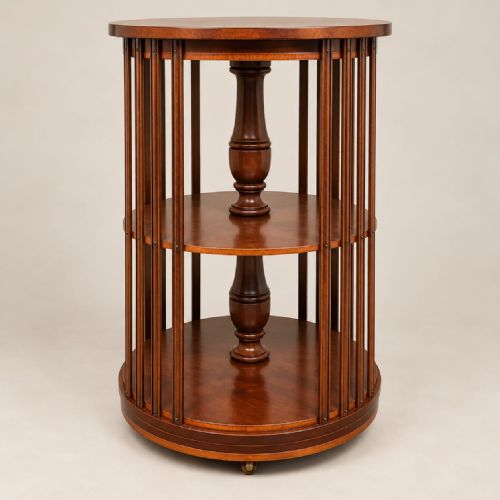
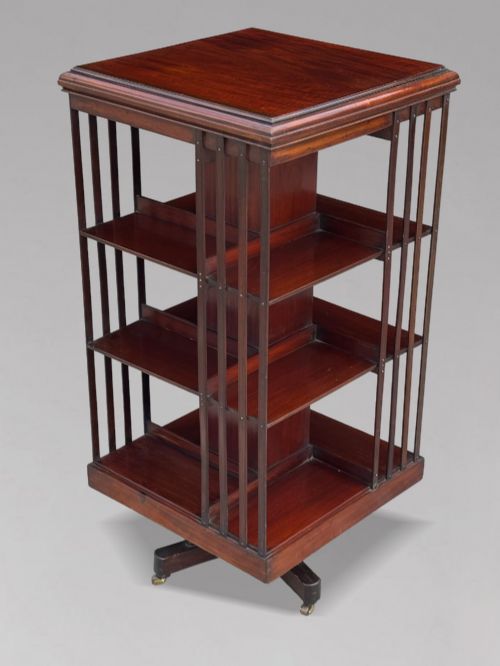
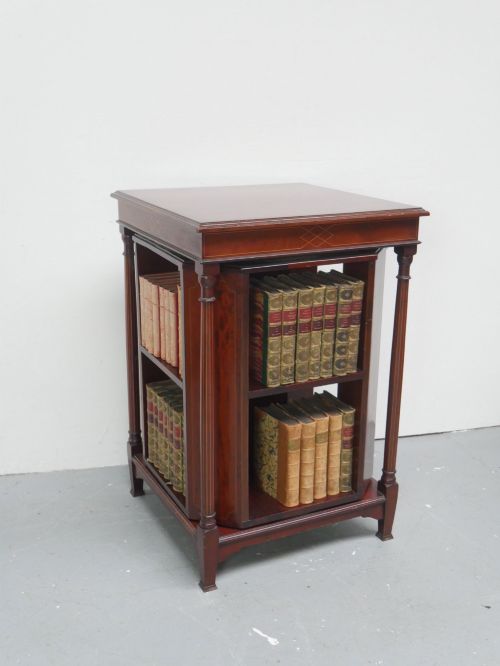
A mahogany revolving bookshelf is a clever piece of furniture designed to hold a handy collection of books while occupying minimal floor or desk space. The pieces appearing here span from the late nineteenth century through the Edwardian era and into the interwar years.
Most examples take the form of floor-standing circular or square units, though compact desktop versions also appear. Makers built these bookcases to rotate smoothly on internal mechanisms, allowing users to access volumes from a single seated position.
How they were made
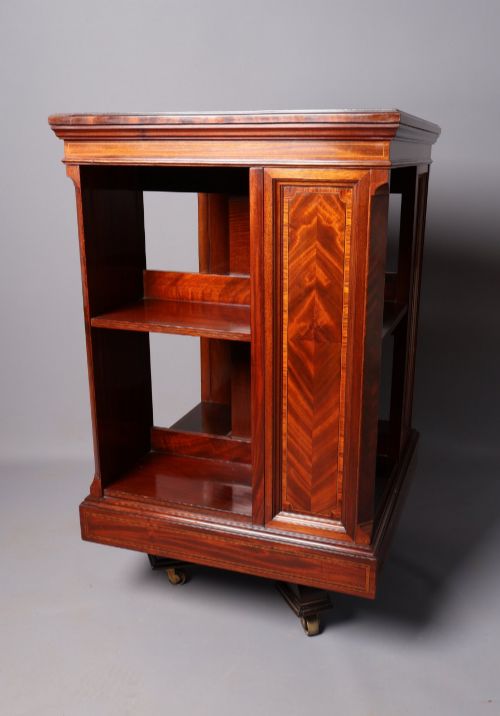
Cabinet makers relied primarily on mahogany timber, sometimes selecting flame mahogany veneers for enhanced grain figure or incorporating satinwood inlay for decorative contrast. Internal frames often utilised oak alongside secondary timbers to ensure structural stability.
Hardware played a crucial mechanical role, with brass and cast iron components forming the underlying pivot systems that enable the smooth rotation of the shelving tiers. Joinery techniques combined traditional cabinet-making methods with robust internal metalwork to support heavy book loads.
Mahogany Revolving Bookshelf Retail Price Guide 2026
Typical asking prices for mahogany revolving bookshelf among the pieces listed under this phrase on Sellingantiques today, from the lower quarter to the upper quarter. They describe what is for sale here now, not the wider market.
Some desktop models let writers spin their dictionaries with one finger while drafting prose.
What varies in quality
The sophistication of the timber selection and decorative detail sets finer examples apart from simpler utilitarian pieces. Plain mahogany surfaces contrast with those featuring intricate satinwood inlay or striking flame mahogany grain patterns.
Mechanical execution defines the daily experience of the furniture, as superior bearing systems provide effortless and silent rotation. The stability of the base and the precision of the slatted divider partitions further distinguish superior cabinet work.
Heals·Maple and Co
The Mahogany Revolving Bookshelf Glossary
- Flame mahogany
- A veneer cut from the fork of a mahogany tree that creates a distinctive rippled, flame-like pattern. This decorative figuring was favoured for prominent top surfaces.
- Satinwood inlay
- A contrasting light-coloured timber inserted into recesses within the darker mahogany surface. This technique created geometric borders or delicate motifs.
- Revolving mechanism
- The internal pivot and ball-bearing assembly concealed beneath the bookcase. It allows the entire upper tier to turn smoothly on its fixed base.
- Edwardian
- A period spanning the reign of King Edward VII, noted for lighter furniture designs and revived historical styles. Pieces from this era often feature refined inlay work.
Mahogany Revolving Bookshelf: Frequently Asked Questions
How do I maintain the revolving mechanism?
Keep the internal pivot clean and periodically check the concealed hardware beneath the base. A light application of appropriate lubricant helps maintain smooth rotation.
Avoid overloading individual tiers, as excessive weight places unnecessary strain on the central spindle and bearing system over time.
Can these bookcases hold heavy books?
Most standard volumes fit comfortably within the tiers, though the height varies between floor-standing and desktop versions. Heavier reference books should sit on the lower tiers to maintain overall stability.
Distributing weight evenly around the four sides ensures the revolving action remains balanced and effortless.
How do I distinguish Edwardian pieces from Victorian ones?
Edwardian examples tend to feature lighter proportions and often incorporate delicate satinwood inlay or crossbanding. Victorian pieces from the nineteenth century generally present a heavier, darker mahogany construction.
Construction details and finish characteristics help clarify the chronological distinction between late nineteenth-century and early twentieth-century workshop practices.
Where is the best place to position a revolving bookshelf?
These pieces suit positions beside a favourite armchair or desk where books need to be close at hand. Because they rotate, they do not require placement directly against a wall.
Allowing clearance on all sides lets users fully appreciate the revolving function and access every compartment without obstruction.