




Mahogany Retail Cabinet
A mahogany retail cabinet brings the character of the late nineteenth and early twentieth-century high street straight into your home.
Mahogany Retail Cabinet
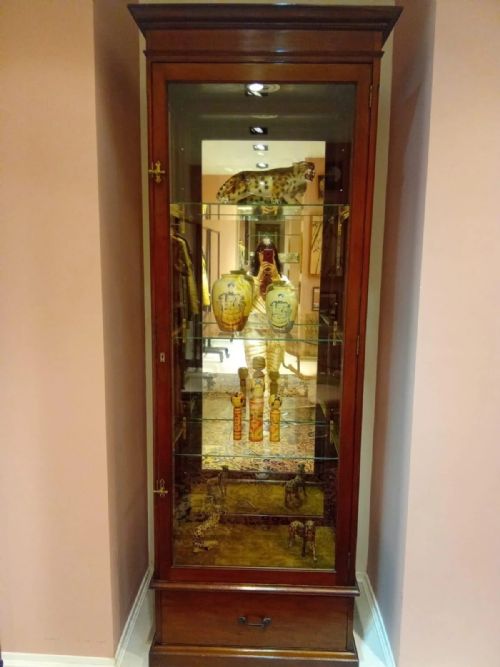
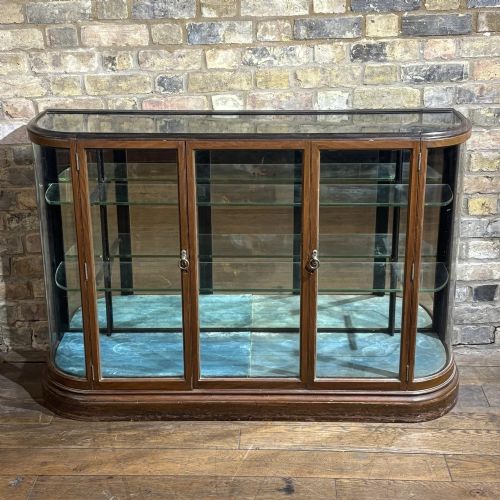
A mahogany retail cabinet is a commercial fixture originally built to showcase goods in nineteenth and twentieth-century shops, pharmacies, and tea rooms. Buyers look to these pieces for practical display storage with robust construction and historic character. The examples seen here range from countertop display cases and large shop counters to tall haberdashery cabinets and specialised advertising units.
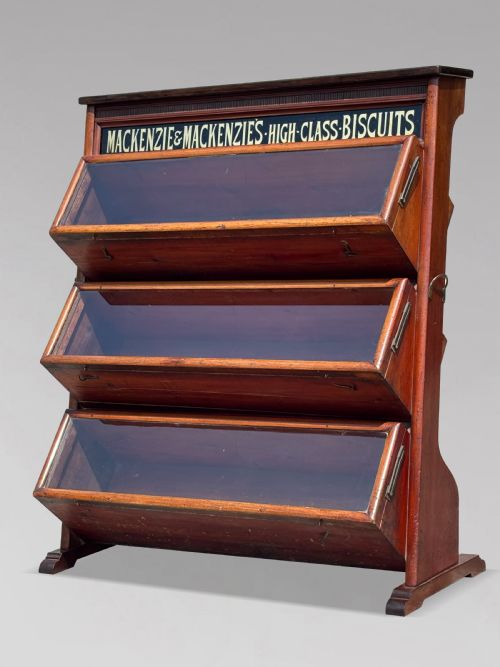
The versions most commonly met on this page date from the Edwardian period through to the 1930s, reflecting the commercial expansion of those eras. These include wall-mounted vitrines, bow-ended display tables, and mechanical dispensing units designed for products like chocolate and soap. Many retain original glass panels and adjustable shelving tailored for trade use.
How They Were Made
These commercial cabinets utilise solid mahogany and selected hardwoods for structural framing, paired with large sheets of clear glass to maximise visibility. Brass fittings, hinges, and handles provide durable mechanical movement for doors and dispensing mechanisms. Mirrored interiors are frequently integrated to reflect light through the display space and enhance the appearance of the contents.
Joinery techniques prioritize strength for daily retail environments, utilising sturdy mortise and tenon joints to support heavy glass and stock. Countertop models and standing shop counters often incorporate velvet or fabric linings within the display base. Sign-written lettering, applied to glass or timber surfaces, advertises period brands using traditional hand-painting methods.
Mahogany Retail Cabinet Retail Price Guide 2026
Typical asking prices for mahogany retail cabinet among the pieces listed under this phrase on Sellingantiques today, from the lower quarter to the upper quarter. They describe what is for sale here now, not the wider market.
Listings feature mahogany, brass, and mirrored glass across Victorian, Edwardian, and 1920s commercial display forms.
What Varies in Quality
The distinction between standard commercial units and the finest examples rests upon the sophistication of the joinery and the integrity of the original materials. Superior cabinets display refined proportions, such as curved bow ends or complex pentagonal footprints, executed by specialised shopfitters. The quality of the mahogany timber, the clarity of the original glass, and the retention of working brass hardware elevate an individual piece.
Provenance and specialised function further differentiate the pieces, with marked maker plates and original advertising glass commanding particular attention. Cabinets designed for specific trades, such as apothecary dispensing or confectionery advertising, show greater detailing than utility counters. The survival of uncompromised interior mirrors and adjustable shelving brackets dictates the overall integrity of the build.
F. Sage And Co·John Stow Ltd·Pollards·E. Pollard And Co Ltd
The Mahogany Retail Cabinet Glossary
- Vitrine
- A glass-fronted display cabinet used for showcasing fine goods or curiosities. These pieces often feature glazed sides and doors to allow maximum light penetration.
- Haberdashery cabinet
- A multi-drawer retail unit traditionally used for storing small sewing items, ribbons, and accessories. They typically combine timber frames with glass-fronted drawer pulls.
- Bow end
- A curved cabinet end that creates a rounded profile rather than a sharp corner. This styling softens the geometric lines of a shop counter.
- Shopfitting
- The trade and craft of manufacturing and installing interior commercial furniture. Specialist firms produced standardised yet high-quality display fixtures for merchants.
Mahogany Retail Cabinet: Frequently Asked Questions
What were mahogany retail cabinets used for?
Merchants utilised these cabinets to protect valuable stock while keeping goods fully visible to customers browsing the shop floor. They served specific trades including pharmacies, drapers, and confectioners for displaying items like chocolate, soap, and tea.
In domestic settings today, they function as display cases for collections, tableware, or books, utilising the original glass protection and adjustable shelving.
How do I identify an Edwardian retail cabinet?
Edwardian examples typically exhibit crisp mahogany frames, generous glass viewing areas, and understated classical detailing influenced by Adam revival styles. They often incorporate brass hardware and internal mirrors characteristic of early twentieth-century commercial design.
Makers' plates or stamps from prominent shopfitters of the era frequently provide precise attribution and date confirmation.
Can I adjust the shelves inside?
Many period cabinets feature original internal rack systems or adjustable brass clips that allow glass shelves to be repositioned at various heights. This original commercial feature accommodates objects of differing vertical dimensions.
Care should be taken when handling the heavy plate glass shelves during adjustment to prevent chipping the polished edges.
Why do some cabinets have advertising lettering?
Commercial fixtures were frequently branded by manufacturers to promote specific confectionery, tobacco, or pharmaceutical products directly on the shop counter. This sign-writing, executed on glass or timber, formed part of the point-of-sale advertising strategy.
Some pieces feature later sign-written details added for decorative display or retail styling long after their original manufacture.